
História natural da PC segundo o GMFCS: evolução motora
Estudo longitudinal de 657 crianças com PC (16 meses a 21 anos) que avalia o desenvolvimento funcional por meio do GMFM-66 e da classificação GMFCS.
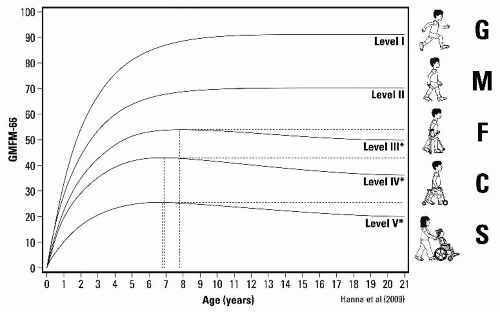
Padrão evolutivo segundo o GMFCS
- GMFCS I-II (leves): Estabilidade funcional na adolescência e idade adulta.
- GMFCS III-V (mais graves):
- Pico funcional: 7 anos 11 meses (III), 6 anos 11 meses (IV e V).
- Declínio na idade adulta: Perda média de 4,7 pontos (III), 7,8 (IV), 6,4 (V) na GMFM-66.
- Relevância clínica: Reduções ≥4 pontos são clinicamente significativas [1].
Mais detalhes sobre o estudo
O modelo de declínio funcional melhor se ajusta aos dados vs. estabilidade. A perda é observada principalmente na adolescência, especialmente nos níveis III-V. Não há evidência de declínio nos níveis I-II [1].
Implicações clínicas
- Monitorizar o GMFM-66 até a idade adulta em GMFCS III-V.
- O declínio funcional na adolescência é esperável em níveis altos, não indicando nova patologia.
- Incluir estratégias de manutenção e prevenção de deterioração em planos terapêuticos.
19955111
{19955111:W4CXKLWZ}
1
vancouver
50
default
8883
https://neuropediatoolkit.org/wp-content/plugins/zotpress/
%7B%22status%22%3A%22success%22%2C%22updateneeded%22%3Afalse%2C%22instance%22%3Afalse%2C%22meta%22%3A%7B%22request_last%22%3A0%2C%22request_next%22%3A0%2C%22used_cache%22%3Atrue%7D%2C%22data%22%3A%5B%7B%22key%22%3A%22W4CXKLWZ%22%2C%22library%22%3A%7B%22id%22%3A19955111%7D%2C%22meta%22%3A%7B%22creatorSummary%22%3A%22Hanna%20et%20al.%22%2C%22parsedDate%22%3A%222009-04%22%2C%22numChildren%22%3A1%7D%2C%22bib%22%3A%22%26lt%3Bdiv%20class%3D%26quot%3Bcsl-bib-body%26quot%3B%20style%3D%26quot%3Bline-height%3A%201.35%3B%20%26quot%3B%26gt%3B%5Cn%20%20%26lt%3Bdiv%20class%3D%26quot%3Bcsl-entry%26quot%3B%20style%3D%26quot%3Bclear%3A%20left%3B%20%26quot%3B%26gt%3B%5Cn%20%20%20%20%26lt%3Bdiv%20class%3D%26quot%3Bcsl-left-margin%26quot%3B%20style%3D%26quot%3Bfloat%3A%20left%3B%20padding-right%3A%200.5em%3B%20text-align%3A%20right%3B%20width%3A%201em%3B%26quot%3B%26gt%3B1.%26lt%3B%5C%2Fdiv%26gt%3B%26lt%3Bdiv%20class%3D%26quot%3Bcsl-right-inline%26quot%3B%20style%3D%26quot%3Bmargin%3A%200%20.4em%200%201.5em%3B%26quot%3B%26gt%3BHanna%20SE%2C%20Rosenbaum%20PL%2C%20Bartlett%20DJ%2C%20Palisano%20RJ%2C%20Walter%20SD%2C%20Avery%20L%2C%20et%20al.%20Stability%20and%20decline%20in%20gross%20motor%20function%20among%20children%20and%20youth%20with%20cerebral%20palsy%20aged%202%20to%2021%20years.%20Dev%20Med%20Child%20Neurol.%202009%20Apr%3B51%284%29%3A295%26%23x2013%3B302.%26lt%3B%5C%2Fdiv%26gt%3B%5Cn%20%20%20%26lt%3B%5C%2Fdiv%26gt%3B%5Cn%26lt%3B%5C%2Fdiv%26gt%3B%22%2C%22data%22%3A%7B%22itemType%22%3A%22journalArticle%22%2C%22title%22%3A%22Stability%20and%20decline%20in%20gross%20motor%20function%20among%20children%20and%20youth%20with%20cerebral%20palsy%20aged%202%20to%2021%20years%22%2C%22creators%22%3A%5B%7B%22creatorType%22%3A%22author%22%2C%22firstName%22%3A%22Steven%20E.%22%2C%22lastName%22%3A%22Hanna%22%7D%2C%7B%22creatorType%22%3A%22author%22%2C%22firstName%22%3A%22Peter%20L.%22%2C%22lastName%22%3A%22Rosenbaum%22%7D%2C%7B%22creatorType%22%3A%22author%22%2C%22firstName%22%3A%22Doreen%20J.%22%2C%22lastName%22%3A%22Bartlett%22%7D%2C%7B%22creatorType%22%3A%22author%22%2C%22firstName%22%3A%22Robert%20J.%22%2C%22lastName%22%3A%22Palisano%22%7D%2C%7B%22creatorType%22%3A%22author%22%2C%22firstName%22%3A%22Stephen%20D.%22%2C%22lastName%22%3A%22Walter%22%7D%2C%7B%22creatorType%22%3A%22author%22%2C%22firstName%22%3A%22Lisa%22%2C%22lastName%22%3A%22Avery%22%7D%2C%7B%22creatorType%22%3A%22author%22%2C%22firstName%22%3A%22Dianne%20J.%22%2C%22lastName%22%3A%22Russell%22%7D%5D%2C%22abstractNote%22%3A%22This%20paper%20reports%20the%20construction%20of%20gross%20motor%20development%20curves%20for%20children%20and%20youth%20with%20cerebral%20palsy%20%28CP%29%20in%20order%20to%20assess%20whether%20function%20is%20lost%20during%20adolescence.%20We%20followed%20children%20previously%20enrolled%20in%20a%20prospective%20longitudinal%20cohort%20study%20for%20an%20additional%204%20years%2C%20as%20they%20entered%20adolescence%20and%20young%20adulthood.%20The%20resulting%20longitudinal%20dataset%20comprised%203455%20observations%20of%20657%20children%20with%20CP%20%28369%20males%2C%20288%20females%29%2C%20assessed%20up%20to%2010%20times%2C%20at%20ages%20ranging%20from%2016%20months%20to%2021%20years.%20Motor%20function%20was%20assessed%20using%20the%2066-item%20Gross%20Motor%20Function%20Measure%20%28GMFM-66%29.%20Participants%20were%20classified%20using%20the%20Gross%20Motor%20Function%20Classification%20System%20%28GMFCS%29.%20We%20assessed%20the%20loss%20of%20function%20in%20adolescence%20by%20contrasting%20a%20model%20of%20function%20that%20assumes%20no%20loss%20with%20a%20model%20that%20allows%20for%20a%20peak%20and%20subsequent%20decline.%20We%20found%20no%20evidence%20of%20functional%20decline%2C%20on%20average%2C%20for%20children%20in%20GMFCS%20Levels%20I%20and%20II.%20However%2C%20in%20Levels%20III%2C%20IV%2C%20and%20V%2C%20average%20GMFM-66%20was%20estimated%20to%20peak%20at%20ages%207%20years%2011%20months%2C%206%20years%2011%20months%2C%20and%206%20years%2011%20months%20respectively%2C%20before%20declining%20by%204.7%2C%207.8%2C%20and%206.4%20GMFM-66%20points%2C%20in%20Levels%20III%2C%20IV%2C%20and%20V%20respectively%2C%20as%20these%20adolescents%20became%20young%20adults.%20We%20show%20that%20these%20declines%20are%20clinically%20significant.%22%2C%22date%22%3A%222009-04%22%2C%22section%22%3A%22%22%2C%22partNumber%22%3A%22%22%2C%22partTitle%22%3A%22%22%2C%22DOI%22%3A%2210.1111%5C%2Fj.1469-8749.2008.03196.x%22%2C%22citationKey%22%3A%22%22%2C%22url%22%3A%22%22%2C%22PMID%22%3A%2219391185%22%2C%22PMCID%22%3A%22%22%2C%22ISSN%22%3A%221469-8749%22%2C%22language%22%3A%22eng%22%2C%22collections%22%3A%5B%227L3LPGBN%22%5D%2C%22dateModified%22%3A%222026-10-25T18%3A59%3A34Z%22%7D%7D%5D%7D
1.
Hanna SE, Rosenbaum PL, Bartlett DJ, Palisano RJ, Walter SD, Avery L, et al. Stability and decline in gross motor function among children and youth with cerebral palsy aged 2 to 21 years. Dev Med Child Neurol. 2009 Apr;51(4):295–302.