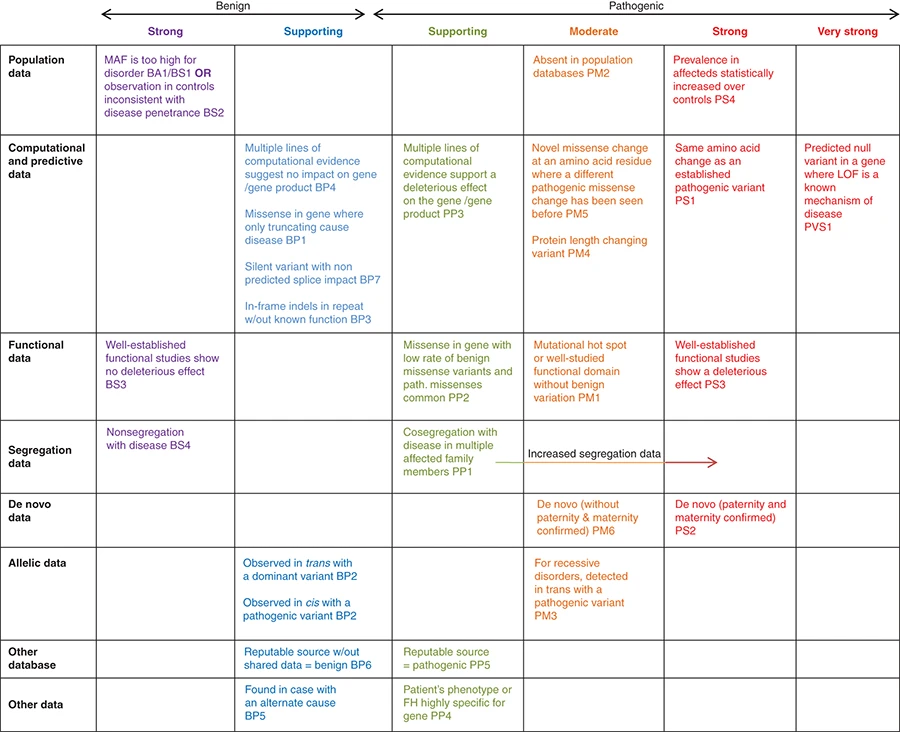
To establish the causality of a genetic variant with respect to a phenotype, sufficient scientific evidence must be obtained. The pathogenicity classification proposed by the ACMG establishes 5 classification categories: Benign, likely benign, variant of uncertain significance, likely pathogenic, and pathogenic. These categories are defined based on the probability that a causal relationship exists between the detected variant and the phenotype, such that a variant classified as likely pathogenic has a 90% certainty of being pathogenic, and one classified as pathogenic has a 99% probability of actually being so. This also means that classifying a variant as VUS means that the probability of the variant being pathogenic lies somewhere between 11% and 89% probability.
It has also proposed a system for analyzing different types of evidence, from data obtained in population studies, functional analysis data, in silico prediction, or segregation studies, classifying them based on the relative weight of each type of data in attributing causality (very strong, strong, moderate, supporting evidence, or not sufficient by itself).
Several databases exist where the pathogenicity of variants identified in a sequencing study can be consulted, provided they have been previously described in the literature and causality investigations have been performed. ClinGen is the FDA-approved database for this purpose.
In the event that the variants have not been previously investigated, it will be necessary to review population databases of both healthy individuals and pathogenic variants, as well as other types of evidence. Varsome is a web tool that uses multiple databases (including ClinGen) to provide automated interpretation following ACMG criteria.
19955111
{19955111:PDLBZKV3},{19955111:4WNH6ZZ4}
1
vancouver
50
default
231
https://neuropediatoolkit.org/wp-content/plugins/zotpress/
%7B%22status%22%3A%22success%22%2C%22updateneeded%22%3Afalse%2C%22instance%22%3Afalse%2C%22meta%22%3A%7B%22request_last%22%3A0%2C%22request_next%22%3A0%2C%22used_cache%22%3Atrue%7D%2C%22data%22%3A%5B%7B%22key%22%3A%22PDLBZKV3%22%2C%22library%22%3A%7B%22id%22%3A19955111%7D%2C%22meta%22%3A%7B%22creatorSummary%22%3A%22MacArthur%20et%20al.%22%2C%22parsedDate%22%3A%222014%22%2C%22numChildren%22%3A1%7D%2C%22bib%22%3A%22%26lt%3Bdiv%20class%3D%26quot%3Bcsl-bib-body%26quot%3B%20style%3D%26quot%3Bline-height%3A%201.35%3B%20%26quot%3B%26gt%3B%5Cn%20%20%26lt%3Bdiv%20class%3D%26quot%3Bcsl-entry%26quot%3B%20style%3D%26quot%3Bclear%3A%20left%3B%20%26quot%3B%26gt%3B%5Cn%20%20%20%20%26lt%3Bdiv%20class%3D%26quot%3Bcsl-left-margin%26quot%3B%20style%3D%26quot%3Bfloat%3A%20left%3B%20padding-right%3A%200.5em%3B%20text-align%3A%20right%3B%20width%3A%201em%3B%26quot%3B%26gt%3B1.%26lt%3B%5C%2Fdiv%26gt%3B%26lt%3Bdiv%20class%3D%26quot%3Bcsl-right-inline%26quot%3B%20style%3D%26quot%3Bmargin%3A%200%20.4em%200%201.5em%3B%26quot%3B%26gt%3BMacArthur%20DG%2C%20Manolio%20TA%2C%20Dimmock%20DP%2C%20Rehm%20HL%2C%20Shendure%20J%2C%20Abecasis%20GR%2C%20et%20al.%20Guidelines%20for%20investigating%20causality%20of%20sequence%20variants%20in%20human%20disease.%20Nature%20%5BInternet%5D.%202014%20Abril%20%5Bcited%202015%20June%2023%5D%3B508%287497%29%3A469%26%23x2013%3B76.%20Available%20from%3A%20%26lt%3Ba%20class%3D%26%23039%3Bzp-ItemURL%26%23039%3B%20href%3D%26%23039%3Bhttp%3A%5C%2F%5C%2Fwww.nature.com%5C%2Fnature%5C%2Fjournal%5C%2Fv508%5C%2Fn7497%5C%2Ffull%5C%2Fnature13127.html%26%23039%3B%26gt%3Bhttp%3A%5C%2F%5C%2Fwww.nature.com%5C%2Fnature%5C%2Fjournal%5C%2Fv508%5C%2Fn7497%5C%2Ffull%5C%2Fnature13127.html%26lt%3B%5C%2Fa%26gt%3B%26lt%3B%5C%2Fdiv%26gt%3B%5Cn%20%20%26lt%3B%5C%2Fdiv%26gt%3B%5Cn%26lt%3B%5C%2Fdiv%26gt%3B%22%2C%22data%22%3A%7B%22itemType%22%3A%22journalArticle%22%2C%22title%22%3A%22Guidelines%20for%20investigating%20causality%20of%20sequence%20variants%20in%20human%20disease%22%2C%22creators%22%3A%5B%7B%22creatorType%22%3A%22author%22%2C%22firstName%22%3A%22D.%20G.%22%2C%22lastName%22%3A%22MacArthur%22%7D%2C%7B%22creatorType%22%3A%22author%22%2C%22firstName%22%3A%22T.%20A.%22%2C%22lastName%22%3A%22Manolio%22%7D%2C%7B%22creatorType%22%3A%22author%22%2C%22firstName%22%3A%22D.%20P.%22%2C%22lastName%22%3A%22Dimmock%22%7D%2C%7B%22creatorType%22%3A%22author%22%2C%22firstName%22%3A%22H.%20L.%22%2C%22lastName%22%3A%22Rehm%22%7D%2C%7B%22creatorType%22%3A%22author%22%2C%22firstName%22%3A%22J.%22%2C%22lastName%22%3A%22Shendure%22%7D%2C%7B%22creatorType%22%3A%22author%22%2C%22firstName%22%3A%22G.%20R.%22%2C%22lastName%22%3A%22Abecasis%22%7D%2C%7B%22creatorType%22%3A%22author%22%2C%22firstName%22%3A%22D.%20R.%22%2C%22lastName%22%3A%22Adams%22%7D%2C%7B%22creatorType%22%3A%22author%22%2C%22firstName%22%3A%22R.%20B.%22%2C%22lastName%22%3A%22Altman%22%7D%2C%7B%22creatorType%22%3A%22author%22%2C%22firstName%22%3A%22S.%20E.%22%2C%22lastName%22%3A%22Antonarakis%22%7D%2C%7B%22creatorType%22%3A%22author%22%2C%22firstName%22%3A%22E.%20A.%22%2C%22lastName%22%3A%22Ashley%22%7D%2C%7B%22creatorType%22%3A%22author%22%2C%22firstName%22%3A%22J.%20C.%22%2C%22lastName%22%3A%22Barrett%22%7D%2C%7B%22creatorType%22%3A%22author%22%2C%22firstName%22%3A%22L.%20G.%22%2C%22lastName%22%3A%22Biesecker%22%7D%2C%7B%22creatorType%22%3A%22author%22%2C%22firstName%22%3A%22D.%20F.%22%2C%22lastName%22%3A%22Conrad%22%7D%2C%7B%22creatorType%22%3A%22author%22%2C%22firstName%22%3A%22G.%20M.%22%2C%22lastName%22%3A%22Cooper%22%7D%2C%7B%22creatorType%22%3A%22author%22%2C%22firstName%22%3A%22N.%20J.%22%2C%22lastName%22%3A%22Cox%22%7D%2C%7B%22creatorType%22%3A%22author%22%2C%22firstName%22%3A%22M.%20J.%22%2C%22lastName%22%3A%22Daly%22%7D%2C%7B%22creatorType%22%3A%22author%22%2C%22firstName%22%3A%22M.%20B.%22%2C%22lastName%22%3A%22Gerstein%22%7D%2C%7B%22creatorType%22%3A%22author%22%2C%22firstName%22%3A%22D.%20B.%22%2C%22lastName%22%3A%22Goldstein%22%7D%2C%7B%22creatorType%22%3A%22author%22%2C%22firstName%22%3A%22J.%20N.%22%2C%22lastName%22%3A%22Hirschhorn%22%7D%2C%7B%22creatorType%22%3A%22author%22%2C%22firstName%22%3A%22S.%20M.%22%2C%22lastName%22%3A%22Leal%22%7D%2C%7B%22creatorType%22%3A%22author%22%2C%22firstName%22%3A%22L.%20A.%22%2C%22lastName%22%3A%22Pennacchio%22%7D%2C%7B%22creatorType%22%3A%22author%22%2C%22firstName%22%3A%22J.%20A.%22%2C%22lastName%22%3A%22Stamatoyannopoulos%22%7D%2C%7B%22creatorType%22%3A%22author%22%2C%22firstName%22%3A%22S.%20R.%22%2C%22lastName%22%3A%22Sunyaev%22%7D%2C%7B%22creatorType%22%3A%22author%22%2C%22firstName%22%3A%22D.%22%2C%22lastName%22%3A%22Valle%22%7D%2C%7B%22creatorType%22%3A%22author%22%2C%22firstName%22%3A%22B.%20F.%22%2C%22lastName%22%3A%22Voight%22%7D%2C%7B%22creatorType%22%3A%22author%22%2C%22firstName%22%3A%22W.%22%2C%22lastName%22%3A%22Winckler%22%7D%2C%7B%22creatorType%22%3A%22author%22%2C%22firstName%22%3A%22C.%22%2C%22lastName%22%3A%22Gunter%22%7D%5D%2C%22abstractNote%22%3A%22The%20discovery%20of%20rare%20genetic%20variants%20is%20accelerating%2C%20and%20clear%20guidelines%20for%20distinguishing%20disease-causing%20sequence%20variants%20from%20the%20many%20potentially%20functional%20variants%20present%20in%20any%20human%20genome%20are%20urgently%20needed.%20Without%20rigorous%20standards%20we%20risk%20an%20acceleration%20of%20false-positive%20reports%20of%20causality%2C%20which%20would%20impede%20the%20translation%20of%20genomic%20research%20findings%20into%20the%20clinical%20diagnostic%20setting%20and%20hinder%20biological%20understanding%20of%20disease.%20Here%20we%20discuss%20the%20key%20challenges%20of%20assessing%20sequence%20variants%20in%20human%20disease%2C%20integrating%20both%20gene-level%20and%20variant-level%20support%20for%20causality.%20We%20propose%20guidelines%20for%20summarizing%20confidence%20in%20variant%20pathogenicity%20and%20highlight%20several%20areas%20that%20require%20further%20resource%20development.%22%2C%22date%22%3A%22Abril%2024%2C%202014%22%2C%22section%22%3A%22%22%2C%22partNumber%22%3A%22%22%2C%22partTitle%22%3A%22%22%2C%22DOI%22%3A%2210.1038%5C%2Fnature13127%22%2C%22citationKey%22%3A%22%22%2C%22url%22%3A%22http%3A%5C%2F%5C%2Fwww.nature.com%5C%2Fnature%5C%2Fjournal%5C%2Fv508%5C%2Fn7497%5C%2Ffull%5C%2Fnature13127.html%22%2C%22PMID%22%3A%22%22%2C%22PMCID%22%3A%22%22%2C%22ISSN%22%3A%220028-0836%22%2C%22language%22%3A%22en%22%2C%22collections%22%3A%5B%223W4D2W9R%22%5D%2C%22dateModified%22%3A%222026-07-15T22%3A40%3A41Z%22%7D%7D%2C%7B%22key%22%3A%224WNH6ZZ4%22%2C%22library%22%3A%7B%22id%22%3A19955111%7D%2C%22meta%22%3A%7B%22creatorSummary%22%3A%22Richards%20et%20al.%22%2C%22parsedDate%22%3A%222015-05%22%2C%22numChildren%22%3A3%7D%2C%22bib%22%3A%22%26lt%3Bdiv%20class%3D%26quot%3Bcsl-bib-body%26quot%3B%20style%3D%26quot%3Bline-height%3A%201.35%3B%20%26quot%3B%26gt%3B%5Cn%20%20%26lt%3Bdiv%20class%3D%26quot%3Bcsl-entry%26quot%3B%20style%3D%26quot%3Bclear%3A%20left%3B%20%26quot%3B%26gt%3B%5Cn%20%20%20%20%26lt%3Bdiv%20class%3D%26quot%3Bcsl-left-margin%26quot%3B%20style%3D%26quot%3Bfloat%3A%20left%3B%20padding-right%3A%200.5em%3B%20text-align%3A%20right%3B%20width%3A%201em%3B%26quot%3B%26gt%3B1.%26lt%3B%5C%2Fdiv%26gt%3B%26lt%3Bdiv%20class%3D%26quot%3Bcsl-right-inline%26quot%3B%20style%3D%26quot%3Bmargin%3A%200%20.4em%200%201.5em%3B%26quot%3B%26gt%3BRichards%20S%2C%20Aziz%20N%2C%20Bale%20S%2C%20Bick%20D%2C%20Das%20S%2C%20Gastier-Foster%20J%2C%20et%20al.%20Standards%20and%20Guidelines%20for%20the%20Interpretation%20of%20Sequence%20Variants%3A%20A%20Joint%20Consensus%20Recommendation%20of%20the%20American%20College%20of%20Medical%20Genetics%20and%20Genomics%20and%20the%20Association%20for%20Molecular%20Pathology.%20Genet%20Med%20%5BInternet%5D.%202015%20May%20%5Bcited%202016%20Sept%206%5D%3B17%285%29%3A405%26%23x2013%3B24.%20Available%20from%3A%20%26lt%3Ba%20class%3D%26%23039%3Bzp-ItemURL%26%23039%3B%20href%3D%26%23039%3Bhttp%3A%5C%2F%5C%2Fwww.ncbi.nlm.nih.gov%5C%2Fpmc%5C%2Farticles%5C%2FPMC4544753%5C%2F%26%23039%3B%26gt%3Bhttp%3A%5C%2F%5C%2Fwww.ncbi.nlm.nih.gov%5C%2Fpmc%5C%2Farticles%5C%2FPMC4544753%5C%2F%26lt%3B%5C%2Fa%26gt%3B%26lt%3B%5C%2Fdiv%26gt%3B%5Cn%20%20%26lt%3B%5C%2Fdiv%26gt%3B%5Cn%26lt%3B%5C%2Fdiv%26gt%3B%22%2C%22data%22%3A%7B%22itemType%22%3A%22journalArticle%22%2C%22title%22%3A%22Standards%20and%20Guidelines%20for%20the%20Interpretation%20of%20Sequence%20Variants%3A%20A%20Joint%20Consensus%20Recommendation%20of%20the%20American%20College%20of%20Medical%20Genetics%20and%20Genomics%20and%20the%20Association%20for%20Molecular%20Pathology%22%2C%22creators%22%3A%5B%7B%22creatorType%22%3A%22author%22%2C%22firstName%22%3A%22Sue%22%2C%22lastName%22%3A%22Richards%22%7D%2C%7B%22creatorType%22%3A%22author%22%2C%22firstName%22%3A%22Nazneen%22%2C%22lastName%22%3A%22Aziz%22%7D%2C%7B%22creatorType%22%3A%22author%22%2C%22firstName%22%3A%22Sherri%22%2C%22lastName%22%3A%22Bale%22%7D%2C%7B%22creatorType%22%3A%22author%22%2C%22firstName%22%3A%22David%22%2C%22lastName%22%3A%22Bick%22%7D%2C%7B%22creatorType%22%3A%22author%22%2C%22firstName%22%3A%22Soma%22%2C%22lastName%22%3A%22Das%22%7D%2C%7B%22creatorType%22%3A%22author%22%2C%22firstName%22%3A%22Julie%22%2C%22lastName%22%3A%22Gastier-Foster%22%7D%2C%7B%22creatorType%22%3A%22author%22%2C%22firstName%22%3A%22Wayne%20W.%22%2C%22lastName%22%3A%22Grody%22%7D%2C%7B%22creatorType%22%3A%22author%22%2C%22firstName%22%3A%22Madhuri%22%2C%22lastName%22%3A%22Hegde%22%7D%2C%7B%22creatorType%22%3A%22author%22%2C%22firstName%22%3A%22Elaine%22%2C%22lastName%22%3A%22Lyon%22%7D%2C%7B%22creatorType%22%3A%22author%22%2C%22firstName%22%3A%22Elaine%22%2C%22lastName%22%3A%22Spector%22%7D%2C%7B%22creatorType%22%3A%22author%22%2C%22firstName%22%3A%22Karl%22%2C%22lastName%22%3A%22Voelkerding%22%7D%2C%7B%22creatorType%22%3A%22author%22%2C%22firstName%22%3A%22Heidi%20L.%22%2C%22lastName%22%3A%22Rehm%22%7D%5D%2C%22abstractNote%22%3A%22The%20American%20College%20of%20Medical%20Genetics%20and%20Genomics%20%28ACMG%29%20previously%20developed%20guidance%20for%20the%20interpretation%20of%20sequence%20variants.%20In%20the%20past%20decade%2C%20sequencing%20technology%20has%20evolved%20rapidly%20with%20the%20advent%20of%20high-throughput%20next%20generation%20sequencing.%20By%20adopting%20and%20leveraging%20next%20generation%20sequencing%2C%20clinical%20laboratories%20are%20now%20performing%20an%20ever%20increasing%20catalogue%20of%20genetic%20testing%20spanning%20genotyping%2C%20single%20genes%2C%20gene%20panels%2C%20exomes%2C%20genomes%2C%20transcriptomes%20and%20epigenetic%20assays%20for%20genetic%20disorders.%20By%20virtue%20of%20increased%20complexity%2C%20this%20paradigm%20shift%20in%20genetic%20testing%20has%20been%20accompanied%20by%20new%20challenges%20in%20sequence%20interpretation.%20In%20this%20context%2C%20the%20ACMG%20convened%20a%20workgroup%20in%202013%20comprised%20of%20representatives%20from%20the%20ACMG%2C%20the%20Association%20for%20Molecular%20Pathology%20%28AMP%29%20and%20the%20College%20of%20American%20Pathologists%20%28CAP%29%20to%20revisit%20and%20revise%20the%20standards%20and%20guidelines%20for%20the%20interpretation%20of%20sequence%20variants.%20The%20group%20consisted%20of%20clinical%20laboratory%20directors%20and%20clinicians.%20This%20report%20represents%20expert%20opinion%20of%20the%20workgroup%20with%20input%20from%20ACMG%2C%20AMP%20and%20CAP%20stakeholders.%20These%20recommendations%20primarily%20apply%20to%20the%20breadth%20of%20genetic%20tests%20used%20in%20clinical%20laboratories%20including%20genotyping%2C%20single%20genes%2C%20panels%2C%20exomes%20and%20genomes.%20This%20report%20recommends%20the%20use%20of%20specific%20standard%20terminology%3A%20%5Cu2018pathogenic%5Cu2019%2C%20%5Cu2018likely%20pathogenic%5Cu2019%2C%20%5Cu2018uncertain%20significance%5Cu2019%2C%20%5Cu2018likely%20benign%5Cu2019%2C%20and%20%5Cu2018benign%5Cu2019%20to%20describe%20variants%20identified%20in%20Mendelian%20disorders.%20Moreover%2C%20this%20recommendation%20describes%20a%20process%20for%20classification%20of%20variants%20into%20these%20five%20categories%20based%20on%20criteria%20using%20typical%20types%20of%20variant%20evidence%20%28e.g.%20population%20data%2C%20computational%20data%2C%20functional%20data%2C%20segregation%20data%2C%20etc.%29.%20Because%20of%20the%20increased%20complexity%20of%20analysis%20and%20interpretation%20of%20clinical%20genetic%20testing%20described%20in%20this%20report%2C%20the%20ACMG%20strongly%20recommends%20that%20clinical%20molecular%20genetic%20testing%20should%20be%20performed%20in%20a%20CLIA-approved%20laboratory%20with%20results%20interpreted%20by%20a%20board-certified%20clinical%20molecular%20geneticist%20or%20molecular%20genetic%20pathologist%20or%20equivalent.%22%2C%22date%22%3A%222015-5%22%2C%22section%22%3A%22%22%2C%22partNumber%22%3A%22%22%2C%22partTitle%22%3A%22%22%2C%22DOI%22%3A%2210.1038%5C%2Fgim.2015.30%22%2C%22citationKey%22%3A%22%22%2C%22url%22%3A%22http%3A%5C%2F%5C%2Fwww.ncbi.nlm.nih.gov%5C%2Fpmc%5C%2Farticles%5C%2FPMC4544753%5C%2F%22%2C%22PMID%22%3A%2225741868%22%2C%22PMCID%22%3A%22PMC4544753%22%2C%22ISSN%22%3A%221098-3600%22%2C%22language%22%3A%22%22%2C%22collections%22%3A%5B%223W4D2W9R%22%2C%225KWTR87X%22%2C%22EJV8KV4Z%22%5D%2C%22dateModified%22%3A%222026-05-09T07%3A12%3A18Z%22%7D%7D%5D%7D
1.
Richards S, Aziz N, Bale S, Bick D, Das S, Gastier-Foster J, et al. Standards and Guidelines for the Interpretation of Sequence Variants: A Joint Consensus Recommendation of the American College of Medical Genetics and Genomics and the Association for Molecular Pathology. Genet Med [Internet]. 2015 May [cited 2016 Sept 6];17(5):405–24. Available from:
http://www.ncbi.nlm.nih.gov/pmc/articles/PMC4544753/