
In clinical practice we have 2 main strategies to obtain information about a child's cognitive functioning.
Educational history.
Through the child's educational history we can infer the intensity of the difficulties they present, although several premises must be taken into account:
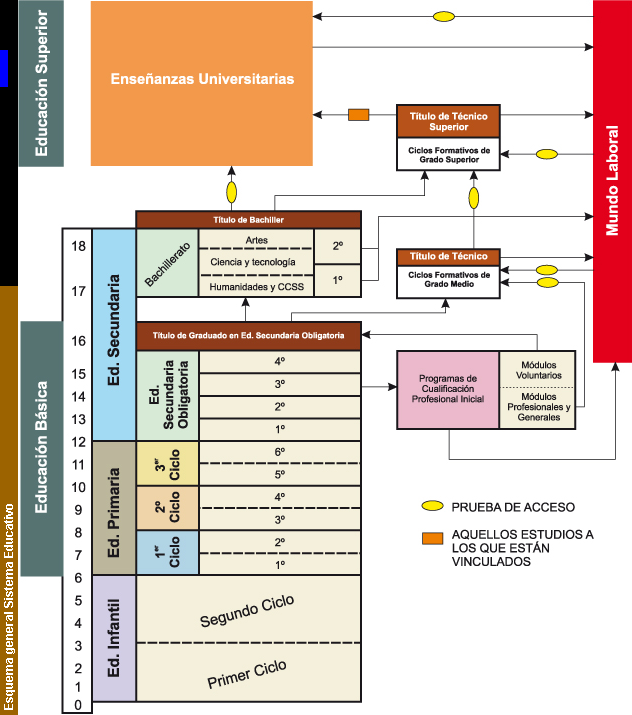
- In the event of late entry into the educational system, academic performance may not adequately represent the cognitive abilities of the individual.
- The absence of grade repetitions is not representative in the current context of academic performance problems, as the current educational system prioritizes the social relationships of the child and encourages adaptations that allow their continuity with the reference group.
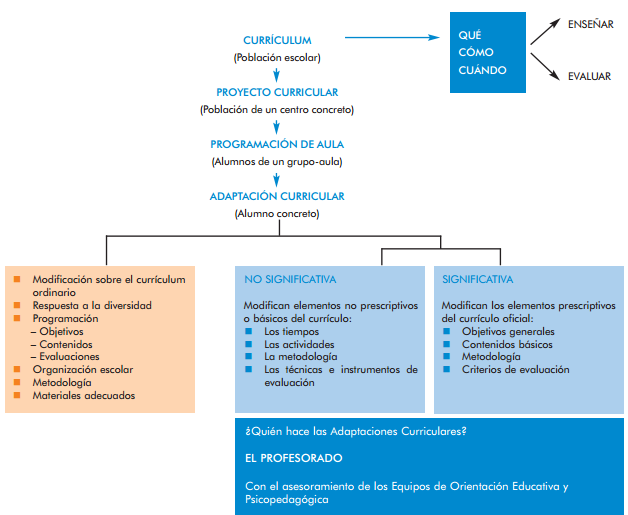
- It is necessary to take into account the presence of curricular adaptations during the primary school stage, and whether these are significant or non-significant.
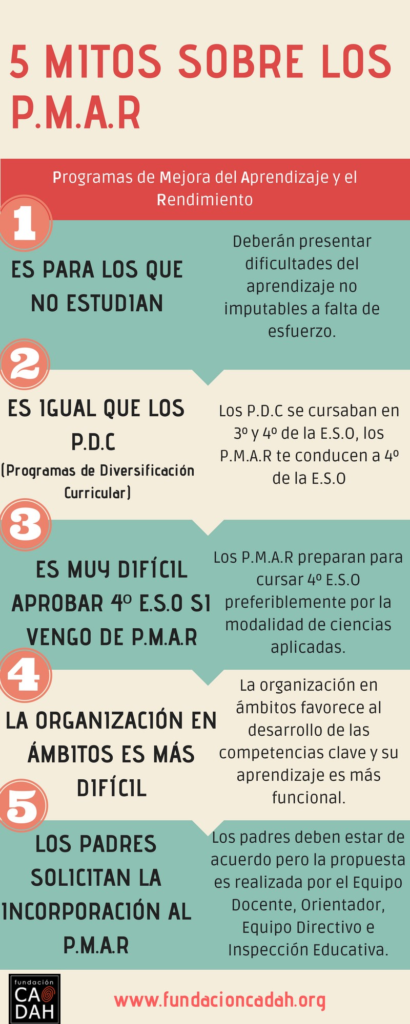
- At the same time, it is necessary to know the programs adapted in secondary school courses (PMAR, learning improvement program of the LOMCE, former curricular diversification of the LOE) or program by "Scopes" (named after families, although in reality it is a methodology applicable to any educational itinerary), which from the LOMLOE is once again called the curricular diversification program or PDC.
- It is necessary to take into consideration the type of school the child attends, for example, whether it is a high-performance school, or whether it is a school of a singular nature (CAES are Centers of Singular Educational Action where students are enrolled who present difficulties in school integration due to being in a disadvantageous situation derived from social, economic, cultural, ethnic, or personal circumstances).
Psychometric assessment.
It must be carried out by a qualified and trained person (psychologist) who participates in the selection and execution of the standardized psychometric test appropriate for the objective pursued.
Test selection.
The selection of the psychometric test is the main source of bias. It must be adjusted according to the demographic parameters of the reference sample, and this information will be provided in the test instructions. Mainly:
- Age. Depending on the subject's age, the test will be designed to evaluate certain abilities.
- Language of administration. The psychometric assessment must be conducted with a test standardized for native speakers of the language in which the test was developed.
- Administration time. Not all tests can be completed in the same number of sessions; some take longer than others.
- Target objective to be measured. Each test is designed to measure a specific variable.
- Outdatedness. Psychometric tests must be renewed every 10 years, as the population they reference changes over time, and so does their cognitive performance. This is known as the Flynn effect.
- Special situations. There are certain individuals who present special situations arising from their disability, which prevent the application of standardized tests to the general population, such as those with congenital blindness or deafness, non-verbal individuals, or those with severe motor disability.
Test administration.
Scrupulous measurement according to the predefined parameters of the test is necessary. For the result to be valid, biases must be controlled.
- Undermeasurement errors may exist. A low score implies poor performance at the time of testing, but it does not always represent the child's optimal performance, as it may have been interfered with by a problem of cooperation, errors in the application of the technique, or other factors.
- Overmeasurement errors may exist. The most frequent bias we must try to avoid is the learning bias, which occurs when we use the same test successively, which facilitates the recall of tasks and improves performance. It is advisable to space out the application of the same cognitive assessment by 1 year to avoid this.
Test interpretation.
Psychometric assessment allows for the analysis of different cognitive domains. The minimum domains for a complete neuropsychological assessment are:
- General intelligence.
- Single-domain functions.
- Executive functions and attention (frontal lobe).
- Language (dominant temporal lobe).
- Memory (temporal lobe).
- Visuospatial (occipital lobe).
- Emotional screening (limbic lobe).
- Multi-domain functions:
- Instrumental learning.
- Reading.
- Writing.
- Mathematical competence.
- Social cognition and social skills.
- Instrumental learning.
Through the analysis of results and knowledge of the specific tasks contained in each test, inferences can be made regarding the specific cognitive functions that are altered.