Since the completion of the human genome project, we have experienced a scientific revolution in the field of applied genetics, which is changing the scientific knowledge of those disciplines that are closely related at an unprecedented speed.
Pediatric neurology is one of the most affected by this genomic revolution, due to the overrepresentation of the central nervous system (and its development) in the genetic code, as a consequence of its complexity and long development time (the largest of all human organs).
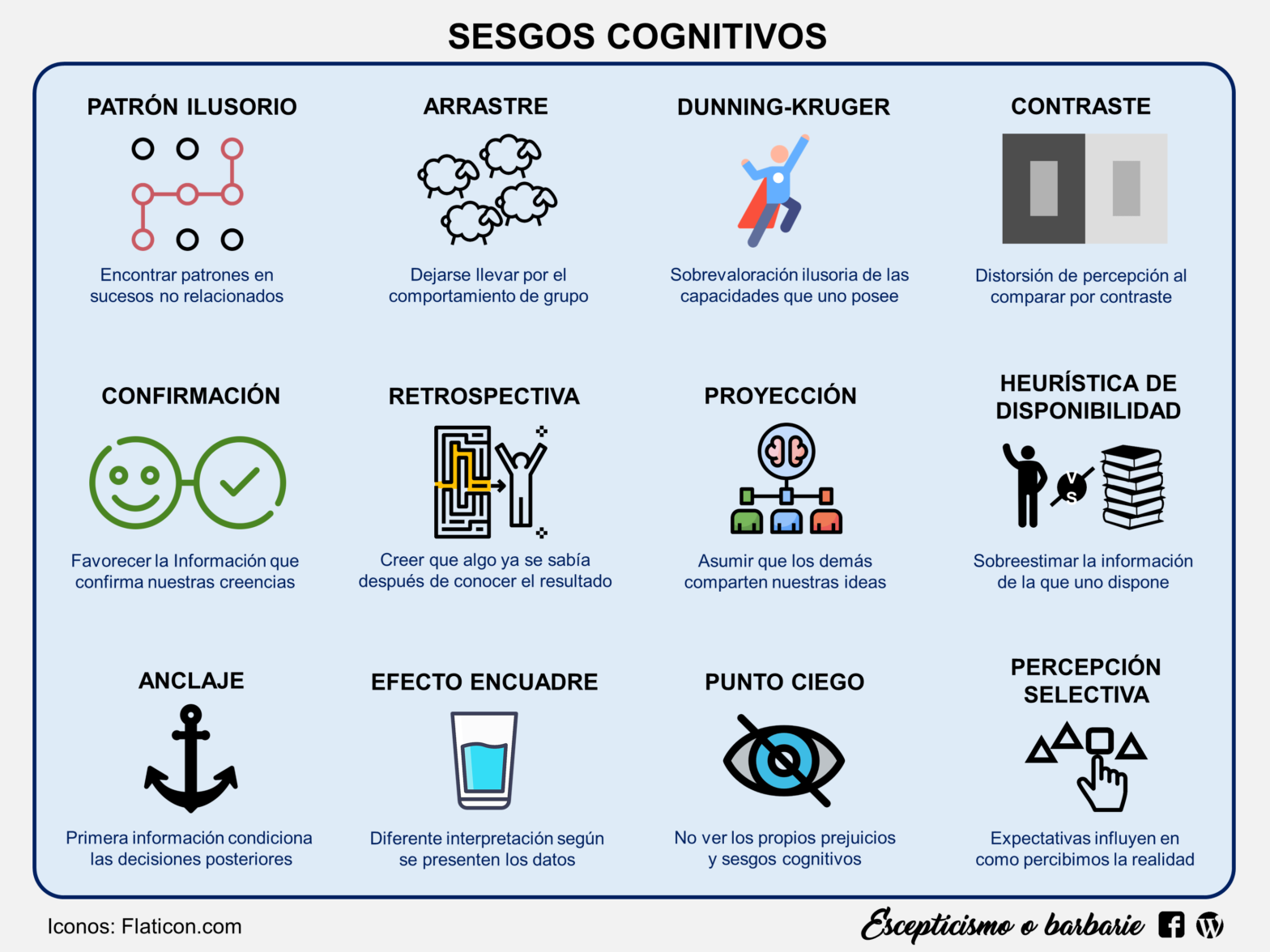
However, the human genome continues to surprise us with its complexity, and we still do not have an explanation for all the biological phenomena that explain neurogenetic diseases. This lack of scientific knowledge should make us be careful when drawing conclusions, since we can incur cognitive biases, such as:
- Confirmation bias: People tend to favor information that confirms their preexisting beliefs and ignore or dismiss information that contradicts them. For example, if we have a family history suggestive of a genetic disease, we may disregard relevant information about a de novo variant, and interpret an inherited genetic variant as more significant.
- Availability bias: We tend to give more weight to information that is easily available, which can lead to overestimating the importance of certain genes or mutations due to media attention or the availability of information about them.
- Representativeness bias: This bias refers to the tendency to judge the likelihood of an event based on how representative it appears of a particular category or prototype, leading to erroneous assumptions about the likelihood of certain diseases or traits based on a person's appearance or stereotypes.
- Anchor bias: People tend to rely too much on the first information they receive when making decisions. In human genetics, this could manifest itself by overvaluing the importance of certain genetic tests or interpreting results disproportionately based on prior information.
- Optimism bias: People tend to believe that we are less likely to experience negative events and more likely to experience positive events. This can influence the perception of the risk of genetic diseases or the interpretation of the implications of genetic test results, such as, for example, that a negative result in a genetic test does not mean that a genetic disease does not exist.
- Authority bias: People tend to trust information provided by authority figures or experts, even if this information is incorrect. In human genetics, this could lead to accepting erroneous or incomplete information from sources considered reliable.
- Hindsight bias: Also known as the "knowledge afterward effect," it is the tendency to view past events as if they had been predictable at the time they occurred. This can lead to erroneous interpretations of genetic causation in situations where genetic information was only discovered after an event.
On the other hand, when we apply scientific knowledge about neurogenetics in clinical practice, we tend to use a cognitive framework or paradigm that can lead us to wrong conclusions. Among the different fallacies that we usually use, are:
- Assumption 1 gene – 1 disease. The idea of “1 gene, 1 disease” is an oversimplification of human genetics. While there are some genetic diseases caused by mutations in a single specific gene, most diseases are the result of complex interactions between multiple genetic and environmental factors. exists genetic heterogeneity y phenotypic heterogeneity, some genes have quantitative behavior, and there may be modulation and interrelation between them, giving rise to consequences that are difficult to predict.
- Asunción 1 genome – 1 individual. The statement “1 genome, 1 individual” is also an oversimplification of human genetics and the genetic diversity present in a single individual. However, reality is more complex, there are multiple situations in which mosaicism genetic (both somatic, constitutional, and germinal), and there are even the chimeras genetics, so it is necessary to take all this variability into account when reaching correct conclusions.
- Assumption of the genome as an immutable and lasting code. Although the human genome is highly stable and passed from generation to generation with great precision, it is not completely immutable and can undergo changes over time due to various reasons. In particular, there are especially dynamic genetic mechanisms, such as:
- The jumping genes, also known as transposable elements or transposons, are DNA sequences that have the ability to move from one position to another within the genome. These elements are responsible for what is called "transposition", a process in which a piece of DNA is cut and inserted elsewhere in the genome, either on the same chromosome or on another chromosome.
- The dynamic mutations, are also another element that can vary over time with the different mitosis. Dynamic mutations are a special type of genetic mutation that involve changes in the length of repetitive DNA sequences in the genome. Repeat length can increase or decrease over generations due to instability in DNA replication. The number of repeats in a particular region of the genome can affect gene function and be associated with various diseases.
- Assumption of the exome = only container of genetic information. In addition to the coding sequences, there are other mechanisms that modulate and regulate the expression of genes, and that can lead to disease, such as epigenome. We often overlook its importance, despite the fact that approximately 98% of the human genome does not directly encode proteins. However, a large part of this non-coding DNA has regulatory, structural and epigenetic functions, although we do not yet have sufficient scientific knowledge about its functioning, it is much more complex and most clinical tools do not allow its study in routine practice.
- Assumption of Mendelian patterns of inheritance as the only form of inheritance. We often forget that there are other inheritance patterns besides the classic autosomal dominant, autosomal recessive and X-linked ones. non-Mendelian patterns of inheritance They refer to the forms of transmission of genetic traits that do not follow Mendel's classical rules, the laws of segregation and independent distribution of alleles, but rather involve more complex genetic phenomena that do not conform to these. Some examples of non-Mendelian inheritance patterns include:
- Codominance: Instead of having one dominant allele and one recessive allele, in co-dominance both alleles are equally expressed in the phenotype of the heterozygous individual. An example is blood group AB, where both alleles A and B are expressed on the surface of red blood cells.
- Incomplete dominance: In this pattern, the heterozygous phenotype shows a mixture of the phenotypes of the homozygous alleles. For example, in the case of the pink flower in certain plant species, a red allele and a white allele give rise to an intermediate pink phenotype.
- Mitochondrial inheritance: Mitochondria, cellular structures related to energy production, have their own DNA. Mitochondrial diseases are inherited from the mother because mitochondria are mainly transmitted through the egg.
- Epigenetic inheritance: Not all inherited characteristics are caused by changes in the DNA sequence. Epigenetic inheritance involves changes in gene expression due to chemical modifications to DNA or histones. These changes can be passed from one generation to the next and affect the inheritance of traits.