
Enfermedades prevenibles mediante la vacunación
Las enfermedades inmunoprevenibles representan una de las principales amenazas para la salud infantil a nivel mundial. Patologías como el sarampión, la poliomielitis, la difteria, el tétanos, la tos ferina y la hepatitis B pueden causar complicaciones graves e incluso la muerte en los niños, especialmente en aquellos menores de cinco años cuyo sistema inmunológico aún se encuentra en desarrollo.
La vacunación durante la infancia constituye una de las intervenciones de salud pública más efectivas y costo-eficientes disponibles. Según la Organización Mundial de la Salud, los programas de inmunización infantil previenen entre 3,5 y 5 millones de muertes cada año. Sin embargo, millones de niños en todo el mundo aún no reciben las vacunas esenciales debido a barreras como la falta de acceso a servicios de salud, la desinformación, los conflictos armados y las desigualdades socioeconómicas.
Las consecuencias de la falta de vacunación no solo afectan a los individuos no inmunizados, sino que también ponen en riesgo a comunidades enteras al reducir la inmunidad colectiva. Los brotes recientes de sarampión en diversas regiones del mundo evidencian cómo la disminución en las tasas de cobertura vacunal puede revertir décadas de progreso en la eliminación de enfermedades.
Fortalecer los sistemas de inmunización, garantizar el acceso equitativo a las vacunas y combatir la desinformación son estrategias fundamentales para proteger a las poblaciones más vulnerables.
Herramientas para monitorear brotes de enfermedades prevenibles
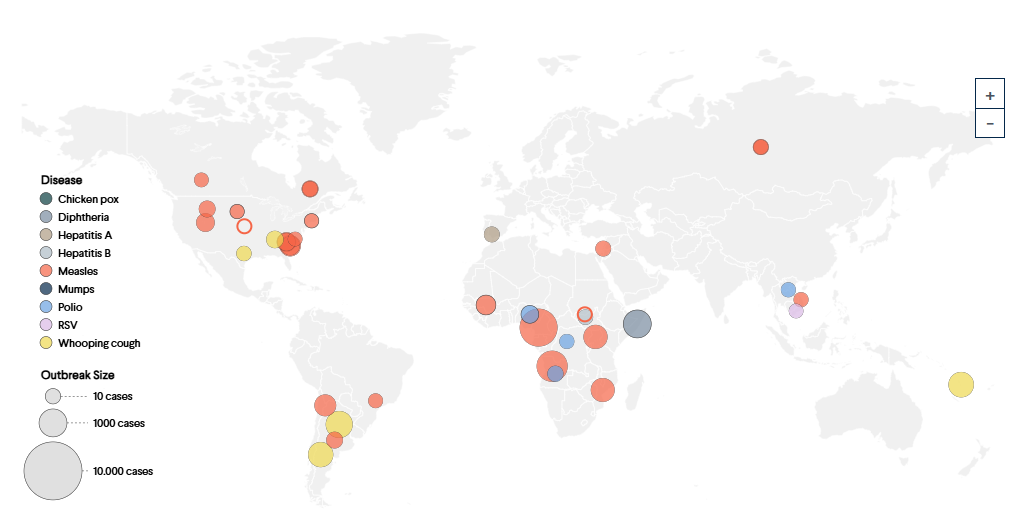
To deepen our understanding of this global problem, tools such as the vaccine-preventable diseases tracker developed by Think Global Health allow us to visualize and monitor the incidence of these pathologies in different regions of the world. This global search engine offers updated data on outbreaks, vaccine coverage rates and epidemiological trends, providing valuable information for both health professionals and public policy makers. Access to this type of resources facilitates the identification of priority areas of intervention and allows the impact of immunization strategies implemented in different countries to be evaluated.
https://www.thinkglobalhealth.org/article/vaccine-preventable-disease-a-global-tracker