
Introduction to Autism Spectrum Disorder (ASD)
The diagnosis of autism spectrum disorder (ASD) is based on the presence of two dimensions of symptoms: the presence of stereotyped and repetitive behaviors, inflexibility and restricted interests, and difficulty with social interaction, non-verbal language and socio-emotional reciprocity.
Stereotyped and Repetitive Behaviors in Animals
Stereotyped and repetitive behaviors are a common characteristic in several species of animals, including the white rhinoceros. These behaviors can range from repetitive circular movements to predictable patterns of behavior.
Romulus: Case of Stereotypy in White Rhinoceros
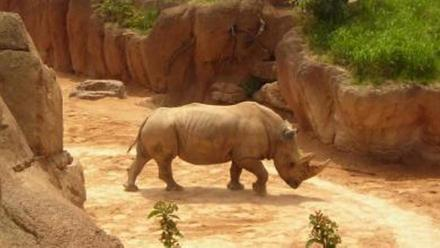
Rómulo, a white rhinoceros from Ceratotherium simum, was born in England in 1979. After 23 years in an old zoo in Valencia, where he lived in a small enclosure, he developed a stereotype consisting of walking in circles continuously.
Video Interpretation: Romulo Spinning
The video 'Romulo Dando Vueltas' clearly shows the stereotypical behavior of Rómulo. This type of behavior can be interpreted as a sign of stress, fear, or an attempt to avoid uncomfortable situations. These stereotypical behaviors may be indistinguishable from neurological and psychiatric conditions in humans, such as autism spectrum disorder.
Transfer from Rómulo to Bioparc of Seville
In 2012, Romulo was transferred to Bioparc in Seville to improve his health. Life in a larger, more modern enclosure, along with an environmental enrichment program, began to show positive results.
Impact of the Environment on Stereotypical Behaviours
Adapting to Romulo's new environment has proven crucial to his recovery. Animal studies suggest that the physical and social environment can significantly influence the development and maintenance of these stereotypic behaviors. The ability to explore a larger environment with multiple sensory stimuli can help reduce or prevent these behaviors.
Evaluation of Romulo in Bioparc
Rómulo has shown a notable improvement in his condition since the transfer. According to the veterinarians and caregivers at Bioparc, in the rhinoceros "there is no longer any trace of stereotypy." This case illustrates how environment and management can influence animal behavior.
Conclusions
This case of Rómulo provides valuable information about how animals can present behaviors similar to those observed in disorders such as ASD. Adaptation to the environment and environmental enrichment can be effective tools to improve the well-being of animals with these behaviors.