

Definition.
Developmental language disorder (DLD) is a condition that affects the acquisition and use of language in children. It is also known as specific language impairment (SLI).
DLD is characterized by persistent difficulties in understanding and/or expressing oral language, which are not explained by other disorders, such as hearing impairment, neurological disorders or intellectual difficulties. These difficulties can manifest themselves in different aspects of language, such as vocabulary, grammar, fluency or understanding instructions.
Children with DLD may have difficulty pronouncing words correctly, constructing grammatically correct sentences, understanding the meaning of words, or following verbal instructions. These language difficulties can affect their academic, social and emotional performance.
The exact causes of TDL are not known with certainty, but it is believed that genetic, neurobiological and environmental factors may be involved. Some children may have a family history of language disorders, suggesting a genetic predisposition.
With appropriate intervention, many children with DLD can improve their language skills and reach a functional level of communication. However, each case is unique and the prognosis may vary. It is essential to address language difficulties early to maximize developmental potential and minimize the long-term impact on the child.
Warning symptoms of language disorder.
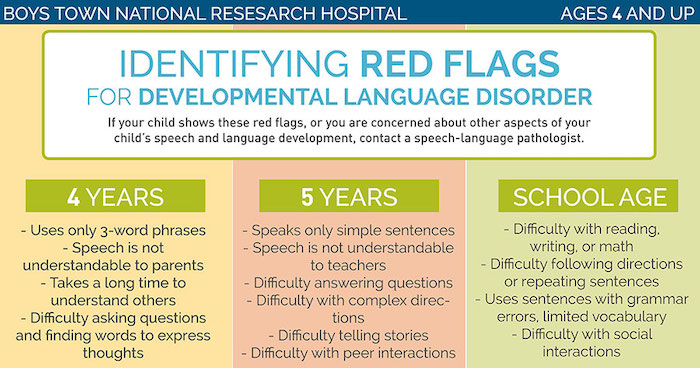
In babies and young children (up to 2 years):
- Lack of babbling: The baby does not make vocal sounds such as "bababa" or "gugugu" after 6 months.
- Absence of communicative gestures: The child does not point, wave his hand or use gestures to communicate.
- Lack of response to verbal stimuli: The baby does not respond to his name or does not show interest in the sounds or voices around him.
In preschool children (3-5 years):
- Limited vocabulary: The child has difficulty learning and remembering new words, resulting in a limited vocabulary for his or her age.
- Persistent pronunciation errors: The child has difficulty pronouncing certain speech sounds correctly, especially those that are common in his or her age group.
- Short and grammatically incorrect sentences: The child has difficulty combining words into grammatically correct sentences and his sentences are short and poorly structured.
- Difficulties following instructions: The child has problems understanding and following simple, sequential verbal instructions.
- Poor story-telling ability: The child shows difficulties in telling coherent and sequential stories, with little narrative structure.
In school-age children (6 years and older):
- Reading comprehension difficulties: The child has difficulties understanding the meaning of what he reads, both in narrative and informational texts.
- Difficulties expressing ideas in writing: The child has problems organizing and expressing his thoughts in writing, showing poor writing in coherence and structure.
- Difficulties in learning foreign languages: The child has difficulties acquiring and learning a new language effectively.
- Difficulties in verbal reasoning: The child has difficulty understanding and answering complex questions or following detailed instructions.
- Difficulties in social interaction: The child has difficulty participating in fluent conversations and maintaining appropriate social interactions due to problems in verbal communication
Differential diagnosis.
Simple language delay refers to a delay in language development without any specific known cause. Children with RSL often show slow progress in their language acquisition, but eventually reach a typical level of language development. They may have temporary difficulties in specific aspects of the language, such as pronunciation or grammar, but these difficulties tend to disappear over time. Children with RSL may benefit from early interventions, such as speech therapy, but do not necessarily have an underlying disorder.
On the other hand, language disorder involves persistent and specific difficulties in language development that cannot be attributed to factors such as hearing impairments, neurological disorders or intellectual difficulties. Children with DLD may have difficulties in multiple aspects of language, such as limited vocabulary, grammatical problems, difficulty forming coherent sentences, or poor comprehension. These difficulties persist over time and may require specialized therapeutic intervention to improve language skills.
The differential diagnosis between RSL and TDL is based on a thorough evaluation of the child's language development and history, as well as the exclusion of other possible causes of language delay.
It is important to note that the differential diagnosis can be complex, since some children may present intermediate characteristics or overlap the symptoms of RSL and DLD. In such cases, diagnosis may require long-term follow-up to obtain a clearer picture of the child's language development.
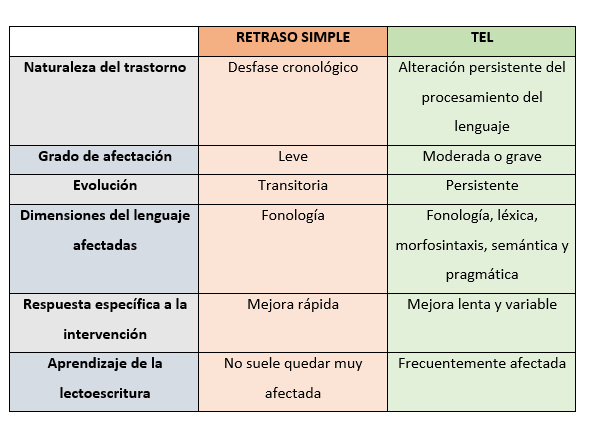
Simple language delay: Chronological lag, 1 year, or a year and a half lag, but with typical errors (dyslalias) and chronological sequence similar to that of a child with normative language.
Language disorder: Non-typical errors in language processing, such as problems with syntax, semantics or pragmatics.
Prerequisites in language development.
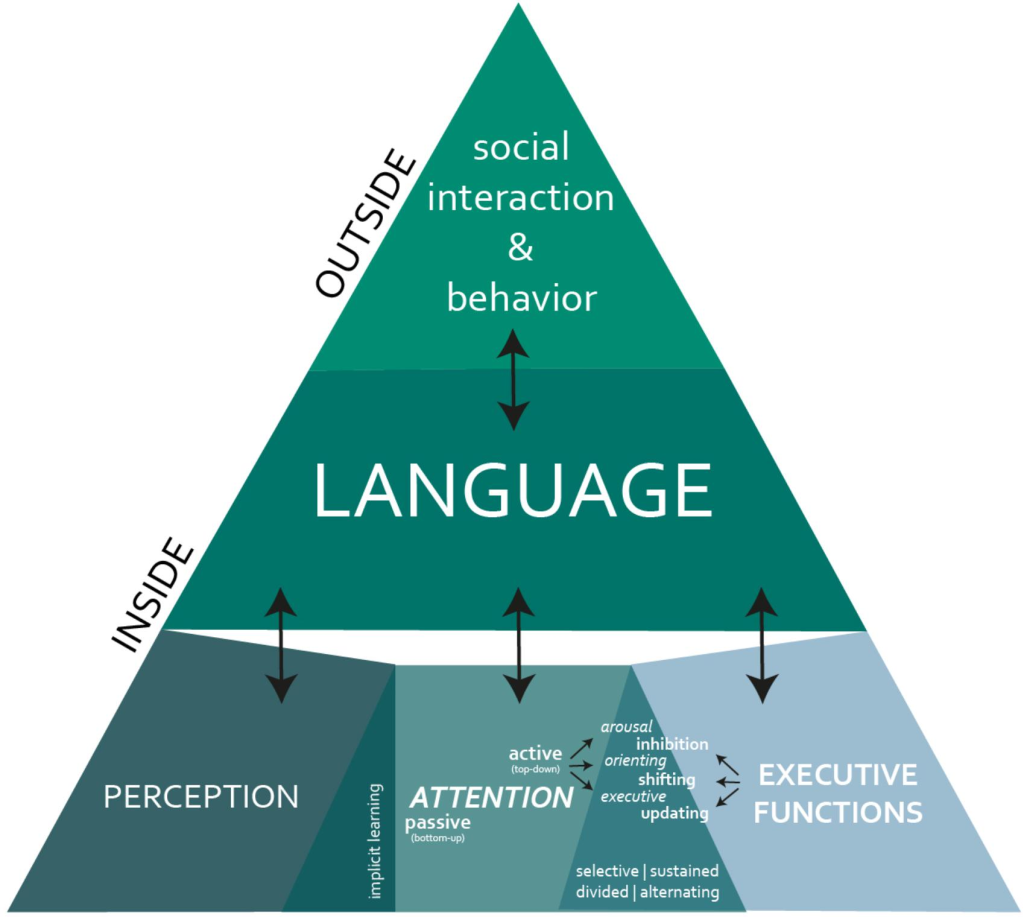
- Attention and concentration: Children must be able to focus their attention on spoken language, both to understand it and to produce it effectively. Sustained attention and the ability to filter out distractions are important for language development.
- Joint attention: Children should be able to engage in social interactions and share attention with others, such as following a person's gaze or pointing to objects of shared interest.
- Oral motor skills: The development of oral motor skills, such as sucking, chewing, and coordination of the muscles of the mouth and tongue, is essential for the production of clear sounds and words.
- Auditory Perception: Children should be able to perceive and distinguish the different speech sounds in their environment. This includes the ability to discriminate similar sounds and recognize rhythmic and melodic patterns in language.
- Cognition and intellectual development: Cognitive development and intellectual skills provide the foundation for language processing and understanding. The development of executive functions is particularly important. This includes skills such as classification, categorization, logical reasoning, and understanding basic concepts.
Risk factors for language disorders.
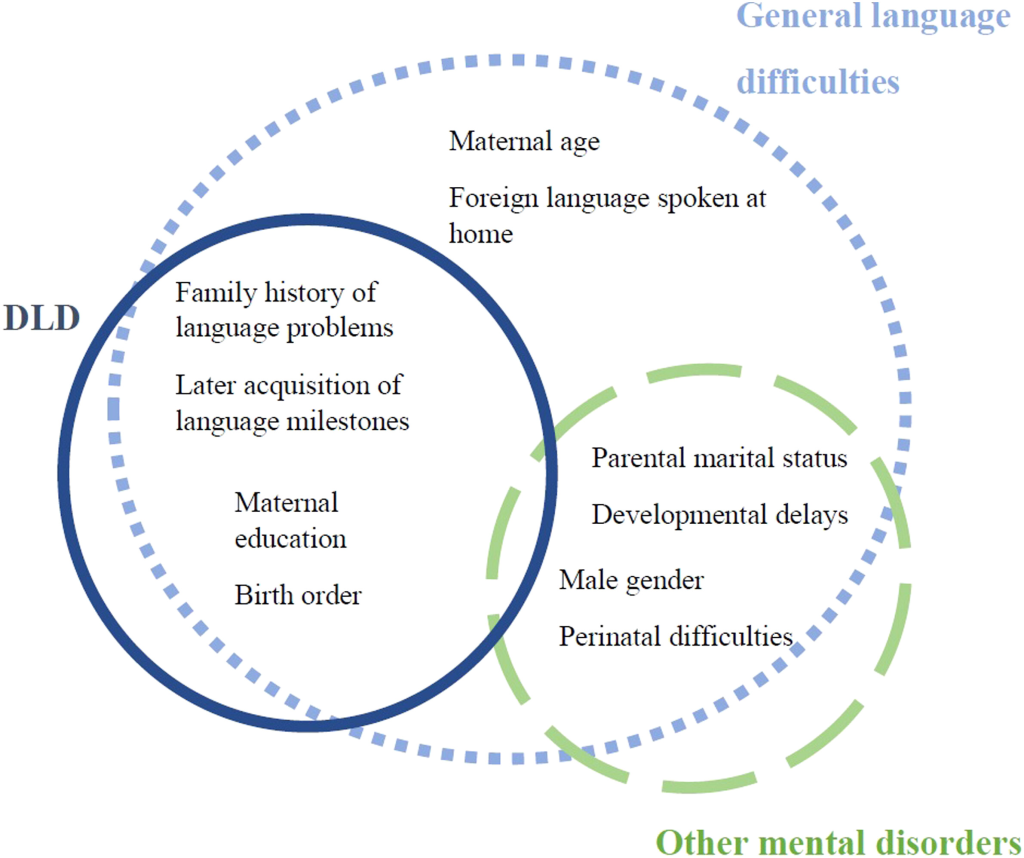
- Family history: A family history of language disorders, speech disorders, or learning difficulties may increase a child's risk of developing a language disorder.
- Genetic factors: There are certain genes that have been associated with an increased risk of language disorders. Studies have found that language disorders tend to run in families and may have a genetic basis.
- Hearing problems: Recurrent hearing loss or hearing problems can negatively affect language development, as children need adequate hearing to acquire and process speech sounds.
- Neurodevelopmental disorders: Some neurodevelopmental disorders, such as global developmental delay, intellectual disability, or autism spectrum disorder (ASD), may be associated with language difficulties.
- Socioeconomic factors: Socioeconomic factors, such as low socioeconomic status, lack of access to quality health services and education, and a disadvantaged socioeconomic background, may increase the risk of language disorders.
- Prematurity or low birth weight: Children born prematurely or with low birth weight may be at increased risk for delays in language development.
- Exposure to adverse environmental factors: Exposure to adverse environmental factors, such as a lack of linguistic stimulation or a chaotic environment, can negatively affect language development in children.
Types of language disorders.
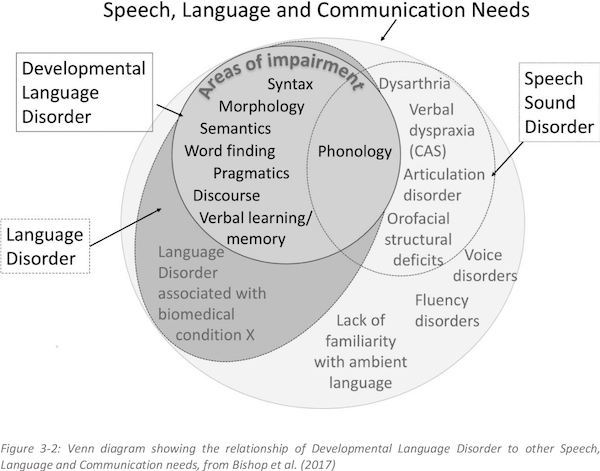
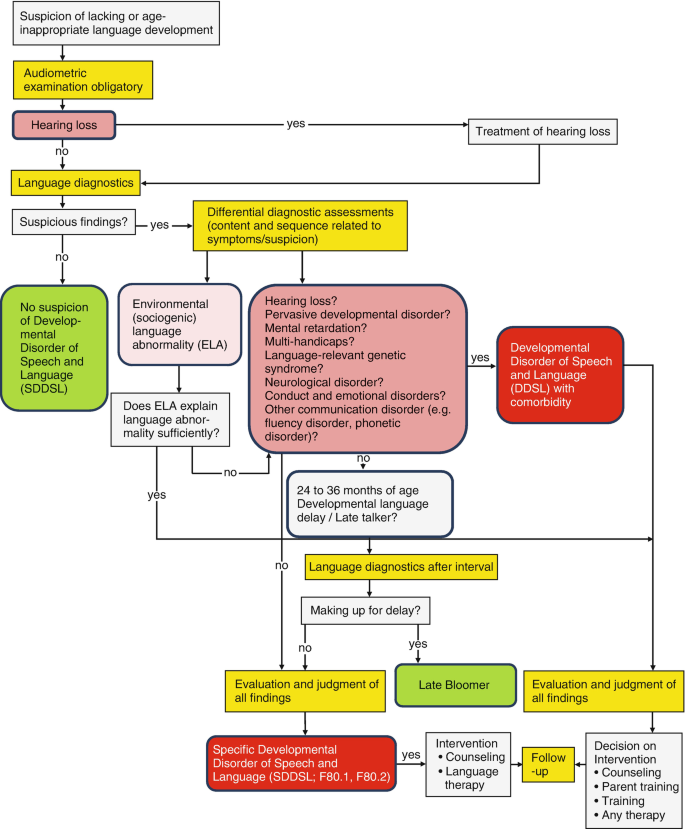
Biomedical evaluation algorithm for language disorders.
AVATEL. Valencian Association of Language Disorders.