

19955111
{19955111:436UEE9K}
1
vancouver
50
default
4527
https://neuropediatoolkit.org/wp-content/plugins/zotpress/
%7B%22status%22%3A%22success%22%2C%22updateneeded%22%3Afalse%2C%22instance%22%3Afalse%2C%22meta%22%3A%7B%22request_last%22%3A0%2C%22request_next%22%3A0%2C%22used_cache%22%3Atrue%7D%2C%22data%22%3A%5B%7B%22key%22%3A%22436UEE9K%22%2C%22library%22%3A%7B%22id%22%3A19955111%7D%2C%22meta%22%3A%7B%22creatorSummary%22%3A%22Kyle%20et%20al.%22%2C%22parsedDate%22%3A%222018%22%2C%22numChildren%22%3A1%7D%2C%22bib%22%3A%22%26lt%3Bdiv%20class%3D%26quot%3Bcsl-bib-body%26quot%3B%20style%3D%26quot%3Bline-height%3A%201.35%3B%20%26quot%3B%26gt%3B%5Cn%20%20%26lt%3Bdiv%20class%3D%26quot%3Bcsl-entry%26quot%3B%20style%3D%26quot%3Bclear%3A%20left%3B%20%26quot%3B%26gt%3B%5Cn%20%20%20%20%26lt%3Bdiv%20class%3D%26quot%3Bcsl-left-margin%26quot%3B%20style%3D%26quot%3Bfloat%3A%20left%3B%20padding-right%3A%200.5em%3B%20text-align%3A%20right%3B%20width%3A%201em%3B%26quot%3B%26gt%3B1.%26lt%3B%5C%2Fdiv%26gt%3B%26lt%3Bdiv%20class%3D%26quot%3Bcsl-right-inline%26quot%3B%20style%3D%26quot%3Bmargin%3A%200%20.4em%200%201.5em%3B%26quot%3B%26gt%3BKyle%20SM%2C%20Vashi%20N%2C%20Justice%20MJ.%20Rett%20syndrome%3A%20a%20neurological%20disorder%20with%20metabolic%20components.%20Open%20Biol%20%5BInternet%5D.%202018%20%5Bcited%202023%20Feb%2019%5D%3B8%282%29%3A170216.%20Available%20from%3A%20%26lt%3Ba%20class%3D%26%23039%3Bzp-ItemURL%26%23039%3B%20href%3D%26%23039%3Bhttps%3A%5C%2F%5C%2Froyalsocietypublishing.org%5C%2Fdoi%5C%2F10.1098%5C%2Frsob.170216%26%23039%3B%26gt%3Bhttps%3A%5C%2F%5C%2Froyalsocietypublishing.org%5C%2Fdoi%5C%2F10.1098%5C%2Frsob.170216%26lt%3B%5C%2Fa%26gt%3B%26lt%3B%5C%2Fdiv%26gt%3B%5Cn%20%20%26lt%3B%5C%2Fdiv%26gt%3B%5Cn%26lt%3B%5C%2Fdiv%26gt%3B%22%2C%22data%22%3A%7B%22itemType%22%3A%22journalArticle%22%2C%22title%22%3A%22Rett%20syndrome%3A%20a%20neurological%20disorder%20with%20metabolic%20components%22%2C%22creators%22%3A%5B%7B%22creatorType%22%3A%22author%22%2C%22firstName%22%3A%22Stephanie%20M.%22%2C%22lastName%22%3A%22Kyle%22%7D%2C%7B%22creatorType%22%3A%22author%22%2C%22firstName%22%3A%22Neeti%22%2C%22lastName%22%3A%22Vashi%22%7D%2C%7B%22creatorType%22%3A%22author%22%2C%22firstName%22%3A%22Monica%20J.%22%2C%22lastName%22%3A%22Justice%22%7D%5D%2C%22abstractNote%22%3A%22Rett%20syndrome%20%28RTT%29%20is%20a%20neurological%20disorder%20caused%20by%20mutations%20in%20the%20X-linked%20gene%20methyl-CpG-binding%20protein%202%20%28%5Cn%20%20%20%20%20%20%20%20%20%20%20%20%20%20MECP2%5Cn%20%20%20%20%20%20%20%20%20%20%20%20%20%20%29%2C%20a%20ubiquitously%20expressed%20transcriptional%20regulator.%20Despite%20remarkable%20scientific%20progress%20since%20its%20discovery%2C%20the%20mechanism%20by%20which%5Cn%20%20%20%20%20%20%20%20%20%20%20%20%20%20MECP2%5Cn%20%20%20%20%20%20%20%20%20%20%20%20%20%20mutations%20cause%20RTT%20symptoms%20is%20largely%20unknown.%20Consequently%2C%20treatment%20options%20for%20patients%20are%20currently%20limited%20and%20centred%20on%20symptom%20relief.%20Thought%20to%20be%20an%20entirely%20neurological%20disorder%2C%20RTT%20research%20has%20focused%20on%20the%20role%20of%5Cn%20%20%20%20%20%20%20%20%20%20%20%20%20%20MECP2%5Cn%20%20%20%20%20%20%20%20%20%20%20%20%20%20in%20the%20central%20nervous%20system.%20However%2C%20the%20variety%20of%20phenotypes%20identified%20in%5Cn%20%20%20%20%20%20%20%20%20%20%20%20%20%20Mecp2%5Cn%20%20%20%20%20%20%20%20%20%20%20%20%20%20mutant%20mouse%20models%20and%20RTT%20patients%20implicate%20important%20roles%20for%20MeCP2%20in%20peripheral%20systems.%20Here%2C%20we%20review%20the%20history%20of%20RTT%2C%20highlighting%20breakthroughs%20in%20the%20field%20that%20have%20led%20us%20to%20present%20day.%20We%20explore%20the%20current%20evidence%20supporting%20metabolic%20dysfunction%20as%20a%20component%20of%20RTT%2C%20presenting%20recent%20studies%20that%20have%20revealed%20perturbed%20lipid%20metabolism%20in%20the%20brain%20and%20peripheral%20tissues%20of%20mouse%20models%20and%20patients.%20Such%20findings%20may%20have%20an%20impact%20on%20the%20quality%20of%20life%20of%20RTT%20patients%20as%20both%20dietary%20and%20drug%20intervention%20can%20alter%20lipid%20metabolism.%20Ultimately%2C%20we%20conclude%20that%20a%20thorough%20knowledge%20of%20MeCP2%26%23039%3Bs%20varied%20functional%20targets%20in%20the%20brain%20and%20body%20will%20be%20required%20to%20treat%20this%20complex%20syndrome.%22%2C%22date%22%3A%2202%5C%2F2018%22%2C%22section%22%3A%22%22%2C%22partNumber%22%3A%22%22%2C%22partTitle%22%3A%22%22%2C%22DOI%22%3A%2210.1098%5C%2Frsob.170216%22%2C%22citationKey%22%3A%22%22%2C%22url%22%3A%22https%3A%5C%2F%5C%2Froyalsocietypublishing.org%5C%2Fdoi%5C%2F10.1098%5C%2Frsob.170216%22%2C%22PMID%22%3A%22%22%2C%22PMCID%22%3A%22%22%2C%22ISSN%22%3A%222046-2441%22%2C%22language%22%3A%22en%22%2C%22collections%22%3A%5B%22AV4DY38Y%22%5D%2C%22dateModified%22%3A%222026-07-15T22%3A40%3A44Z%22%7D%7D%5D%7D
1.
Kyle SM, Vashi N, Justice MJ. Rett syndrome: a neurological disorder with metabolic components. Open Biol [Internet]. 2018 [cited 2023 Feb 19];8(2):170216. Available from: https://royalsocietypublishing.org/doi/10.1098/rsob.170216
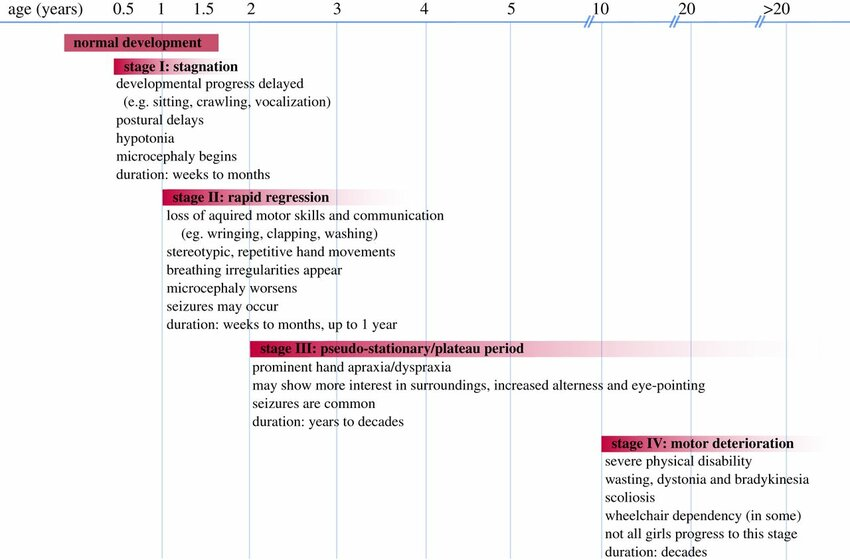
Rett syndrome, a neurodevelopmental disorder linked to the X chromosome (MECP2 gene), typically progresses through four defined clinical stages that mark its developmental trajectory:
- Stage I (Early Onset – 6 to 18 months): Subtle slowing of development, loss of interest in play, and slowing of head growth.
- Stage II (Rapid Destruction – 1 to 4 years): Rapid regression of language and voluntary use of the hands, appearance of characteristic manual stereotypies (hand washing), irritability and breathing disorders while awake.
- Stage III (Pseudostationary – 2 to 10 years): Stabilization of motor symptoms. It highlights apraxia, epileptic seizures and progressive scoliosis, although eye contact (eye communication) improves.
- Stage IV (Late Motor Impairment – older than 10 years): Loss of mobility or ambulation if present, rigidity, spasticity, muscle atrophy and generalized weakness. Cognitive and ocular communication functions are usually preserved in this stage.