

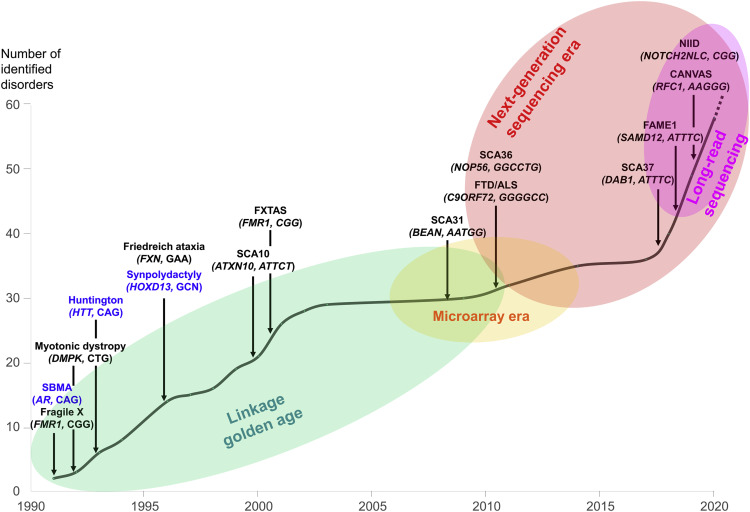
1. Klassifizierung nach Größe der Einheit
- STR (Mikrosatelliten): 1–6 pb → Fall aus der neurologischen Pathologie
- VNTR (im weiteren Sinne): variable Anzahl von Exemplaren, größere Einheit
- Klassische Minisatelliten: 10–60 Basenpaare (INS, MUC1)
- Makrosatelliten: Tausende von pb – dasselbe Prinzip (variable Anzahl von Kopien), wesentlich größere Einheit (FSHD/D4Z4)
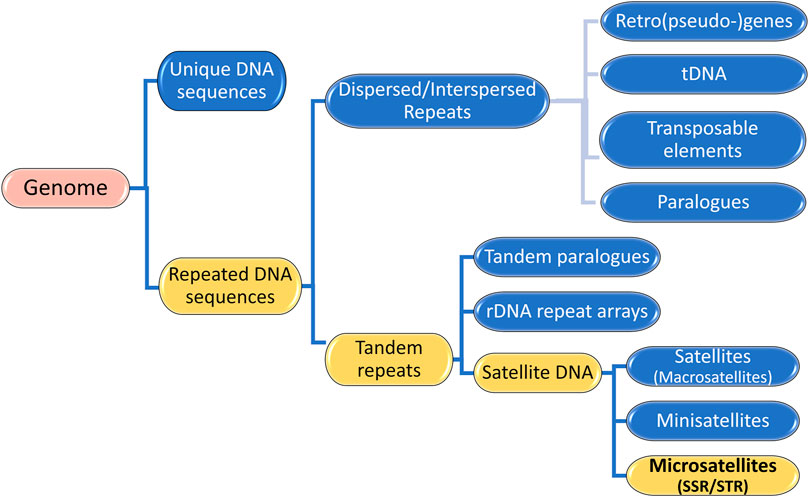
2. Warum sie instabil sind (allgemeiner Mechanismus)
- Verschiebung der DNA-Polymerase während der Replikation
- Hebra im Entstehen löst sich auf und bildet sich in einem versetzten Register neu → Schleife
- Schleife am Anfangsfaden → Expansion
- Schlaufe aus Formgarn → Kontraktion
- Je größer die ursprüngliche Länge, desto größer die Wahrscheinlichkeit einer Schleife → nichtlineare Instabilität jenseits eines kritischen Schwellenwerts (normal → Vormutation → vollständige Mutation)
Klinische Folge: genetische Antizipation = phänotypische Manifestation dieser zunehmenden meiotischen Instabilität (väterliche oder mütterliche Verzerrung, je nach Krankheit).
3. Drei Mechanismen je nach Lage der Wiederholung (STR-Block)
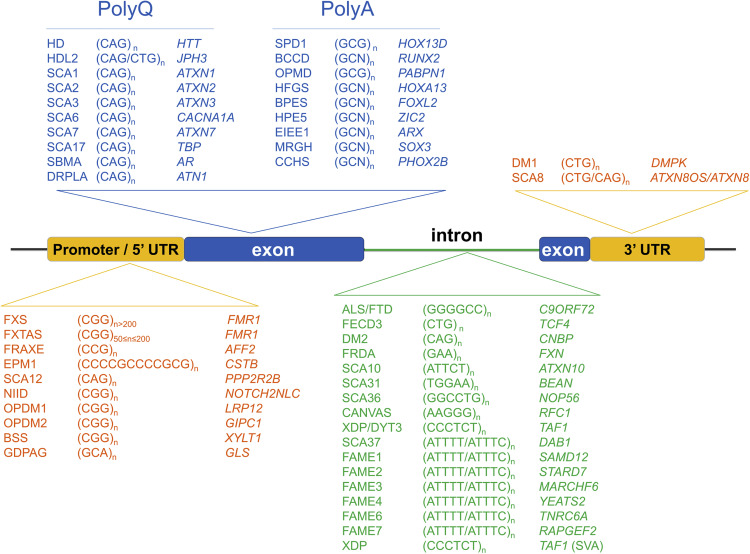
A) Kodierendes Exon, Tripletts (CAG = PolyQ)
- Anormales Protein mit einer Polyglutamin-Kette
- Fehlerhafte Faltung → intranukleäre Aggregation
- Toxischer Funktionsgewinn, dominant
- Beispiele: Huntington, SCAs, Kennedy (X-chromosomale Vererbung)
B) Nicht-kodierender Bereich (UTR, Intron), starke Ausdehnung
- Epigenetische Stilllegung → Hypermethylierung → Funktionsverlust (Fragiles-X-Syndrom, Friedreich-Syndrom)
- RNA-Toxizität → Bindung von Spleißproteinen durch Boten-RNA mit expandierter Wiederholung (myotonisch, C9orf72)
Durch STR verursachte neurologische Erkrankungen.
| Abgekürzter Phänotyp (MIM-Nummer) | Gen | Art der Vererbung | Motiv wiederholen | Standort auf Gene | Pathogene Wiederholungszahla | Chromosom | Koordinaten (hg38) | Klinischer Phänotyp | Referenzen | |
|---|---|---|---|---|---|---|---|---|---|---|
| C9-FTD C9-ALS (#10550) | C9orf72 | ANZEIGE. | GGGGCC | 5'-Region | 24–4000 | chr9 | 27573485 | 27573546 | Frontotemporale Demenz, Amyotrophe Lateralsklerose | [32, 47, 65] |
| LEINWAND (#614575) | RFC1 | A.R. | (AAGGG)400–2000 (ACAGG)exp AAAAG (normal) | Einführung 2 | 400–2000 | chr4 | 39348425 | 39348483 | Kleinhirnataxie, Neuropathie und vestibuläres Areflexie-Syndrom | [11, 28, 138] |
| DM1 (#160900) | DMPK | ANZEIGE. | CTG (Unterbrechungen: CCG) | 3‘-Region | 50–10.000 | chr19 | 45770205 | 45770266 | Myotone Dystrophie 1 | [60, 176] |
| DM2 (#602668) | CNBP (ZNF9) | ANZEIGE. | CCTG | Einleitung 1 | 50–11.000 | chr3 | 129172577 | 129172656 | Myotone Dystrophie 2 | [176] |
| DRPLA (#125370) | ATN1 | ANZEIGE. | CAG | Exon 5 | 49–93 | chr12 | 6936717 | 6936775 | Dentatorubral-pallidoluysische Atrophie | [78] |
| EIEE1/XLID (#308350) (#300419) (#300215) | ARX | XL | GCC | Exon 2 | 17–27 | chrX | 25013654 | 25013697 | Klinisches Krankheitsspektrum einschließlich entwicklungsbedingter und epileptischer Enzephalopathie 1, Hydranenzephalie mit abnormalen Genitalien, X-chromosomaler Lissenzephalie 2 und X-chromosomaler geistiger Behinderung 29 | [73, 150] |
| FAME1 (#601068) | SAMD12 | ANZEIGE. | TTTCA innerhalb der TTTTA-Wiederholungsregion | Einführung 4 | 105–3680 | chr8 | 118366813 | 118366918 | Familiäre myoklonische Epilepsie bei Erwachsenen 1 | [22, 68] |
| RUHM2 (#607876) | STARD7 | ANZEIGE. | ATTTC innerhalb der ATTTT-Wiederholungsregion | Einleitung 1 | 150–460 | chr2 | 96197067 | 96197124 | Familiäre myoklonische Epilepsie bei Erwachsenen 2 | [27] |
| RUHM3 (#613608) | MÄRZF6 | ANZEIGE. | TTTCA innerhalb der TTTTA-Wiederholungsregion | Einleitung 1 | 700–1035 | chr5 | 10356339 | 10356411 | Familiäre myoklonische Epilepsie bei Erwachsenen 3 | [40] |
| RUHM6 (#618074) | TNRC6A | ANZEIGE. | TTTCA innerhalb der TTTTA-Wiederholungsregion | Einleitung 1 | ? (nur 1 Familie) | chr16 | 24613439 | 24613532 | Familiäre myoklonische Epilepsie bei Erwachsenen 6 | [68] |
| RUHM7 (#618075) | RAPGEF2 | ANZEIGE. | TTTCA innerhalb der TTTTA-Wiederholungsregion | Einleitung 14 | ? (nur 1 Familie) | chr4 | 159342527 | 159342618 | Familiäre myoklonische Epilepsie bei Erwachsenen 7 | [68] |
| FRAXE (#309548) | FMR2 (AFF2) | XLR | GCC | 5'-Region | > 200 | chrX | 148500605 | 148500753 | Geistige Behinderung, X-chromosomal, FRAXE-Typ | [53] |
| FRDA (#229300) | FXN | A.R. | GAA | Einleitung 1 | 66–1300 | chr9 | 69037275 | 69037314 | Friedreich-Ataxie | [5, 19, 162] |
| FXS (#300624) FXTAS (#300623) | FMR1 | XL | CGG | 5'-Region | 200–3000 55–200 | chrX | 147911979 | 147912111 | Fragiles-X-Syndrom Fragiles X-Tremor/Ataxie-Syndrom, vorzeitiges Ovarialversagen 1 | [162] [56] |
| HD (#143100) | HTT | ANZEIGE. | CAG (Unterbrechungen: CAA) | Exon 1 | 36–250 | chr4 | 3074876 | 3074941 | Huntington-Krankheit | [96, 101] |
| HDL1 (#603218) | PRNP | ANZEIGE. | 24-Base Oktapeptid PHGGGWGQ | Exon 2 | 8–14 | chr20 | 4699379 | 4699380 | Huntington-ähnliche Krankheit 1 | [108] |
| HDL2 (#606438) | JPH3 | ANZEIGE. | CTG | Exon 2A | 40–59 | chr16 | 87604283 | 87604329 | Huntington-ähnliche Krankheit 2 | [62] |
| HMN | VWA1 | A.R. | GGCCGGCGAGC | Exon 1 | 3 | chr1 | 1435799 | 1435820 | Hereditäre axonale motorische Neuropathie | [121] |
| NIID (#603472) | NOTCH2NLC | ANZEIGE. | CGG | 5′-Region | 66–517 | chr1 | 149390803 | 149390842 | Neuronale intranukleäre Einschlusserkrankung | [55, 118, 146] |
| OPDM1 (#164310) | LRP12 | ANZEIGE. | CGG | 5′-Region | 90–130 | chr8 | 104588965 | 104588999 | Okulopharyngodistale Myopathie | [69] |
| OPDM2 (#618940) | GIPC1 | ANZEIGE. | CGG | 5'-Region | 70–164 | chr19 | 14496029 | 14496104 | Okulopharyngodistale Myopathie | [172] |
| OPMD (#164300) | PABPN1 | ANZEIGE. | G.C.G. | Exon 1 | 7–18 | chr14 | 23321472 | 23321511 | Okulopharyngeale Muskeldystrophie | [15, 129] |
| OPML1 (#618637) | NUTM2B-AS1 | ANZEIGE. | CGG | 5′-Region | 16–160 | chr10 | 79826364 | 79826403 | Okulopharyngeale Myopathie mit Leukenzephalopathie 1 | [69] |
| SBMA (#313200) | A.R. | XLR | CAG | Exon 1 | 38–68 | chrX | 67545317 | 67545419 | Spinale und Bulbäre Muskelatrophie Kennedy (Kennedy-Krankheit) | [44, 82, 147] |
| SCA1 (#164400) | ATXN1 | ANZEIGE. | CAG (Unterbrechungen: CAT) | Exon 8 | 39–91 | chr6 | 16327636 | 16327723 | Spinozerebelläre Ataxie 1 | [120, 141] |
| SCA2 (#183090) | ATXN2 | ANZEIGE. | CAG (Unterbrechungen: CAA, CGG, CGC) | Exon 1 | 33–200 (29–32 erhöhtes ALS-Risiko) | chr12 | 111598950 | 111599019 | Spinozerebelläre Ataxie 2 | [18, 133, 141, 148] |
| SCA3 (#109150) | ATXN3 | ANZEIGE. | CAG | Exon 10 | 53–87 | chr14 | 92071011 | 92071052 | Spinozerebelläre Ataxie 3 | [74] |
| SCA6 (183086) | CACNA1A | ANZEIGE. | CAG | Exon 47 | 19–33 | chr19 | 13207858 | 13207897 | Spinozerebelläre Ataxie 6 | [141, 181] |
| SCA7 (#164500) | ATXN7 | ANZEIGE. | CAG | Exon 1 | 34–460 | chr3 | 63912685 | 63912716 | Spinozerebelläre Ataxie 7 | [18, 30] |
| SCA8 (#608768) | ATXN8 | ANZEIGE. | CAG/TAG | 3’UTR | 74–1300 | Chr.13 | 70139383 | 70139428 | Spinozerebelläre Ataxie 8 | [79, 141, 155] |
| SCA10 (#603516) | ATXN10 | ANZEIGE. | ATTCT (Unterbrechungen: ATCCT) | Einführung 9 | 280–4500 | chr22 | 45795355 | 45795424 | Spinozerebelläre Ataxie 10 | [88, 100, 141] |
| SCA12 (#604326) | PPP2R2B | ANZEIGE. | CAG | 5'-Region | 51–78 | chr5 | 146878729 | 146878758 | Spinozerebelläre Ataxie 12 | [63, 94, 141] |
| SCA17 (#607136) | TBP | ANZEIGE. | CAG (Unterbrechungen: CAT, CAA) | Exon 3 | 43–66 | chr6 | 170561907 | 170562017 | Spinozerebelläre Ataxie 17, Huntington-ähnliche 4 | [97, 115, 141] |
| SCA31 (#117210) | BOHNE1 | ANZEIGE. | TGGAA innerhalb der TAAAA- und TAGAA-Wiederholungsregion | Einführung/ Intergene Region | 500–760 (> 110 TGGAA-Wiederholungen) | chr16 | 66495475 | 66495509 | Spinozerebelläre Ataxie 31 | [134] |
| SCA36 (#614153) | NOP56 | ANZEIGE. | GGCCTG | Einleitung 1 | 650–2500 | chr20 | 2652733 | 2652775 | Spinozerebelläre Ataxie 36 | [77] |
| SCA37 (#615945) | DAB1 | ANZEIGE. | ATTTC innerhalb (ATTTT)7–400 Bereich wiederholen | 5'-Region | 31–75 | chr1 | 57367044 | 57367125 | Spinozerebelläre Ataxie 37 | [139] |
| ULD (#254800) | CSTB | A.R. | CCCCGCCCCGCG | Stromaufwärts 5’UTR | 30–125 | chr21 | 43776444 | 43776479 | Progressive myoklonische Epilepsie 1A (Unverricht- und Lundborg-Krankheit) | [87, 91] |
aDiese Bereiche variieren zwischen den Studien und häufig ist die Obergrenze unbekannt. Es ist wichtig zu beachten, dass diese nur potenziell pathogen sind. Es gibt einen kleinen Teilbereich (< 1 %) der gesunden Kontrollpopulation, der erweiterte Allele ohne klinische Manifestationen aufweist. Ebenso gibt es Allele, die unter dem angegebenen Bereich liegen und intermediäre Allele und Prämutationssyndrome aufweisen können
Angeborene und Entwicklungskrankheiten, die durch STR verursacht werden.
| Phänotyp (OMIM#) | Gen | Motiv | Pathogene Wiederholungszahl | Standort | (hg38) | Referenzen | ||
|---|---|---|---|---|---|---|---|---|
| BPES (#110100) | FOXL2 | G.C.G. | 22–24 | Exon | chr3 | 138946022 | 138946062 | [116] |
| CCHS (#209880) | PHOX2B | G.C.G. | 24–33 | Exon | chr4 | 41745976 | 41746022 | [7] |
| DBQD2 (#615777) | XYLT1 | GGC | 100–800 | 5'-Region | chr16 | 17470869 | 17470967 | [86] |
| FECD3 (#613267) | TCF4 | TGC | > 50 | Einführung | chr18a | 55222184a | 55635956a | [167] |
| BIPAG (#618412) | GLS | GCA | > 300 | 5'-Region | chr2 | 190880873 | 190880920 | [159] |
| H.F.G. (#140000) | HOXA13 | G.C.G. | 24–26 | Exon | chr7 | 27199827 | 27199967 | [50] |
| HPE5 (#609637) | ZIC2 | G.C.G. | 25 | Exon | Chr.13 | 99985449 | 99985494 | [17] |
| HSAN8 (#616488) | PRDM12 | G.C.G. | 18–19 | Exon | chr9 | 130681606 | 130681641 | [23] |
| SPD1 (#186000) | HOXD13 | G.C.G. | 22–29 | Exon | chr2 | 176093058 | 176093099 | [2] |
| XLMR (#300123) | SOX3 | G.C.G. | 15–26 | Exon | chr3 | 181712415 | 181712456 | [89] |
aOrt des gesamten Gens aufgeführt
4. VNTR-Block (im weiteren Sinne)
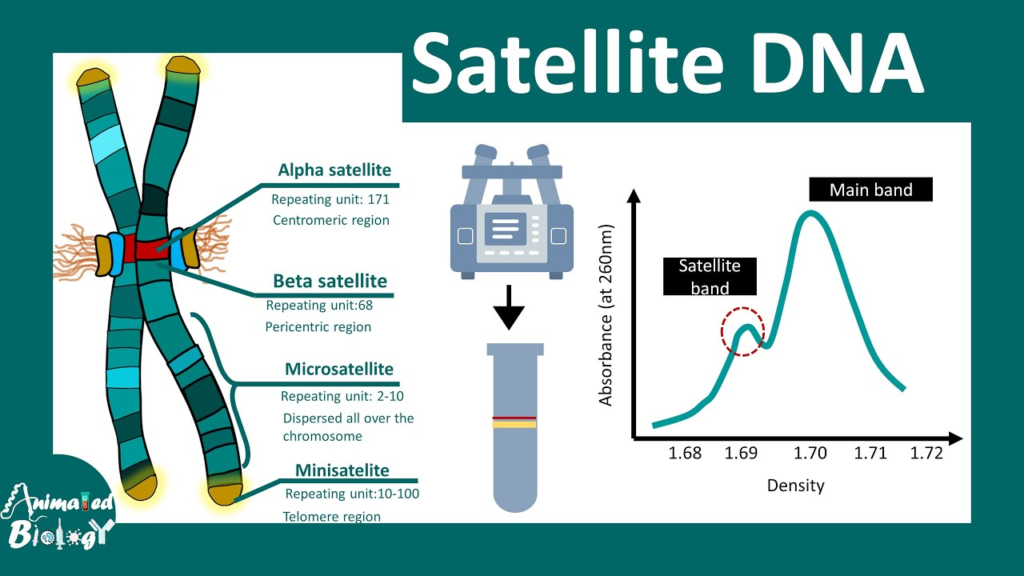
Klassische Minisatelliten
- Veränderung der Kopienzahl ohne abrupte pathogene Schwelle
- Sie modulieren das polygenetische Risiko (INS → Typ-1-Diabetes) oder verursachen eine strukturelle Erkrankung (MUC1 → ADTKD)
- Historische Grundlagen des forensischen „DNA-Fingerprinting“
Makrosatelliten
— FSHD als paradigmatischer Fall
- D4Z4 (Subtelomer 4q35): 3,3-kb-Einheit
- Normal: 11–100 Kopien / Pathologisch: ≤10 Kopien (FSHD1) — Kontraktion, keine Erweiterung
- Chromatin-Entpackung → Aufhebung der Repression von DUX4 (im erwachsenen Muskel normalerweise stillgelegt) → Toxizität
- Erfordert den permissiven Haplotyp 4qA (die gleiche Kontraktion bei 4qB führt nicht zu einer Erkrankung)
- FSHD2: normales Array, aber Mutation in SMCHD1 → dasselbe Ergebnis (Aufhebung der DUX4-Repression) über den trans-Weg, nicht über die cis-Kontraktion
- Es handelt sich nicht um klassische genetische Vorwegnahme (epigenetischer Mechanismus, kein Wiederholungswettlauf)
- Ja, es gibt eine kleine, aber wichtige Gruppe von Erkrankungen, die mit FSHD den „atypischen“ Mechanismus gemeinsam haben (große Wiederholungssequenz, kein klassischer Mikrosatellit und/oder epigenetischer Mechanismus anstelle einer direkten Toxizität). Die für dein Schema relevantesten sind:
– ICF-Syndrom (Immundefekt, zentromerale Instabilität, Gesichtsanomalien)
- Betrifft die Satellitenwiederholungen 2 und 3 (perizentromere Sequenzen, keine D4Z4, aber dasselbe Prinzip von Makrosatelliten/repetitivem Heterochromatin)
- Mechanismus: Mutationen in DNMT3B (o ZBTB24, CDCA7, HELLS) → Hypomethylierung diese wiederholten Regionen → perizentromere Dekondensation → chromosomale Instabilität
- Es handelt sich praktisch um das autosomal-rezessive Äquivalent des FSHD2-Mechanismus: Es versagt der Mechanismus, der das repetitive Heterochromatin stillgelegt hält, anstatt dass die Wiederholung selbst versagt.
—- Progressive myoklonische Epilepsie Typ 1 (Unverricht-Lundborg).
- Gen CSTB (Cystatin B)
- Wiederholung Dodekamera (12 pb) im Promotor – Größe an der Grenze zwischen Mikrosatellit und Minisatellit, ein weiterer Fall, der nicht eindeutig unter die klassischen STRs fällt
- Funktionsweise: Expansion (im Gegensatz zu FSHD), aber das Ergebnis ist Funktionsverlust durch transkriptionelle Reduktion, keine Toxizität des Proteins oder der RNA – die Expansion im Promotor erschwert lediglich die Transkription des Gens
- Nützlich als Kontrast: Expansion, die einen reinen Funktionsverlust verursacht, ohne toxischen Gewinn
19955111
{19955111:N989PCPW},{19955111:XHVJIQA4}
1
Vancouver
50
Standard
2455
https://neuropediatoolkit.org/wp-content/plugins/zotpress/
%7B%22status%22%3A%22success%22%2C%22updateneeded%22%3Afalse%2C%22instance%22%3Afalse%2C%22meta%22%3A%7B%22request_last%22%3A0%2C%22request_next%22%3A0%2C%22used_cache%22%3Atrue%7D%2C%22data%22%3A%5B%7B%22key%22%3A%22N989PCPW%22%2C%22library%22%3A%7B%22id%22%3A19955111%7D%2C%22meta%22%3A%7B%22creatorSummary%22%3A%22Depienne%20and%20Mandel%22%2C%22parsedDate%22%3A%222021-05-06%22%2C%22numChildren%22%3A1%7D%2C%22bib%22%3A%22%26lt%3Bdiv%20class%3D%26quot%3Bcsl-bib-body%26quot%3B%20style%3D%26quot%3Bline-height%3A%201.35%3B%20%26quot%3B%26gt%3B%5Cn%20%20%26lt%3Bdiv%20class%3D%26quot%3Bcsl-entry%26quot%3B%20style%3D%26quot%3Bclear%3A%20left%3B%20%26quot%3B%26gt%3B%5Cn%20%20%20%20%26lt%3Bdiv%20class%3D%26quot%3Bcsl-left-margin%26quot%3B%20style%3D%26quot%3Bfloat%3A%20left%3B%20padding-right%3A%200.5em%3B%20text-align%3A%20right%3B%20width%3A%201em%3B%26quot%3B%26gt%3B1.%26lt%3B%5C%2Fdiv%26gt%3B%26lt%3Bdiv%20class%3D%26quot%3Bcsl-right-inline%26quot%3B%20style%3D%26quot%3Bmargin%3A%200%20.4em%200%201.5em%3B%26quot%3B%26gt%3BDepienne%20C%2C%20Mandel%20JL.%2030%20years%20of%20repeat%20expansion%20disorders%3A%20What%20have%20we%20learned%20and%20what%20are%20the%20remaining%20challenges%3F%20The%20American%20Journal%20of%20Human%20Genetics%20%5BInternet%5D.%202021%20May%206%20%5Bcited%202021%20Sept%2019%5D%3B108%285%29%3A764%26%23x2013%3B85.%20Available%20from%3A%20%26lt%3Ba%20class%3D%26%23039%3Bzp-ItemURL%26%23039%3B%20href%3D%26%23039%3Bhttps%3A%5C%2F%5C%2Fwww.sciencedirect.com%5C%2Fscience%5C%2Farticle%5C%2Fpii%5C%2FS0002929721000951%26%23039%3B%26gt%3Bhttps%3A%5C%2F%5C%2Fwww.sciencedirect.com%5C%2Fscience%5C%2Farticle%5C%2Fpii%5C%2FS0002929721000951%26lt%3B%5C%2Fa%26gt%3B%26lt%3B%5C%2Fdiv%26gt%3B%5Cn%20%20%26lt%3B%5C%2Fdiv%26gt%3B%5Cn%26lt%3B%5C%2Fdiv%26gt%3B%22%2C%22data%22%3A%7B%22itemType%22%3A%22journalArticle%22%2C%22title%22%3A%2230%20years%20of%20repeat%20expansion%20disorders%3A%20What%20have%20we%20learned%20and%20what%20are%20the%20remaining%20challenges%3F%22%2C%22creators%22%3A%5B%7B%22creatorType%22%3A%22author%22%2C%22firstName%22%3A%22Christel%22%2C%22lastName%22%3A%22Depienne%22%7D%2C%7B%22creatorType%22%3A%22author%22%2C%22firstName%22%3A%22Jean-Louis%22%2C%22lastName%22%3A%22Mandel%22%7D%5D%2C%22abstractNote%22%3A%22Tandem%20repeats%20represent%20one%20of%20the%20most%20abundant%20class%20of%20variations%20in%20human%20genomes%2C%20which%20are%20polymorphic%20by%20nature%20and%20become%20highly%20unstable%20in%20a%20length-dependent%20manner.%20The%20expansion%20of%20repeat%20length%20across%20generations%20is%20a%20well-established%20process%20that%20results%20in%20human%20disorders%20mainly%20affecting%20the%20central%20nervous%20system.%20At%20least%2050%20disorders%20associated%20with%20expansion%20loci%20have%20been%20described%20to%20date%2C%20with%20half%20recognized%20only%20in%20the%20last%20ten%20years%2C%20as%20prior%20methodological%20difficulties%20limited%20their%20identification.%20These%20limitations%20still%20apply%20to%20the%20current%20widely%20used%20molecular%20diagnostic%20methods%20%28exome%20or%20gene%20panels%29%20and%20thus%20result%20in%20missed%20diagnosis%20detrimental%20to%20affected%20individuals%20and%20their%20families%2C%20especially%20for%20disorders%20that%20are%20very%20rare%20and%5C%2For%20clinically%20not%20recognizable.%20Most%20of%20these%20disorders%20have%20been%20identified%20through%20family-driven%20approaches%20and%20many%20others%20likely%20remain%20to%20be%20identified.%20The%20recent%20development%20of%20long-read%20technologies%20provides%20a%20unique%20opportunity%20to%20systematically%20investigate%20the%20contribution%20of%20tandem%20repeats%20and%20repeat%20expansions%20to%20the%20genetic%20architecture%20of%20human%20disorders.%20In%20this%20review%2C%20we%20summarize%20the%20current%20and%20most%20recent%20knowledge%20about%20the%20genetics%20of%20repeat%20expansion%20disorders%20and%20the%20diversity%20of%20their%20pathophysiological%20mechanisms%20and%20outline%20the%20perspectives%20of%20developing%20personalized%20treatments%20in%20the%20future.%22%2C%22date%22%3A%22May%206%2C%202021%22%2C%22section%22%3A%22%22%2C%22partNumber%22%3A%22%22%2C%22partTitle%22%3A%22%22%2C%22DOI%22%3A%2210.1016%5C%2Fj.ajhg.2021.03.011%22%2C%22citationKey%22%3A%22%22%2C%22url%22%3A%22https%3A%5C%2F%5C%2Fwww.sciencedirect.com%5C%2Fscience%5C%2Farticle%5C%2Fpii%5C%2FS0002929721000951%22%2C%22PMID%22%3A%22%22%2C%22PMCID%22%3A%22%22%2C%22ISSN%22%3A%220002-9297%22%2C%22language%22%3A%22en%22%2C%22collections%22%3A%5B%22QKPQST8L%22%5D%2C%22dateModified%22%3A%222026-07-15T22%3A41%3A32Z%22%7D%7D%2C%7B%22key%22%3A%22XHVJIQA4%22%2C%22library%22%3A%7B%22id%22%3A19955111%7D%2C%22meta%22%3A%7B%22creatorSummary%22%3A%22Chintalaphani%20et%20al.%22%2C%22parsedDate%22%3A%222021-05-25%22%2C%22numChildren%22%3A2%7D%2C%22bib%22%3A%22%26lt%3Bdiv%20class%3D%26quot%3Bcsl-bib-body%26quot%3B%20style%3D%26quot%3Bline-height%3A%201.35%3B%20%26quot%3B%26gt%3B%5Cn%20%20%26lt%3Bdiv%20class%3D%26quot%3Bcsl-entry%26quot%3B%20style%3D%26quot%3Bclear%3A%20left%3B%20%26quot%3B%26gt%3B%5Cn%20%20%20%20%26lt%3Bdiv%20class%3D%26quot%3Bcsl-left-margin%26quot%3B%20style%3D%26quot%3Bfloat%3A%20left%3B%20padding-right%3A%200.5em%3B%20text-align%3A%20right%3B%20width%3A%201em%3B%26quot%3B%26gt%3B1.%26lt%3B%5C%2Fdiv%26gt%3B%26lt%3Bdiv%20class%3D%26quot%3Bcsl-right-inline%26quot%3B%20style%3D%26quot%3Bmargin%3A%200%20.4em%200%201.5em%3B%26quot%3B%26gt%3BChintalaphani%20SR%2C%20Pineda%20SS%2C%20Deveson%20IW%2C%20Kumar%20KR.%20An%20update%20on%20the%20neurological%20short%20tandem%20repeat%20expansion%20disorders%20and%20the%20emergence%20of%20long-read%20sequencing%20diagnostics.%20Acta%20Neuropathologica%20Communications%20%5BInternet%5D.%202021%20May%2025%20%5Bcited%202021%20Sept%2019%5D%3B9%281%29%3A98.%20Available%20from%3A%20%26lt%3Ba%20class%3D%26%23039%3Bzp-ItemURL%26%23039%3B%20href%3D%26%23039%3Bhttps%3A%5C%2F%5C%2Fdoi.org%5C%2F10.1186%5C%2Fs40478-021-01201-x%26%23039%3B%26gt%3Bhttps%3A%5C%2F%5C%2Fdoi.org%5C%2F10.1186%5C%2Fs40478-021-01201-x%26lt%3B%5C%2Fa%26gt%3B%26lt%3B%5C%2Fdiv%26gt%3B%5Cn%20%20%26lt%3B%5C%2Fdiv%26gt%3B%5Cn%26lt%3B%5C%2Fdiv%26gt%3B%22%2C%22data%22%3A%7B%22itemType%22%3A%22journalArticle%22%2C%22title%22%3A%22An%20update%20on%20the%20neurological%20short%20tandem%20repeat%20expansion%20disorders%20and%20the%20emergence%20of%20long-read%20sequencing%20diagnostics%22%2C%22creators%22%3A%5B%7B%22creatorType%22%3A%22author%22%2C%22firstName%22%3A%22Sanjog%20R.%22%2C%22lastName%22%3A%22Chintalaphani%22%7D%2C%7B%22creatorType%22%3A%22author%22%2C%22firstName%22%3A%22Sandy%20S.%22%2C%22lastName%22%3A%22Pineda%22%7D%2C%7B%22creatorType%22%3A%22author%22%2C%22firstName%22%3A%22Ira%20W.%22%2C%22lastName%22%3A%22Deveson%22%7D%2C%7B%22creatorType%22%3A%22author%22%2C%22firstName%22%3A%22Kishore%20R.%22%2C%22lastName%22%3A%22Kumar%22%7D%5D%2C%22abstractNote%22%3A%22Short%20tandem%20repeat%20%28STR%29%20expansion%20disorders%20are%20an%20important%20cause%20of%20human%20neurological%20disease.%20They%20have%20an%20established%20role%20in%20more%20than%2040%20different%20phenotypes%20including%20the%20myotonic%20dystrophies%2C%20Fragile%20X%20syndrome%2C%20Huntington%5Cu2019s%20disease%2C%20the%20hereditary%20cerebellar%20ataxias%2C%20amyotrophic%20lateral%20sclerosis%20and%20frontotemporal%20dementia.%22%2C%22date%22%3A%22May%2025%2C%202021%22%2C%22section%22%3A%22%22%2C%22partNumber%22%3A%22%22%2C%22partTitle%22%3A%22%22%2C%22DOI%22%3A%2210.1186%5C%2Fs40478-021-01201-x%22%2C%22citationKey%22%3A%22%22%2C%22url%22%3A%22https%3A%5C%2F%5C%2Fdoi.org%5C%2F10.1186%5C%2Fs40478-021-01201-x%22%2C%22PMID%22%3A%22%22%2C%22PMCID%22%3A%22%22%2C%22ISSN%22%3A%222051-5960%22%2C%22language%22%3A%22%22%2C%22collections%22%3A%5B%22QKPQST8L%22%5D%2C%22dateModified%22%3A%222026-05-09T07%3A43%3A45Z%22%7D%7D%5D%7D
1.
Depienne C, Mandel JL. 30 Jahre Erkrankungen durch Repeat-Expansion: Was haben wir gelernt und welche Herausforderungen bleiben noch? The American Journal of Human Genetics [Internet]. 6. Mai 2021 [zitiert am 19. September 2021];108(5):764–85. Verfügbar unter: https://www.sciencedirect.com/science/article/pii/S0002929721000951
1.
Chintalaphani SR, Pineda SS, Deveson IW, Kumar KR. Ein Überblick über neurologische Erkrankungen mit Kurz-Tandem-Repeat-Expansionen und die Einführung von Diagnosemethoden mittels Long-Read-Sequenzierung. Acta Neuropathologica Communications [Internet]. 25. Mai 2021 [zitiert am 19. Sept. 2021];9(1):98. Verfügbar unter: https://doi.org/10.1186/s40478-021-01201-x