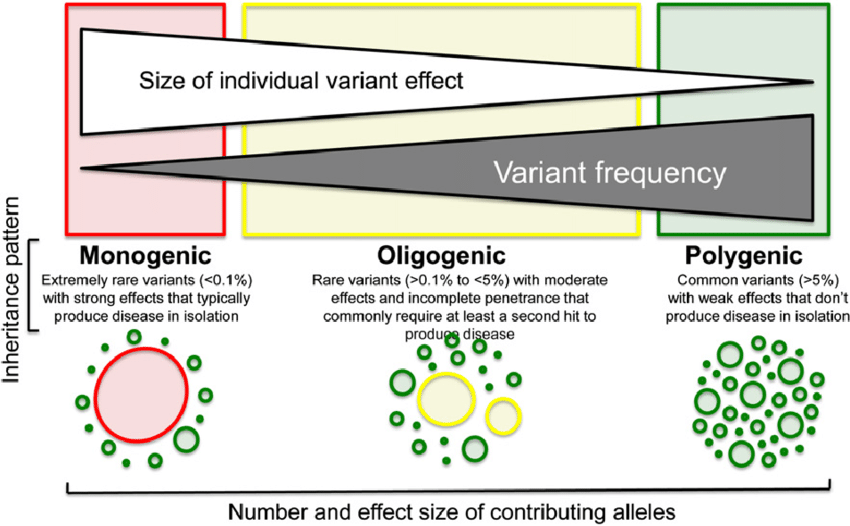
In the era of massive sequencing, access to the intensive study of the genome has provided a much deeper understanding of genetic variability, and how this can give rise to complex phenotypes from the combination of several monogenetic diseases in the same individual.
It is estimated that in approximately 5% of cases, a patient's phenotype can be explained by the coexistence of several simultaneous genetic diseases, which is counterintuitive, since traditionally they were considered rare diseases, and the a priori probability of their coexistence seemed very uncommon (Ockham's razor). However, today we have discovered that our notion of probability was conditioned by a bias that imposed the limitation of diagnostic techniques, and in reality these are more frequent problems than could be thought a priori. Possibly the distribution of this effect is heterogeneous, with most of the genetic "double-trouble" incidents accumulating in those most frequent variants, with variable penetrance, and familial transmission.