


Evaluation process.
The school is the natural environment in which children's cognitive difficulties will become evident. School information, therefore, is essential to be able to understand these difficulties. The school history, identified difficulties, supports and adaptations, as well as psychometric tests available, allow for a much more adequate diagnosis.
It is also the environment in which they interact with their peers, and where the developing your social skills.
Coordination of interventions.
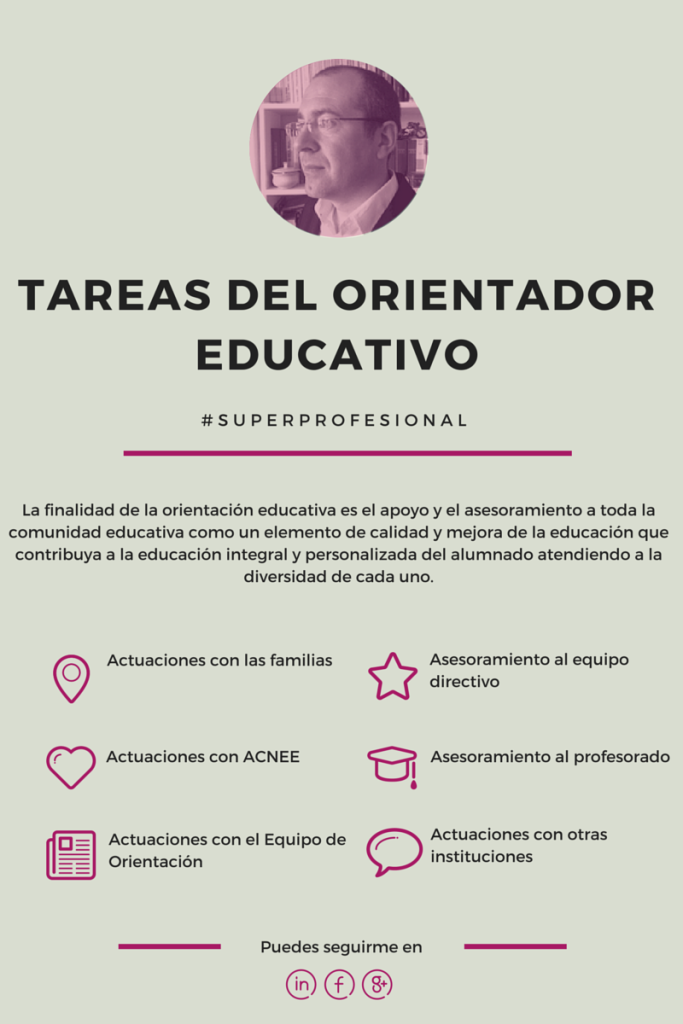
The main interlocutor who participates in this task is the school counselor, given that his position is ideal to act. as a bridge between professionals of the school center and the health center professionals.
therapeutic process.
Before indicating pharmacological treatment for any neurodevelopmental disorder, it is mandatory to start a psychoeducational intervention aimed at trying to resolve difficulties through alternative means. In this sense, the role of the school, and the counselor, as coordinator of inclusion strategies is fundamental, and therefore, for an adequate assessment of the indication for pharmacological treatment, it is necessary to know the supports and aids for the NEAE of the students being evaluated, and thus base an adequate therapeutic indication.
On the other hand, feedback from the school environment is essential for the pharmacological adjustment of both treatments to improve attentional performance and those used to adjust behavioral problems.