
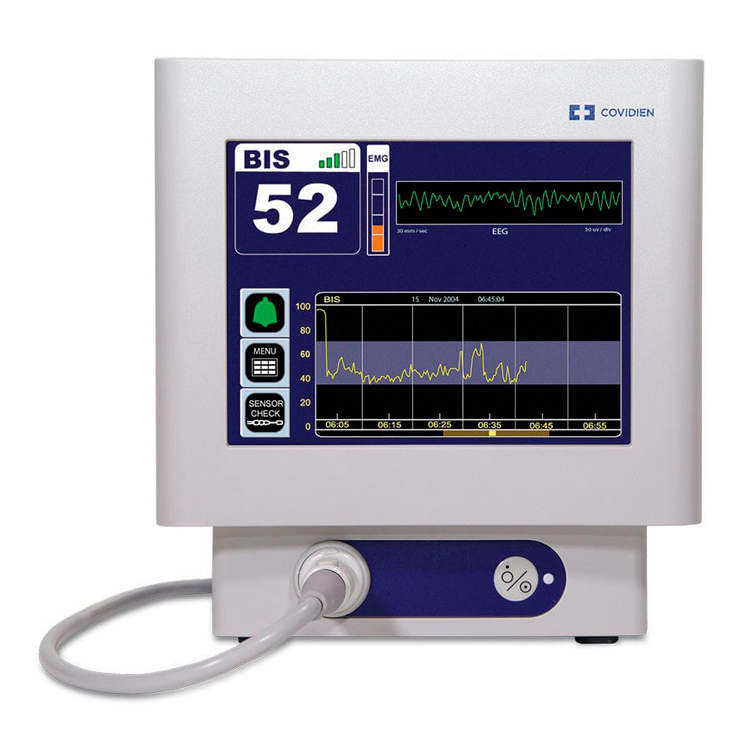
BIS Monitor: Brief Clinical Guide
The BIS Monitor (Bispectral Index) is a neurological monitoring tool that estimates the state of consciousness through analysis of brain activity from electroencephalographic (EEG) signals. It does not directly measure consciousness, but rather the depth of anesthetic hypnosis.
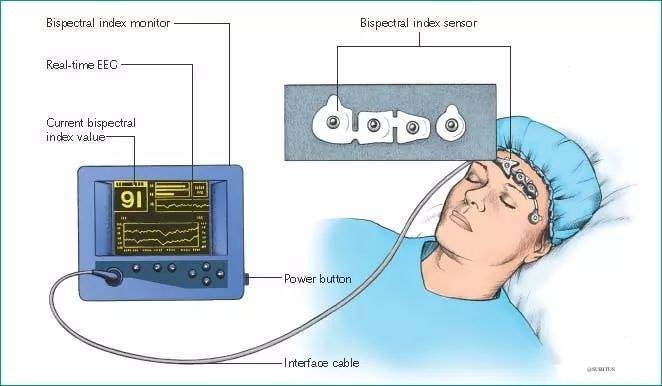
BIS Classification and Clinical Significance
- BIS 0–25: Deep coma; minimal brain activity. Incompatible with conscience.
- BIS 26–75: Intermediate coma state; response to inconsistent stimulation.
- BIS 76–100: Normal consciousness; high and stable brain activity.

Clinical Use and Limitations
- Recommended in general anesthesia, especially in neurosurgery or patients with neurological disease.
- Values <50 sugieren pérdida de consciencia;>60 indicates a normal state of consciousness.
- It does not replace the Glasgow Coma Scale (GCS). A low BIS does not necessarily imply low GCS if the patient responds to stimuli.
- In pediatrics, adjustments are required: children may show greater variability in BIS due to greater sensitivity to the anesthetic.
Clinical Alert: Common Misinterpretation
Confusing BIS with GCS may lead to underestimation of neurological status. A patient with BIS 40 may have GCS 15 if they respond to stimuli. The BIS assesses underlying brain activity, not behavioral response.
Keys to apply: Maintain BIS between 70–80 in non-neurological surgeries; adjust dose if BIS drops <50. Always consider age, type of procedure and clinical context.