
During the first years of life, there is a great variability in the normal dream, and produce very significant changes in the duration and distribution of the dream in a short time, which is why it is interesting to count with normogramas:
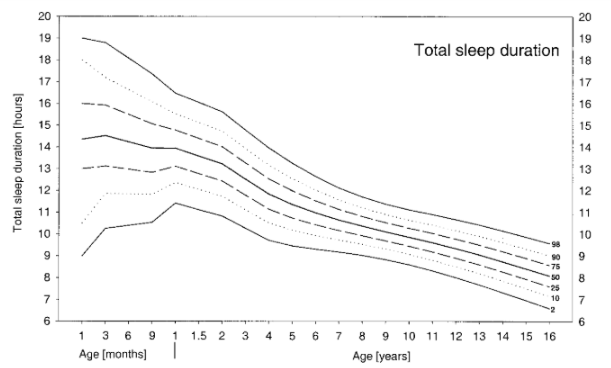
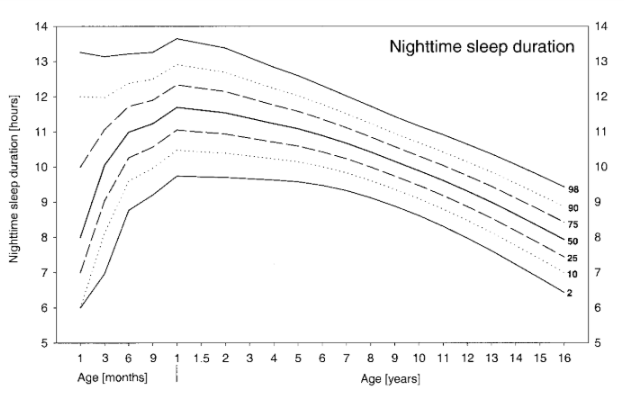
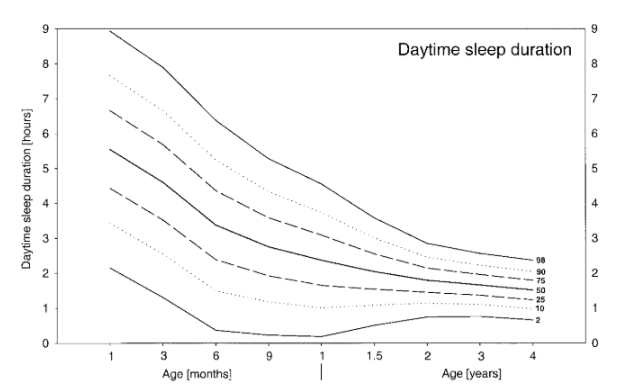
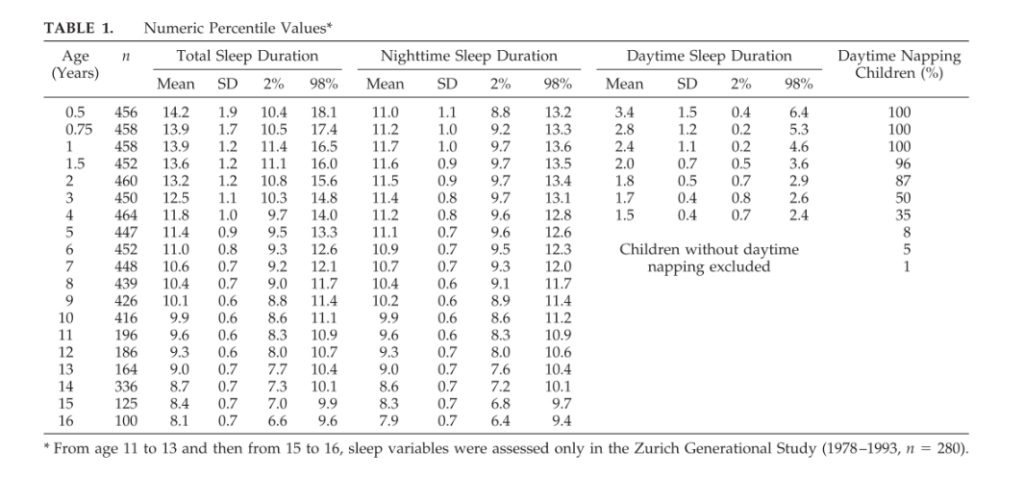
19955111
{19955111:KR6T33VE}
1
vancouver
50
default
1760
https://neuropediatoolkit.org/wp-content/plugins/zotpress/
statussuccessupdateneededfalseinstancefalsemetarequest_last0request_next0used_cachetruedatakeyKR6T33VElibraryid19955111metacreatorSummaryIglowsteinetal.parsedDate2003-02-01numChildren1bibltdivclassquotcsl-bib-bodyquotstylequotline-height1.35quotgtnltdivclassquotcsl-entryquotstylequotclearleftquotgtnltdivclassquotcsl-left-marginquotstylequotfloatleftpadding-right0.5emtext-alignrightwidth1emquotgt1.ltdivgtltdivclassquotcsl-right-inlinequotstylequotmargin0.4em01.5emquotgtIglowsteinIJenniOGMolinariLLargoRH.SleepDurationFromInfancytoAdolescenceReferenceValuesandGenerationalTrends.PEDIATRICSInternet.2003Feb1cited2018Aug41112302x20137.Availablefromltaclass039zp-ItemURL039href039httppediatrics.aappublications.orgcgidoi10.1542peds.111.2.302039gthttppediatrics.aappublications.orgcgidoi10.1542peds.111.2.302ltagtltdivgtnltdivgtnltdivgtdataitemTypejournalArticletitleSleepDurationFromInfancytoAdolescenceReferenceValuesandGenerationalTrendscreatorscreatorTypeauthorfirstNameI.lastNameIglowsteincreatorTypeauthorfirstNameO.G.lastNameJennicreatorTypeauthorfirstNameL.lastNameMolinaricreatorTypeauthorfirstNameR.H.lastNameLargoabstractNoteMethods.Atotalof493subjectsfromtheZurichLongitudinalStudieswerefollowedusingstructuredsleeprelatedquestionnairesat13691218and24monthsafterbirthandthenatannualintervalsuntil16yearsofage.Gaussianpercentilesforages3monthsto16yearswerecalculatedfortotalsleepdurationtimeinbedandnighttimeanddaytimesleepduration.Themeansleepdurationforages1to16yearswasestimatedbygeneralizedadditivemodelsbasedontheloesssmootheracohorteffectalsohadtobeincluded.ThestandarddeviationSDwasestimatedfromtheloesssmoothedabsoluteresidualsfromthemeancurve.Forages36and9monthsanalternativeapproachwithasimplemodellinearinagewasused.Forage1monthempiricalpercentileswerecalculated.nResults.Totalsleepdurationdecreasedfromanaverageof14.2hoursSD1.9hoursat6monthsofagetoanaverageof8.1hoursSD0.8hoursat16yearsofage.Thevarianceshowedthesamedecliningtrendtheinterquartilerangeat6monthsafterbirthwas2.5hourswhereasat16yearsofageitwasonly1.0hours.Totalsleepdurationdecreasedacrossthestudiedcohorts1974u20131993becauseofincreasinglylaterbedtimebutunchangedwaketimeacrossdecades.Consolidationofnocturnalsleepoccurredduringthefirst12monthsafterbirthwithadecreasingtrendofdaytimesleep.Thisresultedinasmallincreaseofnighttimesleepdurationby1yearofagemean11.0u060e1.1hoursat1monthto11.7u060e1.0hoursat1yearofage.Themostprominentdeclineinnappinghabitsoccurredbetween1.5yearsofage96.4ofallchildrenand4yearsofage35.4.nConclusions.Percentilecurvesprovidevaluableinformationondevelopmentalcourseandage-specificvariabilityofsleepdurationforthehealthcareprofessionalwhodealswithsleepproblemsinpediatricpractice.Pediatrics2003111302u2013307sleepdurationnapsgenerationaltrendsinfantschildrenadolescents.date2003-02-01sectionpartNumberpartTitleDOI10.1542peds.111.2.302citationKeyurlhttppediatrics.aappublications.orgcgidoi10.1542peds.111.2.302PMIDPMCIDISSN0031-40051098-4275languageencollections4AQU5UYMdateModified2026-07-15T223837Z
1.
Iglowstein I, Jenni OG, Molinari L, Largo RH. Sleep Duration From Infancy to Adolescence: Reference Values and Generational Trends. PEDIATRICS [Internet]. 2003 Feb 1 [cited 2018 Aug 4];111(2):302-7. Available from: http://pediatrics.aappublications.org/cgi/doi/10.1542/peds.111.2.302