
Hemicerebellitis: Clinical Summary
Focal inflammatory disease of the cerebellum that affects one hemisphere, with risk of neurological disability if not diagnosed and treated in time.
Main Signs and Symptoms
- Neurology: Progressive ataxia, dizziness, nausea, vomiting, difficulty walking.
- Eye signs: Nystagmus, abnormal eye movements, anisochromia, or unilateral pupillary dilation (specific finding).
- Other signs: Intentional tremor, hypotonia, altered reflexes on the affected side.
Diagnosis: Key Criteria
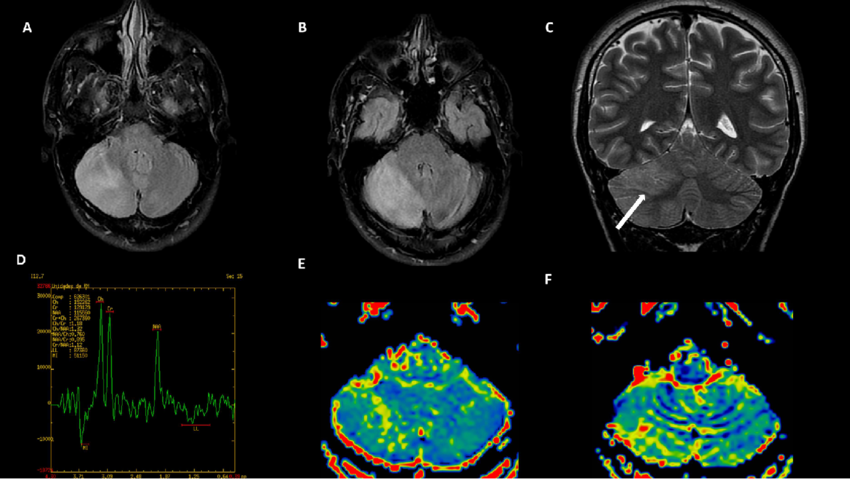
- Neuroimaging image: Brain MRI with contrast is the standard; shows unilateral inflammation in the cerebellum (hyperintensity on T2/FLAIR).
- Ophthalmological examination: Detailed evaluation of pupil and eye movements is essential. Unilateral anisochromia is a highly suggestive indicator.
- Important differentials: Mitochondrial diseases (such as Leigh syndrome), myasthenia gravis, cerebellar tumors, infections (e.g. abscess).
Clinical Actions
- Perform brain MRI with contrast if suspected.
- Evaluate with an ophthalmologist if there are ocular alterations.
- Study underlying causes: antibodies (anti-GAD, anti-Ma2), cerebrospinal fluid analysis, mitochondrial function tests if there are systemic signs.
Key Source Details
• Leigh syndrome and its variants (Leigh-like) can present ataxia, nystagmus and oculomotor dysfunction, but with bilateral lesions and in the basal ganglia, not unilateral. (Finsterer, 2008)
• Anisochromia in hemicerebellitis is a useful clinical finding, although not specific to a single etiology.
Hemicerebellitis requires rigorous differential diagnosis. It should not be confused with similar neurological disorders such as Leigh syndrome or myasthenia gravis. Early intervention significantly improves prognosis.
Clue: Anisochromia + ataxia + MRI with unilateral cerebellar lesion = suspected diagnosis. Confirm with specific studies.