

19955111
{19955111:436UEE9K}
1
Vancouver
50
Standard
4527
https://neuropediatoolkit.org/wp-content/plugins/zotpress/
%7B%22status%22%3A%22success%22%2C%22updateneeded%22%3Afalse%2C%22instance%22%3Afalse%2C%22meta%22%3A%7B%22request_last%22%3A0%2C%22request_next%22%3A0%2C%22used_cache%22%3Atrue%7D%2C%22data%22%3A%5B%7B%22key%22%3A%22436UEE9K%22%2C%22library%22%3A%7B%22id%22%3A19955111%7D%2C%22meta%22%3A%7B%22creatorSummary%22%3A%22Kyle%20et%20al.%22%2C%22parsedDate%22%3A%222018%22%2C%22numChildren%22%3A1%7D%2C%22bib%22%3A%22%26lt%3Bdiv%20class%3D%26quot%3Bcsl-bib-body%26quot%3B%20style%3D%26quot%3Bline-height%3A%201.35%3B%20%26quot%3B%26gt%3B%5Cn%20%20%26lt%3Bdiv%20class%3D%26quot%3Bcsl-entry%26quot%3B%20style%3D%26quot%3Bclear%3A%20left%3B%20%26quot%3B%26gt%3B%5Cn%20%20%20%20%26lt%3Bdiv%20class%3D%26quot%3Bcsl-left-margin%26quot%3B%20style%3D%26quot%3Bfloat%3A%20left%3B%20padding-right%3A%200.5em%3B%20text-align%3A%20right%3B%20width%3A%201em%3B%26quot%3B%26gt%3B1.%26lt%3B%5C%2Fdiv%26gt%3B%26lt%3Bdiv%20class%3D%26quot%3Bcsl-right-inline%26quot%3B%20style%3D%26quot%3Bmargin%3A%200%20.4em%200%201.5em%3B%26quot%3B%26gt%3BKyle%20SM%2C%20Vashi%20N%2C%20Justice%20MJ.%20Rett%20syndrome%3A%20a%20neurological%20disorder%20with%20metabolic%20components.%20Open%20Biol%20%5BInternet%5D.%202018%20%5Bcited%202023%20Feb%2019%5D%3B8%282%29%3A170216.%20Available%20from%3A%20%26lt%3Ba%20class%3D%26%23039%3Bzp-ItemURL%26%23039%3B%20href%3D%26%23039%3Bhttps%3A%5C%2F%5C%2Froyalsocietypublishing.org%5C%2Fdoi%5C%2F10.1098%5C%2Frsob.170216%26%23039%3B%26gt%3Bhttps%3A%5C%2F%5C%2Froyalsocietypublishing.org%5C%2Fdoi%5C%2F10.1098%5C%2Frsob.170216%26lt%3B%5C%2Fa%26gt%3B%26lt%3B%5C%2Fdiv%26gt%3B%5Cn%20%20%26lt%3B%5C%2Fdiv%26gt%3B%5Cn%26lt%3B%5C%2Fdiv%26gt%3B%22%2C%22data%22%3A%7B%22itemType%22%3A%22journalArticle%22%2C%22title%22%3A%22Rett%20syndrome%3A%20a%20neurological%20disorder%20with%20metabolic%20components%22%2C%22creators%22%3A%5B%7B%22creatorType%22%3A%22author%22%2C%22firstName%22%3A%22Stephanie%20M.%22%2C%22lastName%22%3A%22Kyle%22%7D%2C%7B%22creatorType%22%3A%22author%22%2C%22firstName%22%3A%22Neeti%22%2C%22lastName%22%3A%22Vashi%22%7D%2C%7B%22creatorType%22%3A%22author%22%2C%22firstName%22%3A%22Monica%20J.%22%2C%22lastName%22%3A%22Justice%22%7D%5D%2C%22abstractNote%22%3A%22Rett%20syndrome%20%28RTT%29%20is%20a%20neurological%20disorder%20caused%20by%20mutations%20in%20the%20X-linked%20gene%20methyl-CpG-binding%20protein%202%20%28%5Cn%20%20%20%20%20%20%20%20%20%20%20%20%20%20MECP2%5Cn%20%20%20%20%20%20%20%20%20%20%20%20%20%20%29%2C%20a%20ubiquitously%20expressed%20transcriptional%20regulator.%20Despite%20remarkable%20scientific%20progress%20since%20its%20discovery%2C%20the%20mechanism%20by%20which%5Cn%20%20%20%20%20%20%20%20%20%20%20%20%20%20MECP2%5Cn%20%20%20%20%20%20%20%20%20%20%20%20%20%20mutations%20cause%20RTT%20symptoms%20is%20largely%20unknown.%20Consequently%2C%20treatment%20options%20for%20patients%20are%20currently%20limited%20and%20centred%20on%20symptom%20relief.%20Thought%20to%20be%20an%20entirely%20neurological%20disorder%2C%20RTT%20research%20has%20focused%20on%20the%20role%20of%5Cn%20%20%20%20%20%20%20%20%20%20%20%20%20%20MECP2%5Cn%20%20%20%20%20%20%20%20%20%20%20%20%20%20in%20the%20central%20nervous%20system.%20However%2C%20the%20variety%20of%20phenotypes%20identified%20in%5Cn%20%20%20%20%20%20%20%20%20%20%20%20%20%20Mecp2%5Cn%20%20%20%20%20%20%20%20%20%20%20%20%20%20mutant%20mouse%20models%20and%20RTT%20patients%20implicate%20important%20roles%20for%20MeCP2%20in%20peripheral%20systems.%20Here%2C%20we%20review%20the%20history%20of%20RTT%2C%20highlighting%20breakthroughs%20in%20the%20field%20that%20have%20led%20us%20to%20present%20day.%20We%20explore%20the%20current%20evidence%20supporting%20metabolic%20dysfunction%20as%20a%20component%20of%20RTT%2C%20presenting%20recent%20studies%20that%20have%20revealed%20perturbed%20lipid%20metabolism%20in%20the%20brain%20and%20peripheral%20tissues%20of%20mouse%20models%20and%20patients.%20Such%20findings%20may%20have%20an%20impact%20on%20the%20quality%20of%20life%20of%20RTT%20patients%20as%20both%20dietary%20and%20drug%20intervention%20can%20alter%20lipid%20metabolism.%20Ultimately%2C%20we%20conclude%20that%20a%20thorough%20knowledge%20of%20MeCP2%26%23039%3Bs%20varied%20functional%20targets%20in%20the%20brain%20and%20body%20will%20be%20required%20to%20treat%20this%20complex%20syndrome.%22%2C%22date%22%3A%2202%5C%2F2018%22%2C%22section%22%3A%22%22%2C%22partNumber%22%3A%22%22%2C%22partTitle%22%3A%22%22%2C%22DOI%22%3A%2210.1098%5C%2Frsob.170216%22%2C%22citationKey%22%3A%22%22%2C%22url%22%3A%22https%3A%5C%2F%5C%2Froyalsocietypublishing.org%5C%2Fdoi%5C%2F10.1098%5C%2Frsob.170216%22%2C%22PMID%22%3A%22%22%2C%22PMCID%22%3A%22%22%2C%22ISSN%22%3A%222046-2441%22%2C%22language%22%3A%22en%22%2C%22collections%22%3A%5B%22AV4DY38Y%22%5D%2C%22dateModified%22%3A%222026-07-15T22%3A40%3A44Z%22%7D%7D%5D%7D
1.
Kyle SM, Vashi N, Richter MJ. Rett-Syndrom: eine neurologische Störung mit Stoffwechselkomponenten. Öffnen Sie Biol [Internet]. 2018 [zitiert am 19. Februar 2023];8(2):170216. Erhältlich bei: https://royalsocietypublishing.org/doi/10.1098/rsob.170216
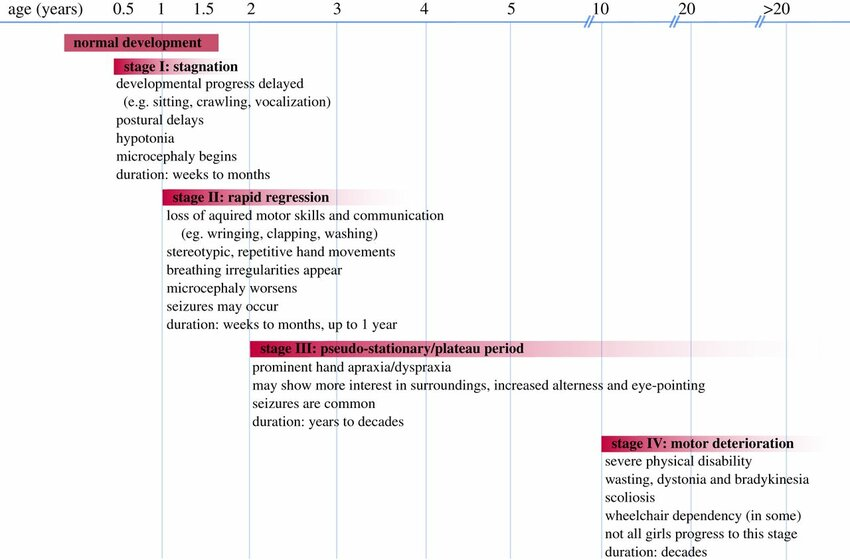
Das Rett-Syndrom, eine X-chromosomale neurologische Entwicklungsstörung (MECP2-Gen), verläuft typischerweise in vier klar definierten klinischen Stadien, die seinen Entwicklungsverlauf kennzeichnen:
- Stadium I (frühe Phase – 6 bis 18 Monate): Leichte Entwicklungsverzögerung, nachlassendes Interesse am Spielen und verlangsamtes Kopfwachstum.
- Stadium II (rasche Zerstörung – 1 bis 4 Jahre): Schneller Sprachrückgang und willkürlicher Einsatz der Hände, Auftreten charakteristischer manueller Stereotypien (Händewaschen), Reizbarkeit und Atemstörungen im Wachzustand.
- Stadium III (pseudostationär – 2 bis 10 Jahre): Stabilisierung der motorischen Symptome. Besonders hervorzuheben sind Apraxie, epileptische Anfälle und eine fortschreitende Skoliose, wobei sich der Blickkontakt (die Kommunikation über den Blick) verbessert.
- Stadium IV (späte motorische Beeinträchtigung – älter als 10 Jahre): Verlust der Mobilität oder der Gehfähigkeit, sofern diese zuvor vorhanden war, Steifheit, Spastik, Muskelschwund und allgemeine Schwäche. Die kognitiven Funktionen und die Augenkommunikation bleiben in diesem Stadium in der Regel erhalten.