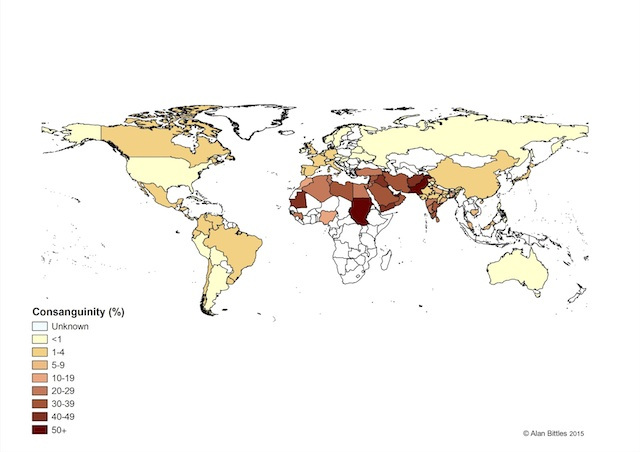

In unserem geografischen Gebiet gibt es zwei Minderheitenpopulationen, die aus genetischer Sicht von Interesse sind, vor allem weil sie in der Vergangenheit praktiziert haben Inzucht und präsent hoch Blutsverwandtschaftund dafür, dass sie unter genetischen Engpässen gelitten haben, die dazu geführt haben Gründereffekt bei einigen Krankheiten.
- Mendelsche Krankheiten, die durch privative Mutationen mit Gründereffekt in der Zigeunerbevölkerung verursacht werden.
| Störung | OMIM* | Nachlass | Karte | Gen | Mutation |
| Standort | |||||
| primär angeboren | 231300 | A.R. | 14 Uhr 21 | CYP1B1 | E387K |
| Glaukom | |||||
| Galaktokinase | 230200 | A.R. | 17q24 | GK1 | P28T |
| Mangel | |||||
| Polyzystische Niere | 173900 | ANZEIGE. | 4q21-q23 | PKD2 | R306X** |
| Krankheit | |||||
| Erbliche motorische und | 601455 | A.R. | 8q24 | NDRG1 | R148X |
| Sensorische Neuropathie-Lom | |||||
| Erbliche motorische und | 605285 | A.R. | 10q23 | ||
| Sensorische Neuropathie-Russe | |||||
| Angeborener Katarakt im Gesicht | 604168 | A.R. | 18qter | ||
| Dysmorphismus-Neuropathie |
- Gemeldete Trägerraten einzelner Genstörungen bei Roma
| Störung | Land | Allgemein | Hohes Risiko |
| Rom | Gruppen | ||
| Primäres angeborenes Glaukom | Slowakei | 5% | *11% |
| Galaktokinase | Bulgarien | 2% | *4%-5% |
| Mangel | |||
| Autosomal-dominante polyzystische Erkrankung | Ungarn | 2.4% | |
| Nierenerkrankung | |||
| Erblich motorisch und sensorisch | Bulgarien | *2% | *20% |
| Neuropathie-Lom | |||
| Muskeldystrophie des Gliedmaßengürtels | **Bulgarien | 2% | 6% |
| Typ 2C | |||
| MCAD-Mangel | ***Spanien | *2.5%-10% | |
| Phenylketonurie | tschechisch | 6% | |
| Slowakei | |||
| Okulokutaner Albinismus | Spanien | 3.4% | |
| Fraser-Syndrom | Spanien | 2.7% | |
| Epidermolysis bullosa | Spanien | 2.4% |
19955111
{19955111:H68EFK34}
1
Vancouver
50
Standard
1698
https://neuropediatoolkit.org/wp-content/plugins/zotpress/
%7B%22status%22%3A%22success%22%2C%22updateneeded%22%3Afalse%2C%22instance%22%3Afalse%2C%22meta%22%3A%7B%22request_last%22%3A0%2C%22request_next%22%3A0%2C%22used_cache%22%3Atrue%7D%2C%22data%22%3A%5B%7B%22key%22%3A%22H68EFK34%22%2C%22library%22%3A%7B%22id%22%3A19955111%7D%2C%22meta%22%3A%7B%22creatorSummary%22%3A%22Kalaydjieva%20et%20al.%22%2C%22parsedDate%22%3A%222001-04-02%22%2C%22numChildren%22%3A2%7D%2C%22bib%22%3A%22%26lt%3Bdiv%20class%3D%26quot%3Bcsl-bib-body%26quot%3B%20style%3D%26quot%3Bline-height%3A%201.35%3B%20%26quot%3B%26gt%3B%5Cn%20%20%26lt%3Bdiv%20class%3D%26quot%3Bcsl-entry%26quot%3B%20style%3D%26quot%3Bclear%3A%20left%3B%20%26quot%3B%26gt%3B%5Cn%20%20%20%20%26lt%3Bdiv%20class%3D%26quot%3Bcsl-left-margin%26quot%3B%20style%3D%26quot%3Bfloat%3A%20left%3B%20padding-right%3A%200.5em%3B%20text-align%3A%20right%3B%20width%3A%201em%3B%26quot%3B%26gt%3B1.%26lt%3B%5C%2Fdiv%26gt%3B%26lt%3Bdiv%20class%3D%26quot%3Bcsl-right-inline%26quot%3B%20style%3D%26quot%3Bmargin%3A%200%20.4em%200%201.5em%3B%26quot%3B%26gt%3BKalaydjieva%20L%2C%20Gresham%20D%2C%20Calafell%20F.%20Genetic%20studies%20of%20the%20Roma%20%28Gypsies%29%3A%20a%20review.%20BMC%20Med%20Genet%20%5BInternet%5D.%202001%20Apr%202%20%5Bcited%202021%20Apr%2011%5D%3B2%3A5.%20Available%20from%3A%20%26lt%3Ba%20class%3D%26%23039%3Bzp-ItemURL%26%23039%3B%20href%3D%26%23039%3Bhttps%3A%5C%2F%5C%2Fwww.ncbi.nlm.nih.gov%5C%2Fpmc%5C%2Farticles%5C%2FPMC31389%5C%2F%26%23039%3B%26gt%3Bhttps%3A%5C%2F%5C%2Fwww.ncbi.nlm.nih.gov%5C%2Fpmc%5C%2Farticles%5C%2FPMC31389%5C%2F%26lt%3B%5C%2Fa%26gt%3B%26lt%3B%5C%2Fdiv%26gt%3B%5Cn%20%20%26lt%3B%5C%2Fdiv%26gt%3B%5Cn%26lt%3B%5C%2Fdiv%26gt%3B%22%2C%22data%22%3A%7B%22itemType%22%3A%22journalArticle%22%2C%22title%22%3A%22Genetic%20studies%20of%20the%20Roma%20%28Gypsies%29%3A%20a%20review%22%2C%22creators%22%3A%5B%7B%22creatorType%22%3A%22author%22%2C%22firstName%22%3A%22Luba%22%2C%22lastName%22%3A%22Kalaydjieva%22%7D%2C%7B%22creatorType%22%3A%22author%22%2C%22firstName%22%3A%22David%22%2C%22lastName%22%3A%22Gresham%22%7D%2C%7B%22creatorType%22%3A%22author%22%2C%22firstName%22%3A%22Francesc%22%2C%22lastName%22%3A%22Calafell%22%7D%5D%2C%22abstractNote%22%3A%22Background%5CnData%20provided%20by%20the%20social%20sciences%20as%20well%20as%20genetic%20research%20suggest%20that%20the%208-10%20million%20Roma%20%28Gypsies%29%20who%20live%20in%20Europe%20today%20are%20best%20described%20as%20a%20conglomerate%20of%20genetically%20isolated%20founder%20populations.%20The%20relationship%20between%20the%20traditional%20social%20structure%20observed%20by%20the%20Roma%2C%20where%20the%20Group%20is%20the%20primary%20unit%2C%20and%20the%20boundaries%2C%20demographic%20history%20and%20biological%20relatedness%20of%20the%20diverse%20founder%20populations%20appears%20complex%20and%20has%20not%20been%20addressed%20by%20population%20genetic%20studies.%5Cn%5CnResults%5CnRecent%20medical%20genetic%20research%20has%20identified%20a%20number%20of%20novel%2C%20or%20previously%20known%20but%20rare%20conditions%2C%20caused%20by%20private%20founder%20mutations.%20A%20summary%20of%20the%20findings%2C%20provided%20in%20this%20review%2C%20should%20assist%20diagnosis%20and%20counselling%20in%20affected%20families%2C%20and%20promote%20future%20collaborative%20research.%20The%20available%20incomplete%20epidemiological%20data%20suggest%20a%20non-random%20distribution%20of%20disease-causing%20mutations%20among%20Romani%20groups.%5Cn%5CnConclusion%5CnAlthough%20far%20from%20systematic%2C%20the%20published%20information%20indicates%20that%20medical%20genetics%20has%20an%20important%20role%20to%20play%20in%20improving%20the%20health%20of%20this%20underprivileged%20and%20forgotten%20people%20of%20Europe.%20Reported%20carrier%20rates%20for%20some%20Mendelian%20disorders%20are%20in%20the%20range%20of%205%20-15%25%2C%20sufficient%20to%20justify%20newborn%20screening%20and%20early%20treatment%2C%20or%20community-based%20education%20and%20carrier%20testing%20programs%20for%20disorders%20where%20no%20therapy%20is%20currently%20available.%20To%20be%20most%20productive%2C%20future%20studies%20of%20the%20epidemiology%20of%20single%20gene%20disorders%20should%20take%20social%20organisation%20and%20cultural%20anthropology%20into%20consideration%2C%20thus%20allowing%20the%20targeting%20of%20public%20health%20programs%20and%20contributing%20to%20the%20understanding%20of%20population%20structure%20and%20demographic%20history%20of%20the%20Roma.%22%2C%22date%22%3A%222001-4-2%22%2C%22section%22%3A%22%22%2C%22partNumber%22%3A%22%22%2C%22partTitle%22%3A%22%22%2C%22DOI%22%3A%2210.1186%5C%2F1471-2350-2-5%22%2C%22citationKey%22%3A%22%22%2C%22url%22%3A%22https%3A%5C%2F%5C%2Fwww.ncbi.nlm.nih.gov%5C%2Fpmc%5C%2Farticles%5C%2FPMC31389%5C%2F%22%2C%22PMID%22%3A%2211299048%22%2C%22PMCID%22%3A%22PMC31389%22%2C%22ISSN%22%3A%221471-2350%22%2C%22language%22%3A%22%22%2C%22collections%22%3A%5B%22XF3FMYL5%22%5D%2C%22dateModified%22%3A%222026-05-09T21%3A48%3A27Z%22%7D%7D%5D%7D
1.
Kalaydjieva L, Gresham D, Calafell F. Genetische Studien der Roma (Zigeuner): eine Übersicht. BMC Med Genet [Internet]. 2. April 2001 [zitiert am 11. April 2021];2:5. Erhältlich bei: https://www.ncbi.nlm.nih.gov/pmc/articles/PMC31389/
Zusätzlich zu den vorherigen Tabellen wird auch eine Möglichkeit beschrieben angeborene Myasthenie die in der Roma-Bevölkerung häufiger vorkommt als in der Allgemeinbevölkerung, insbesondere die epsilon1267delG-Mutation im Epsilon-Untereinheit-Gen des Acetylcholinrezeptors (AChR).
19955111
{19955111:WKU6TKTJ}
1
Vancouver
50
Standard
1698
https://neuropediatoolkit.org/wp-content/plugins/zotpress/
%7B%22status%22%3A%22success%22%2C%22updateneeded%22%3Afalse%2C%22instance%22%3Afalse%2C%22meta%22%3A%7B%22request_last%22%3A0%2C%22request_next%22%3A0%2C%22used_cache%22%3Atrue%7D%2C%22data%22%3A%5B%7B%22key%22%3A%22WKU6TKTJ%22%2C%22library%22%3A%7B%22id%22%3A19955111%7D%2C%22meta%22%3A%7B%22creatorSummary%22%3A%22Abicht%20et%20al.%22%2C%22parsedDate%22%3A%221999-10-22%22%2C%22numChildren%22%3A1%7D%2C%22bib%22%3A%22%26lt%3Bdiv%20class%3D%26quot%3Bcsl-bib-body%26quot%3B%20style%3D%26quot%3Bline-height%3A%201.35%3B%20%26quot%3B%26gt%3B%5Cn%20%20%26lt%3Bdiv%20class%3D%26quot%3Bcsl-entry%26quot%3B%20style%3D%26quot%3Bclear%3A%20left%3B%20%26quot%3B%26gt%3B%5Cn%20%20%20%20%26lt%3Bdiv%20class%3D%26quot%3Bcsl-left-margin%26quot%3B%20style%3D%26quot%3Bfloat%3A%20left%3B%20padding-right%3A%200.5em%3B%20text-align%3A%20right%3B%20width%3A%201em%3B%26quot%3B%26gt%3B1.%26lt%3B%5C%2Fdiv%26gt%3B%26lt%3Bdiv%20class%3D%26quot%3Bcsl-right-inline%26quot%3B%20style%3D%26quot%3Bmargin%3A%200%20.4em%200%201.5em%3B%26quot%3B%26gt%3BAbicht%20A%2C%20Stucka%20R%2C%20Karcagi%20V%2C%20Herczegfalvi%20A%2C%20Horv%26%23xE1%3Bth%20R%2C%20Mortier%20W%2C%20et%20al.%20A%20common%20mutation%20%28epsilon1267delG%29%20in%20congenital%20myasthenic%20patients%20of%20Gypsy%20ethnic%20origin.%20Neurology.%201999%20Oct%2022%3B53%287%29%3A1564%26%23x2013%3B9.%26lt%3B%5C%2Fdiv%26gt%3B%5Cn%20%20%20%26lt%3B%5C%2Fdiv%26gt%3B%5Cn%26lt%3B%5C%2Fdiv%26gt%3B%22%2C%22data%22%3A%7B%22itemType%22%3A%22journalArticle%22%2C%22title%22%3A%22A%20common%20mutation%20%28epsilon1267delG%29%20in%20congenital%20myasthenic%20patients%20of%20Gypsy%20ethnic%20origin%22%2C%22creators%22%3A%5B%7B%22creatorType%22%3A%22author%22%2C%22firstName%22%3A%22A.%22%2C%22lastName%22%3A%22Abicht%22%7D%2C%7B%22creatorType%22%3A%22author%22%2C%22firstName%22%3A%22R.%22%2C%22lastName%22%3A%22Stucka%22%7D%2C%7B%22creatorType%22%3A%22author%22%2C%22firstName%22%3A%22V.%22%2C%22lastName%22%3A%22Karcagi%22%7D%2C%7B%22creatorType%22%3A%22author%22%2C%22firstName%22%3A%22A.%22%2C%22lastName%22%3A%22Herczegfalvi%22%7D%2C%7B%22creatorType%22%3A%22author%22%2C%22firstName%22%3A%22R.%22%2C%22lastName%22%3A%22Horv%5Cu00e1th%22%7D%2C%7B%22creatorType%22%3A%22author%22%2C%22firstName%22%3A%22W.%22%2C%22lastName%22%3A%22Mortier%22%7D%2C%7B%22creatorType%22%3A%22author%22%2C%22firstName%22%3A%22U.%22%2C%22lastName%22%3A%22Schara%22%7D%2C%7B%22creatorType%22%3A%22author%22%2C%22firstName%22%3A%22V.%22%2C%22lastName%22%3A%22Ramaekers%22%7D%2C%7B%22creatorType%22%3A%22author%22%2C%22firstName%22%3A%22W.%22%2C%22lastName%22%3A%22Jost%22%7D%2C%7B%22creatorType%22%3A%22author%22%2C%22firstName%22%3A%22J.%22%2C%22lastName%22%3A%22Brunner%22%7D%2C%7B%22creatorType%22%3A%22author%22%2C%22firstName%22%3A%22G.%22%2C%22lastName%22%3A%22Janssen%22%7D%2C%7B%22creatorType%22%3A%22author%22%2C%22firstName%22%3A%22U.%22%2C%22lastName%22%3A%22Seidel%22%7D%2C%7B%22creatorType%22%3A%22author%22%2C%22firstName%22%3A%22B.%22%2C%22lastName%22%3A%22Schlotter%22%7D%2C%7B%22creatorType%22%3A%22author%22%2C%22firstName%22%3A%22W.%22%2C%22lastName%22%3A%22M%5Cu00fcller-Felber%22%7D%2C%7B%22creatorType%22%3A%22author%22%2C%22firstName%22%3A%22D.%22%2C%22lastName%22%3A%22Pongratz%22%7D%2C%7B%22creatorType%22%3A%22author%22%2C%22firstName%22%3A%22R.%22%2C%22lastName%22%3A%22R%5Cu00fcdel%22%7D%2C%7B%22creatorType%22%3A%22author%22%2C%22firstName%22%3A%22H.%22%2C%22lastName%22%3A%22Lochm%5Cu00fcller%22%7D%5D%2C%22abstractNote%22%3A%22OBJECTIVE%3A%20Mutation%20analysis%20of%20the%20acetylcholine%20receptor%20%28AChR%29%20epsilon%20subunit%20gene%20in%20patients%20with%20sporadic%20or%20autosomal%20recessive%20congenital%20myasthenic%20syndromes%20%28CMS%29.%5CnBACKGROUND%3A%20The%20nicotinic%20AChR%20of%20skeletal%20muscle%20is%20a%20neurotransmitter-gated%20ion%20channel%20that%20mediates%20synaptic%20transmission%20at%20the%20vertebrate%20neuromuscular%20junction.%20Mutations%20in%20its%20gene%20may%20cause%20congenital%20myasthenic%20syndromes.%20A%20recently%20described%20mutation%20in%20exon%2012%20of%20the%20AChR%20epsilon%20subunit%20%28epsilon1267delG%29%20disrupts%20the%20cytoplasmic%20loop%20and%20the%20fourth%20transmembrane%20region%20%28M4%29%20of%20the%20AChR%20epsilon%20subunit.%5CnMETHODS%3A%20Forty-three%20CMS%20patients%20from%2035%20nonrelated%20families%20were%20clinically%20classified%20as%20sporadic%20cases%20of%20CMS%20%28group%20III%20according%20to%20European%20Neuromuscular%20Centre%20consensus%29%20and%20were%20analyzed%20for%20epsilon1267delG%20by%20PCR%20amplification%20and%20sequence%20analysis.%5CnRESULTS%3A%20The%20authors%20report%20the%20complete%20genomic%20sequence%20and%20organization%20of%20the%20gene%20coding%20for%20the%20epsilon%20subunit%20of%20the%20human%20AChR%20%28accession%20number%20AF105999%29.%20Homozygous%20epsilon1267delG%20was%20identified%20in%2013%20CMS%20patients%20from%2011%20independent%20families.%20All%20epsilon1267delG%20families%20were%20of%20Gypsy%20or%20southeastern%20European%20origin.%20Genotype%20analysis%20indicated%20that%20they%20derive%20from%20a%20common%20ancestor%20%28founder%29%20causing%20CMS%20in%20the%20southeastern%20European%20Gypsy%20population.%20Phenotype%20analysis%20revealed%20a%20uniform%20pattern%20of%20clinical%20features%20including%20bilateral%20ptosis%20and%20mild%20to%20moderate%20fatigable%20weakness%20of%20ocular%2C%20facial%2C%20bulbar%2C%20and%20limb%20muscles.%5CnCONCLUSIONS%3A%20The%20mutation%20epsilon1267delG%20might%20be%20frequent%20in%20European%20congenital%20myasthenic%20syndrome%20patients%20of%20Gypsy%20ethnic%20origin.%20In%20general%2C%20patients%20%28epsilon1267delG%29%20were%20characterized%20by%20the%20onset%20of%20symptoms%20in%20early%20infancy%2C%20the%20presence%20of%20ophthalmoparesis%2C%20positive%20response%20to%20anticholinesterase%20treatment%2C%20and%20the%20benign%20natural%20course%20of%20the%20disease.%22%2C%22date%22%3A%221999-10-22%22%2C%22section%22%3A%22%22%2C%22partNumber%22%3A%22%22%2C%22partTitle%22%3A%22%22%2C%22DOI%22%3A%2210.1212%5C%2Fwnl.53.7.1564%22%2C%22citationKey%22%3A%22%22%2C%22url%22%3A%22%22%2C%22PMID%22%3A%2210534268%22%2C%22PMCID%22%3A%22%22%2C%22ISSN%22%3A%220028-3878%22%2C%22language%22%3A%22eng%22%2C%22collections%22%3A%5B%22IYX9B9KI%22%5D%2C%22dateModified%22%3A%222026-07-15T22%3A38%3A16Z%22%7D%7D%5D%7D
1.
Abicht A, Stucka R, Karcagi V, Herczegfalvi A, Horváth R, Mortier W, et al. Eine häufige Mutation (epsilon1267delG) bei Patienten mit angeborener Myasthenie aus der ethnischen Gruppe der Roma. Neurology. 22. Oktober 1999; 53(7):1564–9.