
Facial Phenotypes in CdLS: Key Characteristics
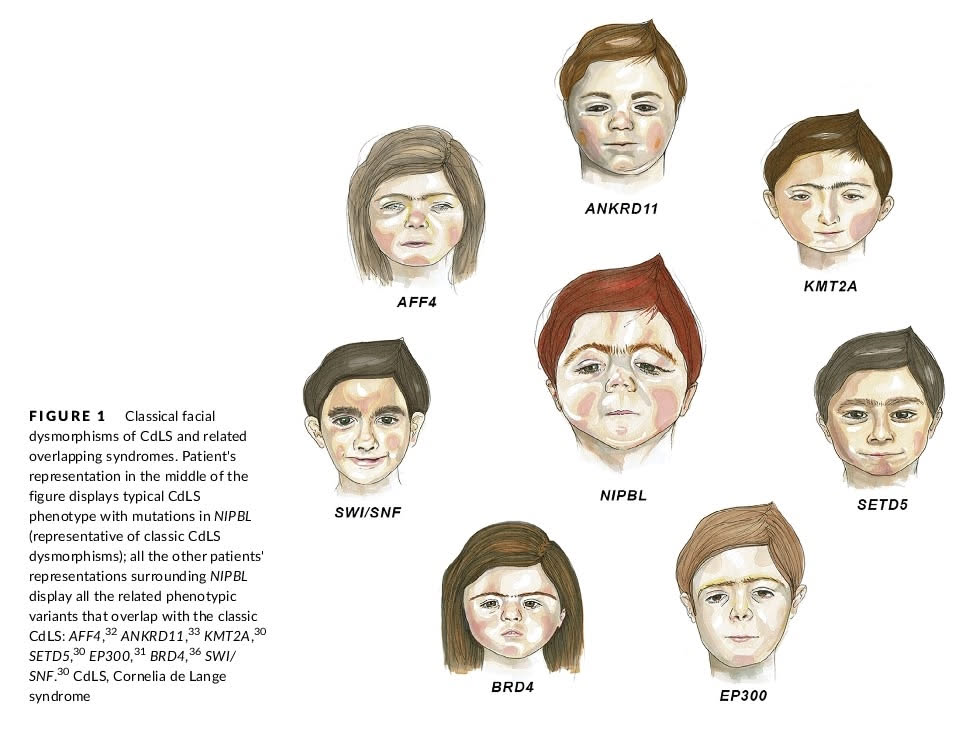
Facial phenotypes in Cornelia de Lange Syndrome (CdLS) are early diagnostic markers and essential for clinical evaluation. Its recognition allows early detection and guides multidisciplinary interventions.
Main Facial Characteristics
- United conjuncture (synophridia): arched eyebrows, fused in the midline and long eyelashes. Associated with mutations in NDE1 and alterations in the development of connective tissues.
- Short and depressed nose: low nasal bridge, anteverted (upward) nostrils and bulbous tip. Indicates alteration in nasal cartilage development.
- Long and flat philtrum: absence of the groove between the nose and upper lip. Secondary to disruption in the formation of subcutaneous and muscular tissues.
- Thin lips with drooping corners: "sad mouth" appearance. Associated with alterations in the development of the jaw and facial muscles.
- Micrognathia: small jaw, often accompanied by low-set ears. It can affect chewing, breathing and phonological development.
Clinical Implications
- Presence of these signs does not confirm CdLS alone; must be validated with genetic studies (exome, gene analysis such as SMC1A, SMC3, HTF, NIPBL).
- Micrognathia and facial alterations can compromise breathing, feeding and speech development.
- Early evaluation by a multidisciplinary team is recommended: genetics, otorhinolaryngology, dentistry, physiotherapy and neuropsychology.
Key data sources
19955111
{19955111:TYWQFSY4}
1
vancouver
50
default
7913
https://neuropediatoolkit.org/wp-content/plugins/zotpress/
%7B%22status%22%3A%22success%22%2C%22updateneeded%22%3Afalse%2C%22instance%22%3Afalse%2C%22meta%22%3A%7B%22request_last%22%3A0%2C%22request_next%22%3A0%2C%22used_cache%22%3Atrue%7D%2C%22data%22%3A%5B%7B%22key%22%3A%22TYWQFSY4%22%2C%22library%22%3A%7B%22id%22%3A19955111%7D%2C%22meta%22%3A%7B%22creatorSummary%22%3A%22Avagliano%20et%20al.%22%2C%22parsedDate%22%3A%222020%22%2C%22numChildren%22%3A1%7D%2C%22bib%22%3A%22%26lt%3Bdiv%20class%3D%26quot%3Bcsl-bib-body%26quot%3B%20style%3D%26quot%3Bline-height%3A%201.35%3B%20%26quot%3B%26gt%3B%5Cn%20%20%26lt%3Bdiv%20class%3D%26quot%3Bcsl-entry%26quot%3B%20style%3D%26quot%3Bclear%3A%20left%3B%20%26quot%3B%26gt%3B%5Cn%20%20%20%20%26lt%3Bdiv%20class%3D%26quot%3Bcsl-left-margin%26quot%3B%20style%3D%26quot%3Bfloat%3A%20left%3B%20padding-right%3A%200.5em%3B%20text-align%3A%20right%3B%20width%3A%201em%3B%26quot%3B%26gt%3B1.%26lt%3B%5C%2Fdiv%26gt%3B%26lt%3Bdiv%20class%3D%26quot%3Bcsl-right-inline%26quot%3B%20style%3D%26quot%3Bmargin%3A%200%20.4em%200%201.5em%3B%26quot%3B%26gt%3BAvagliano%20L%2C%20Parenti%20I%2C%20Grazioli%20P%2C%20Fede%20ED%2C%20Parodi%20C%2C%20Mariani%20M%2C%20et%20al.%20Chromatinopathies%3A%20A%20focus%20on%20Cornelia%20de%20Lange%20syndrome.%20Clinical%20Genetics%20%5BInternet%5D.%202020%20%5Bcited%202020%20Mar%2022%5D%3B97%281%29%3A3%26%23x2013%3B11.%20Available%20from%3A%20%26lt%3Ba%20class%3D%26%23039%3Bzp-ItemURL%26%23039%3B%20href%3D%26%23039%3Bhttps%3A%5C%2F%5C%2Fonlinelibrary.wiley.com%5C%2Fdoi%5C%2Fabs%5C%2F10.1111%5C%2Fcge.13674%26%23039%3B%26gt%3Bhttps%3A%5C%2F%5C%2Fonlinelibrary.wiley.com%5C%2Fdoi%5C%2Fabs%5C%2F10.1111%5C%2Fcge.13674%26lt%3B%5C%2Fa%26gt%3B%26lt%3B%5C%2Fdiv%26gt%3B%5Cn%20%20%26lt%3B%5C%2Fdiv%26gt%3B%5Cn%26lt%3B%5C%2Fdiv%26gt%3B%22%2C%22data%22%3A%7B%22itemType%22%3A%22journalArticle%22%2C%22title%22%3A%22Chromatinopathies%3A%20A%20focus%20on%20Cornelia%20de%20Lange%20syndrome%22%2C%22creators%22%3A%5B%7B%22creatorType%22%3A%22author%22%2C%22firstName%22%3A%22Laura%22%2C%22lastName%22%3A%22Avagliano%22%7D%2C%7B%22creatorType%22%3A%22author%22%2C%22firstName%22%3A%22Ilaria%22%2C%22lastName%22%3A%22Parenti%22%7D%2C%7B%22creatorType%22%3A%22author%22%2C%22firstName%22%3A%22Paolo%22%2C%22lastName%22%3A%22Grazioli%22%7D%2C%7B%22creatorType%22%3A%22author%22%2C%22firstName%22%3A%22Elisabetta%20Di%22%2C%22lastName%22%3A%22Fede%22%7D%2C%7B%22creatorType%22%3A%22author%22%2C%22firstName%22%3A%22Chiara%22%2C%22lastName%22%3A%22Parodi%22%7D%2C%7B%22creatorType%22%3A%22author%22%2C%22firstName%22%3A%22Milena%22%2C%22lastName%22%3A%22Mariani%22%7D%2C%7B%22creatorType%22%3A%22author%22%2C%22firstName%22%3A%22Frank%20J.%22%2C%22lastName%22%3A%22Kaiser%22%7D%2C%7B%22creatorType%22%3A%22author%22%2C%22firstName%22%3A%22Angelo%22%2C%22lastName%22%3A%22Selicorni%22%7D%2C%7B%22creatorType%22%3A%22author%22%2C%22firstName%22%3A%22Cristina%22%2C%22lastName%22%3A%22Gervasini%22%7D%2C%7B%22creatorType%22%3A%22author%22%2C%22firstName%22%3A%22Valentina%22%2C%22lastName%22%3A%22Massa%22%7D%5D%2C%22abstractNote%22%3A%22In%20recent%20years%2C%20many%20genes%20have%20been%20associated%20with%20chromatinopathies%20classified%20as%20%5Cu201cCornelia%20de%20Lange%20Syndrome-like.%5Cu201d%20It%20is%20known%20that%20the%20phenotype%20of%20these%20patients%20becomes%20less%20recognizable%2C%20overlapping%20to%20features%20characteristic%20of%20other%20syndromes%20caused%20by%20genetic%20variants%20affecting%20different%20regulators%20of%20chromatin%20structure%20and%20function.%20Therefore%2C%20Cornelia%20de%20Lange%20syndrome%20diagnosis%20might%20be%20arduous%20due%20to%20the%20seldom%20discordance%20between%20unexpected%20molecular%20diagnosis%20and%20clinical%20evaluation.%20Here%2C%20we%20review%20the%20molecular%20features%20of%20Cornelia%20de%20Lange%20syndrome%2C%20supporting%20the%20hypothesis%20that%20%5Cu201cCdLS-like%20syndromes%5Cu201d%20are%20part%20of%20a%20larger%20%5Cu201crare%20disease%20family%5Cu201d%20sharing%20multiple%20clinical%20features%20and%20common%20disrupted%20molecular%20pathways.%22%2C%22date%22%3A%222020%22%2C%22section%22%3A%22%22%2C%22partNumber%22%3A%22%22%2C%22partTitle%22%3A%22%22%2C%22DOI%22%3A%2210.1111%5C%2Fcge.13674%22%2C%22citationKey%22%3A%22%22%2C%22url%22%3A%22https%3A%5C%2F%5C%2Fonlinelibrary.wiley.com%5C%2Fdoi%5C%2Fabs%5C%2F10.1111%5C%2Fcge.13674%22%2C%22PMID%22%3A%22%22%2C%22PMCID%22%3A%22%22%2C%22ISSN%22%3A%221399-0004%22%2C%22language%22%3A%22en%22%2C%22collections%22%3A%5B%22JL84I4NF%22%5D%2C%22dateModified%22%3A%222026-07-15T22%3A41%3A44Z%22%7D%7D%5D%7D
1.
Avagliano L, Parenti I, Grazioli P, Fede ED, Parodi C, Mariani M, et al. Chromatinopathies: A focus on Cornelia de Lange syndrome. Clinical Genetics [Internet]. 2020 [cited 2020 Mar 22];97(1):3–11. Available from: https://onlinelibrary.wiley.com/doi/abs/10.1111/cge.13674