
MOGAD: MOG Antibody Disease
MOGAD is an inflammatory demyelinating disease of the CNS caused by antibodies against myelin oligodendrocyte glycoprotein (MOG). It is an autoimmune entity different from multiple sclerosis, with a characteristic clinical and serological pattern.
Main Clinical Manifestations
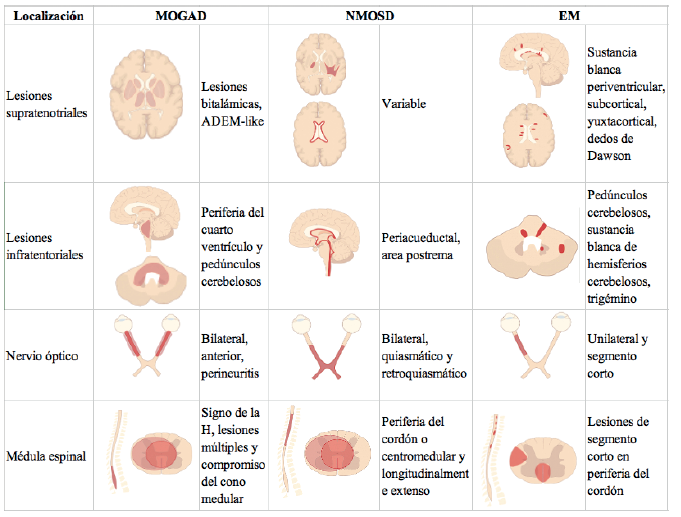
- Bilateral optic neuritis: common in children/adolescents; eye pain, papilledema, acute visual loss. It may precede other forms.
- transverse myelitis: motor weakness, sensory alterations, bladder dysfunction. Spinal cord injuries in MRI.
- Acute disseminated encephalomyelitis (ADEM): acute presentation with fever, neurological disorders, multifocal lesions in the brain and spinal cord.
All three manifestations are common in children, and the presence of anti-MOG antibodies is key for the differential diagnosis.
Diagnosis and Confirmation
- Positive serological test for anti-MOG antibodies (immunofluorescence test or ELISA)
- MRI of the skull and spinal cord: inflammatory lesions in specific areas (optic, spinal cord)
- Exclude other causes: multiple sclerosis, SLE, viral infections
Key Source Details
Key references:
• Mader et al., Neurology 2022: Anti-MOG positivity in >90% of cases with bilateral optic neuritis and ADEM in children.
• Pache et al., Brain 2023: MOGAD has a better prognosis than multiple sclerosis, with frequent remissions after treatment.
Early management with steroids and, if necessary, immunoglobulins or biological therapy, significantly improves the prognosis.
Final keys:
• Consider MOGAD in children with bilateral optic neuritis, ADEM, or transverse myelitis.
• Confirm with a specific test for anti-MOG antibodies.
• Avoid misdiagnosis such as multiple sclerosis.