非進行性の先天性運動失調症
非進行性の先天性運動失調は、随意運動における秩序と調整の欠如、および平衡感覚の喪失を特徴とする、まれで複雑な状態です。これらの状態は、進行の兆候がないこと、および時間の経過とともに悪化しない一種の運動失調を示すことによって区別されます。
先天性運動失調のカテゴリー
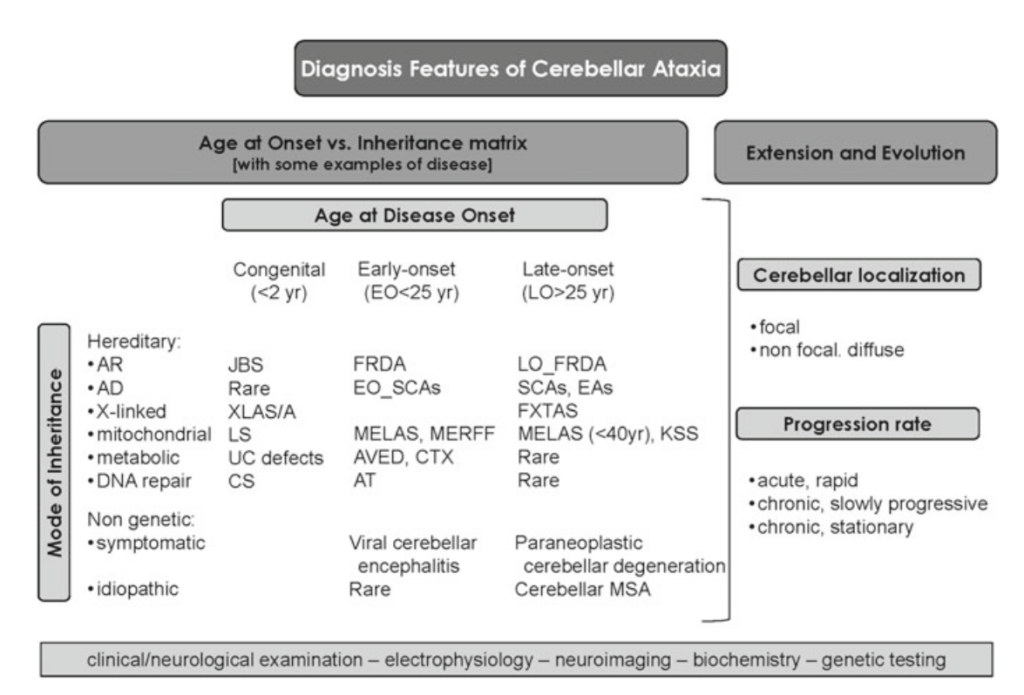
これらの運動失調は、発症年齢に応じて 3 つの主なカテゴリに分類できます。
- 乳児期および幼児の先天性運動失調 (2 年未満): これらの運動失調は通常、生後数か月間から症状が現れます。それらは小脳の形成と発達の欠陥に関連しており、遺伝的問題や先天的奇形に関連している可能性があります。
- 小児期、青年期、若年成人期の早期発症(25 歳未満): これらの運動失調は、小児期、青年期、または青年期初期に始まります。それらは、神経遺伝性疾患、発達異常、または後天的な損傷によって引き起こされる可能性があります。
- 遅発性小脳失調症: 25 歳以降に発症し、神経学的、遺伝的、または環境的要因によって続発する可能性があります。
診断の鑑別における発症年齢の重要性
発症年齢は、さまざまな形態の運動失調を診断上区別する上で重要です。臨床現場では、 発症年齢に基づく小脳性運動失調症の鑑別診断 (Difamino, 2020) は、発症年齢が特定の病状の特定にどのような影響を与えるかを理解するための貴重な指針を提供します。
先天性運動失調症の典型的な症例
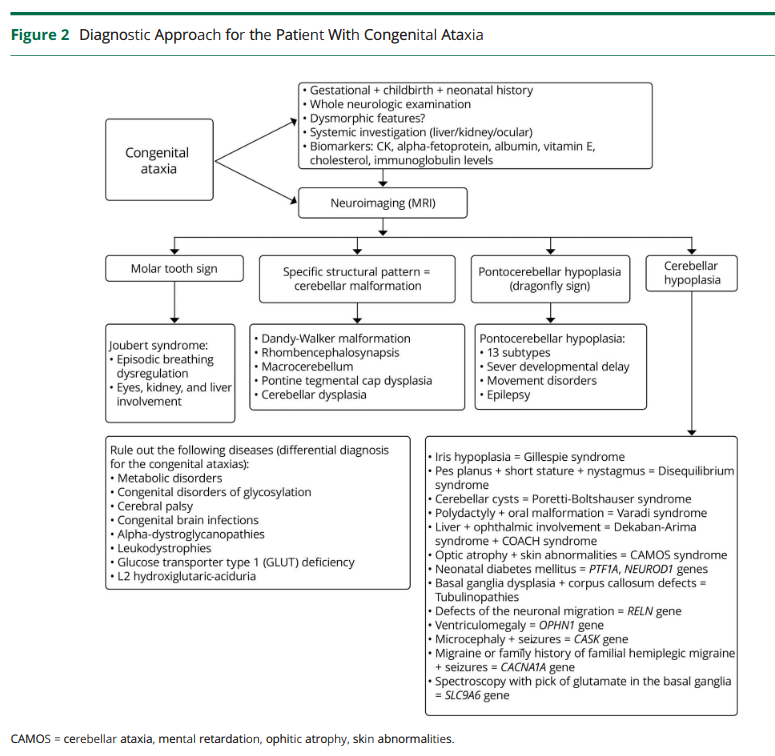
先天性運動失調の典型的なケースは、座ったり、歩いたり、細かい動きを制御したりすることが困難な生後 6 か月の赤ちゃんかもしれません。臨床評価と脳磁気共鳴画像法 (MRI) などの補足研究により、先天性運動失調を示す小脳の異常が明らかになることがあります。
メカニズムと解剖生理学的基礎
先天性運動失調は、筋肉の調整とバランスに不可欠な小脳の形成と発達の欠陥によって引き起こされます。などの遺伝子の変化 ATXN1、ATXN2、ATXN3とりわけ、非進行性の先天性運動失調を引き起こす可能性があります。
画像解釈
画像 (図 1 ~ 5) は、先天性運動失調患者の小脳萎縮のパターンを示しています。図 1 は小脳容積の減少を示し、図 2 は小脳の基底構造の保存を示しています。図 3 と 4 は、罹患患者における小脳の機能的活動の低下を詳しく示しています。最後に、図 5 は、発症年齢と小脳の罹患領域の解剖学的位置との関係を示しています。
結論
発症年齢は、小脳性運動失調の診断の鑑別において重要な要素です。これらの運動失調の臨床的、解剖学的、分子的特徴を知ることで、証拠に基づいた管理とより正確な予後が可能になります。診断ツールの統合と遺伝的バイオマーカーの研究は、正確な診断と効果的な治療に不可欠です。
参考文献
【デファミノ、2020】パラオ、アルパ、グリュオル、鯉渕。 発症年齢に基づく小脳性運動失調症の鑑別診断。 DOI: 10.1007/978-3-319-24551-5_70
19955111
{19955111:GVZPNCAR}
1
バンクーバー
50
デフォルト
7746
https://neuropediatoolkit.org/wp-content/plugins/zotpress/
%7B%22status%22%3A%22success%22%2C%22updateneeded%22%3Afalse%2C%22instance%22%3Afalse%2C%22meta%22%3A%7B%22request_last%22%3A0%2C%22request_next%22%3A0%2C%22used_cache%22%3Atrue%7D%2C%22data%22%3A%5B%7B%22key%22%3A%22GVZPNCAR%22%2C%22library%22%3A%7B%22id%22%3A19955111%7D%2C%22meta%22%3A%7B%22creatorSummary%22%3A%22Palau%20and%20Arpa%22%2C%22parsedDate%22%3A%222016%22%2C%22numChildren%22%3A1%7D%2C%22bib%22%3A%22%26lt%3Bdiv%20class%3D%26quot%3Bcsl-bib-body%26quot%3B%20style%3D%26quot%3Bline-height%3A%201.35%3B%20%26quot%3B%26gt%3B%5Cn%20%20%26lt%3Bdiv%20class%3D%26quot%3Bcsl-entry%26quot%3B%20style%3D%26quot%3Bclear%3A%20left%3B%20%26quot%3B%26gt%3B%5Cn%20%20%20%20%26lt%3Bdiv%20class%3D%26quot%3Bcsl-left-margin%26quot%3B%20style%3D%26quot%3Bfloat%3A%20left%3B%20padding-right%3A%200.5em%3B%20text-align%3A%20right%3B%20width%3A%201em%3B%26quot%3B%26gt%3B1.%26lt%3B%5C%2Fdiv%26gt%3B%26lt%3Bdiv%20class%3D%26quot%3Bcsl-right-inline%26quot%3B%20style%3D%26quot%3Bmargin%3A%200%20.4em%200%201.5em%3B%26quot%3B%26gt%3BPalau%20F%2C%20Arpa%20J.%20Differential%20Diagnosis%20of%20Cerebellar%20Ataxias%20on%20the%20Basis%20of%20the%20Age%20at%20Onset.%20In%3A%20Gruol%20DL%2C%20Koibuchi%20N%2C%20Manto%20M%2C%20Molinari%20M%2C%20Schmahmann%20JD%2C%20Shen%20Y%2C%20editors.%20Essentials%20of%20Cerebellum%20and%20Cerebellar%20Disorders%3A%20A%20Primer%20For%20Graduate%20Students%20%5BInternet%5D.%20Cham%3A%20Springer%20International%20Publishing%3B%202016%20%5Bcited%202025%20Feb%2024%5D.%20p.%20523%26%23x2013%3B9.%20Available%20from%3A%20%26lt%3Ba%20class%3D%26%23039%3Bzp-ItemURL%26%23039%3B%20href%3D%26%23039%3Bhttps%3A%5C%2F%5C%2Fdoi.org%5C%2F10.1007%5C%2F978-3-319-24551-5_70%26%23039%3B%26gt%3Bhttps%3A%5C%2F%5C%2Fdoi.org%5C%2F10.1007%5C%2F978-3-319-24551-5_70%26lt%3B%5C%2Fa%26gt%3B%26lt%3B%5C%2Fdiv%26gt%3B%5Cn%20%20%26lt%3B%5C%2Fdiv%26gt%3B%5Cn%26lt%3B%5C%2Fdiv%26gt%3B%22%2C%22data%22%3A%7B%22itemType%22%3A%22bookSection%22%2C%22title%22%3A%22Differential%20Diagnosis%20of%20Cerebellar%20Ataxias%20on%20the%20Basis%20of%20the%20Age%20at%20Onset%22%2C%22creators%22%3A%5B%7B%22creatorType%22%3A%22author%22%2C%22firstName%22%3A%22Francesc%22%2C%22lastName%22%3A%22Palau%22%7D%2C%7B%22creatorType%22%3A%22author%22%2C%22firstName%22%3A%22Javier%22%2C%22lastName%22%3A%22Arpa%22%7D%2C%7B%22creatorType%22%3A%22editor%22%2C%22firstName%22%3A%22Donna%20L.%22%2C%22lastName%22%3A%22Gruol%22%7D%2C%7B%22creatorType%22%3A%22editor%22%2C%22firstName%22%3A%22Noriyuki%22%2C%22lastName%22%3A%22Koibuchi%22%7D%2C%7B%22creatorType%22%3A%22editor%22%2C%22firstName%22%3A%22Mario%22%2C%22lastName%22%3A%22Manto%22%7D%2C%7B%22creatorType%22%3A%22editor%22%2C%22firstName%22%3A%22Marco%22%2C%22lastName%22%3A%22Molinari%22%7D%2C%7B%22creatorType%22%3A%22editor%22%2C%22firstName%22%3A%22Jeremy%20D.%22%2C%22lastName%22%3A%22Schmahmann%22%7D%2C%7B%22creatorType%22%3A%22editor%22%2C%22firstName%22%3A%22Ying%22%2C%22lastName%22%3A%22Shen%22%7D%5D%2C%22abstractNote%22%3A%22Ataxias%20are%20a%20complex%20and%20heterogeneous%20group%20of%20disorders%20characterized%20by%20the%20absence%20of%20order%20and%20coordination%20of%20voluntary%20movements%20and%20loss%20of%20equilibrium.%20The%20major%20clinical%20criteria%20for%20diagnosis%20include%20disease%20extension%20%28focal%20vs%20non%20focal%29%2C%20etiology%20%28hereditary%20vs%20symptomatic%20or%20idiopathic%29%2C%20progression%20rate%2C%20age%20at%20onset%2C%20and%20neurological%20and%20systemic%20symptoms%20that%20support%20the%20diagnosis%20of%20specific%20disorders.%20Age%20at%20onset%20is%20a%20very%20important%20clinical%20tool%20that%20along%20with%20inheritance%20are%20useful%20address%20the%20proper%20differential%20diagnosis.%20In%20this%20way%20three%20major%20categories%20of%20cerebellar%20ataxias%20may%20be%20recognized%3A%20%28i%29%20congenital%20ataxias%20in%20infancy%20and%20young%20children%20%28%26lt%3B2%20years%29%2C%20%28ii%29%20early-onset%20in%20childhood%2C%20adolescence%20and%20young%20adulthood%20%28%26lt%3B25%20years%29%2C%20and%20%28iii%29%20late-onset%20cerebellar%20ataxias.%22%2C%22bookTitle%22%3A%22Essentials%20of%20Cerebellum%20and%20Cerebellar%20Disorders%3A%20A%20Primer%20For%20Graduate%20Students%22%2C%22date%22%3A%222016%22%2C%22originalDate%22%3A%22%22%2C%22originalPublisher%22%3A%22%22%2C%22originalPlace%22%3A%22%22%2C%22format%22%3A%22%22%2C%22ISBN%22%3A%22978-3-319-24551-5%22%2C%22DOI%22%3A%2210.1007%5C%2F978-3-319-24551-5_70%22%2C%22citationKey%22%3A%22%22%2C%22url%22%3A%22https%3A%5C%2F%5C%2Fdoi.org%5C%2F10.1007%5C%2F978-3-319-24551-5_70%22%2C%22ISSN%22%3A%22%22%2C%22language%22%3A%22en%22%2C%22collections%22%3A%5B%22RHJ4SR7B%22%5D%2C%22dateModified%22%3A%222026-07-15T22%3A41%3A54Z%22%7D%7D%5D%7D
1.
Palau F、Arpa J. 発症年齢に基づく小脳失調症の鑑別診断。参加者: Gruol DL、Koibuchi N、Manto M、Molinari M、Schmahmann JD、Shen Y、編集者。小脳および小脳障害の要点: 大学院生のための入門書 [インターネット]。チャム: Springer International Publishing; 2016 年 [2025 年 2 月 24 日引用]。 p. 523-9。以下から入手可能:
https://doi.org/10.1007/978-3-319-24551-5_70
19955111
{19955111:SCVLXL47}
1
バンクーバー
50
デフォルト
7746
https://neuropediatoolkit.org/wp-content/plugins/zotpress/
 図 6. 非進行性の先天性運動失調を発症年齢に応じて分類し、症状の発症時期によって 3 つの主要なグループを区別するスキーム。
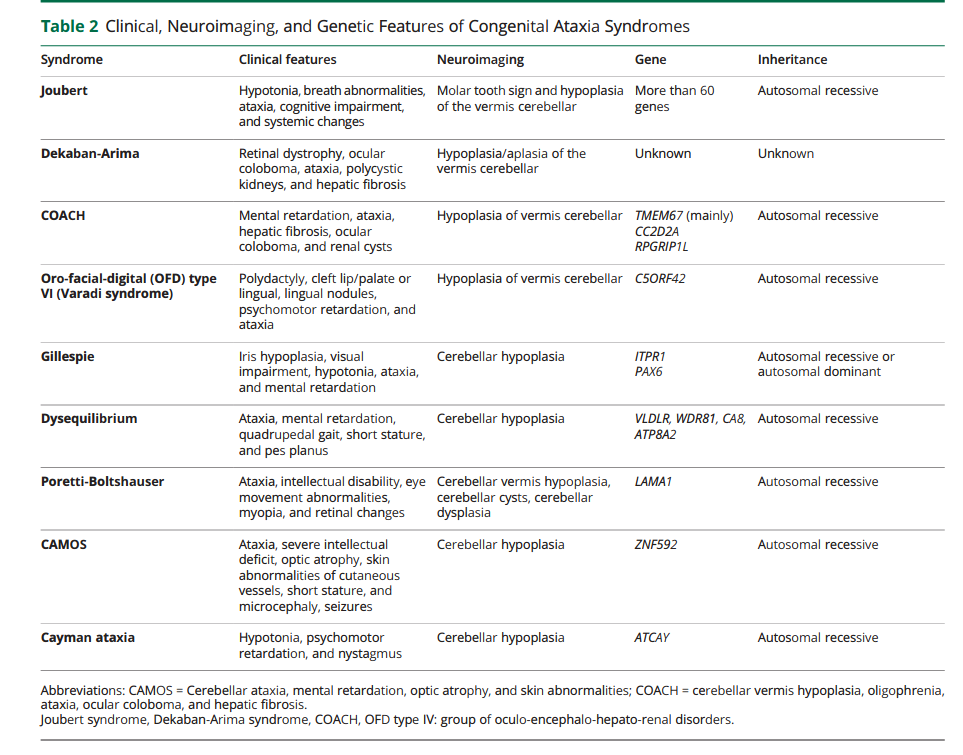 図 7. 小脳性運動失調の鑑別診断の基本的な基準としての発症年齢の重要性を示す図。
 図 8. 非進行性の先天性運動失調のカテゴリーと、小脳奇形や遺伝子変異を含む各グループの根底にある病因との関係のグラフ表示。
 図 9. 発症年齢と運動失調の各グループの考えられる遺伝的または構造的原因との相関関係を示す臨床図。