

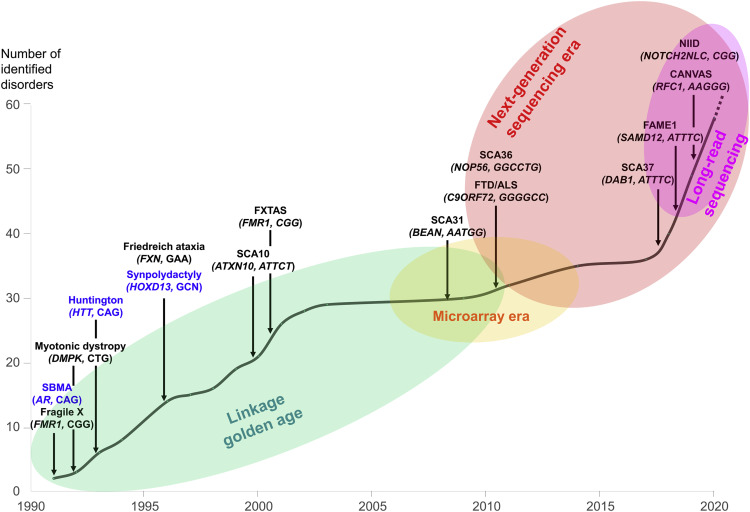
1、按单位规模分类
- STR(微卫星): 1-6 bp → 神经病理厚度
- VNTR(广义): 可变份数,最大单位
- 经典小卫星: 10-60 bp(INS、MUC1)
- 大型卫星: 数千 bp — 相同的原理(不同数量的拷贝),更大的单位 (FSHD/D4Z4)
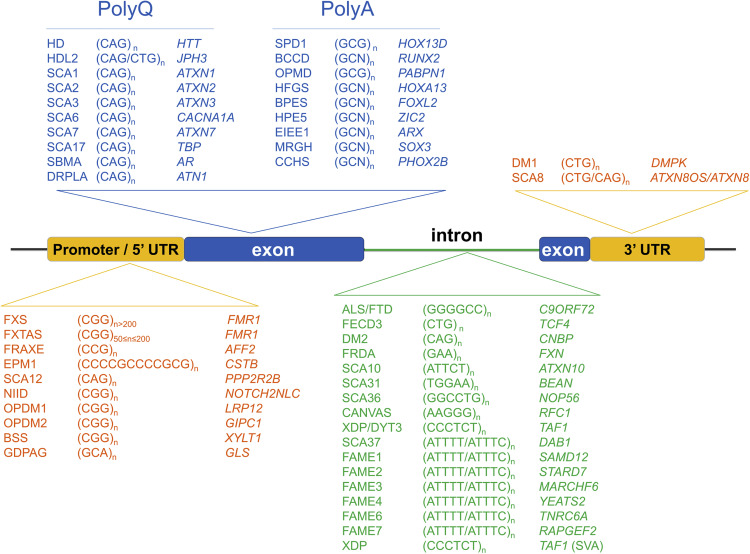
2. 为什么它们不稳定(共同机制)
- 复制过程中DNA聚合酶的滑移
- 新生链在移位寄存器中解离并重新结合→循环
- 新生链中的循环 → 扩张
- 模具钢绞线环 → 收缩
- 先验长度越大,临界阈值后出现循环→非线性不稳定的概率就越大(正常→预突变→完全突变)
临床后果: 遗传预期 = 这种减数分裂不稳定性增加的表型表现(父系或母系偏差取决于疾病)。
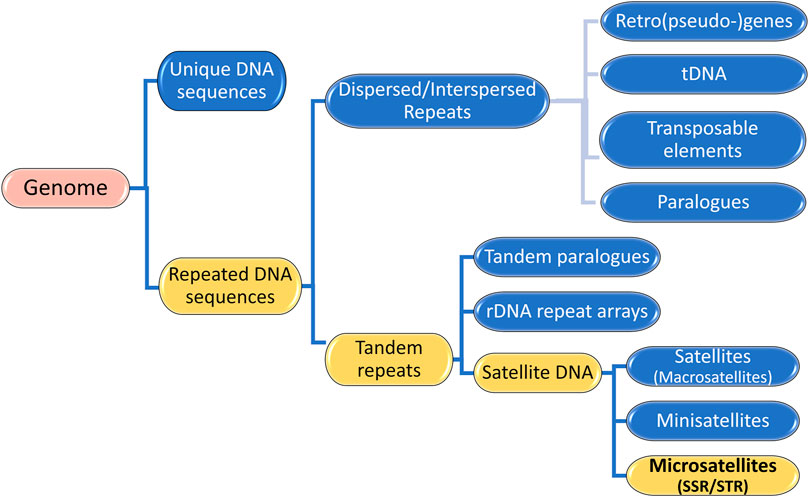
3. 取决于重复位置(STR 块)的三种机制
A) 编码外显子,三联体 (CAG=polyQ)
- 多聚谷氨酰胺束异常蛋白
- 错误折叠→核内聚集
- 毒性功能增益, 主导的
- 例如:亨廷顿、SCA、肯尼迪(X 连锁)
B) 非编码区(UTR、内含子),大扩展
- 表观遗传沉默 → 过度甲基化 → 功能丧失(Fragile X,Friedreich)
- RNA毒性 → 通过具有扩展重复序列的信使 RNA 来隔离剪接蛋白(肌强直,C9orf72)
STR引起的神经系统疾病。
| 缩写表型(MIM 编号) | 基因 | 继承方式 | 重复主题 | 基因上的位置 | 致病性重复次数a | 染色体 | 坐标 (hg38) | 临床表型 | 参考 | |
|---|---|---|---|---|---|---|---|---|---|---|
| C9-FTD C9-ALS (#10550) | C9orf72 | 广告。 | GGGGCC | 5' 区域 | 24–4000 | chr9 | 27573485 | 27573546 | 额颞叶痴呆、肌萎缩侧索硬化症 | [32, 47, 65] |
| 帆布 (#614575) | RFC1 | A.R. | (阿格格)400–2000 (ACAG)经验值 AAAAG(正常) | 内含子2 | 400–2000 | 染色体4 | 39348425 | 39348483 | 小脑性共济失调、神经病和前庭无反射综合征 | [11, 28, 138] |
| DM1 (#160900) | DMPK | 广告。 | CTG (中断:CCG) | 3’区域 | 50–10,000 | 第19位基因 | 45770205 | 45770266 | 强直性肌营养不良1 | [60, 176] |
| DM2 (#602668) | 中国国家石油公司 (ZNF9) | 广告。 | CCTG | 内含子1 | 50–11,000 | chr3 | 129172577 | 129172656 | 强直性肌营养不良2 | [176] |
| DRPLA (#125370) | ATN1 | 广告。 | 冠状动脉造影 | 外显子5 | 49–93 | chr12 | 6936717 | 6936775 | 齿状红核-苍白球路易体萎缩 | [78] |
| EIEE1/XLID (#308350) (#300419) (#300215) | 阿尔克斯 | XL | 海湾合作委员会 | 外显子2 | 17–27 | chrX | 25013654 | 25013697 | 疾病的临床谱,包括发育性脑病和癫痫性脑病 1、伴有生殖器异常的积水性无脑畸形、X 连锁无脑畸形 2 和 X 连锁智力低下 29 | [73, 150] |
| 名誉1 (#601068) | SAMD12 | 广告。 | TTCA 在 TTTTA 重复区域内 | 内含子4 | 105–3680 | chr8 | 118366813 | 118366918 | 家族性成人肌阵挛性癫痫 1 | [22, 68] |
| FAME2 (#607876) | 标准7 | 广告。 | ATTTC 在 ATTTT 重复区域内 | 内含子1 | 150–460 | chr2 | 96197067 | 96197124 | 家族性成人肌阵挛性癫痫2 | [27] |
| FAME3 (#613608) | 3月6日 | 广告。 | TTCA 在 TTTTA 重复区域内 | 内含子1 | 700–1035 | chr5 | 10356339 | 10356411 | 家族性成人肌阵挛性癫痫 3 | [40] |
| FAME6 (#618074) | TNRC6A | 广告。 | TTCA 在 TTTTA 重复区域内 | 内含子1 | ? (只有1个家庭) | chr16 | 24613439 | 24613532 | 家族性成人肌阵挛性癫痫 6 | [68] |
| FAME7 (#618075) | RAPGEF2 | 广告。 | TTCA 在 TTTTA 重复区域内 | 内含子14 | ? (只有1个家庭) | 染色体4 | 159342527 | 159342618 | 家族性成人肌阵挛性癫痫 7 | [68] |
| 弗拉克斯 (#309548) | FMR2 (AF2) | 卡侬 | 海湾合作委员会 | 5' 区域 | > 200 | chrX | 148500605 | 148500753 | 精神发育迟滞,X连锁,FRAXE型 | [53] |
| FRDA (#229300) | FXN | A.R. | GAA | 内含子1 | 66–1300 | chr9 | 69037275 | 69037314 | 弗里德赖希共济失调 | [5, 19, 162] |
| FXS (#300624) 福克斯塔斯 (#300623) | FMR1 | XL | CGG | 5' 区域 | 200–3000 55–200 | chrX | 147911979 | 147912111 | 脆性X综合征 脆性 X 震颤/共济失调综合征、卵巢早衰 1 | [162] [56] |
| 高清 (#143100) | 高温试验 | 广告。 | 冠状动脉造影 (中断:CAA) | 外显子1 | 36–250 | 染色体4 | 3074876 | 3074941 | 亨廷顿病 | [96, 101] |
| 高密度脂蛋白1 (#603218) | PRNP | 广告。 | 24碱基 八肽 PHGGGWGQ | 外显子2 | 8–14 | chr20 | 4699379 | 4699380 | 亨廷顿病样 1 | [108] |
| 高密度脂蛋白2 (#606438) | JPH3 | 广告。 | CTG | 外显子2A | 40–59 | chr16 | 87604283 | 87604329 | 亨廷顿病样2 | [62] |
| 汉密尔顿 | 大众WA1 | A.R. | GGCGCGGAGC | 外显子1 | 3 | chr1 | 1435799 | 1435820 | 遗传性轴突运动神经病 | [121] |
| NIID (#603472) | NOTCH2NLC | 广告。 | CGG | 5′区域 | 66–517 | chr1 | 149390803 | 149390842 | 神经元核内包涵体病 | [55, 118, 146] |
| OPDM1 (#164310) | LRP12 | 广告。 | CGG | 5′区域 | 90–130 | chr8 | 104588965 | 104588999 | 眼咽远端肌病 | [69] |
| OPDM2 (#618940) | GIPC1 | 广告。 | CGG | 5' 区域 | 70–164 | 第19位基因 | 14496029 | 14496104 | 眼咽远端肌病 | [172] |
| OPMD (#164300) | PABPN1 | 广告。 | G.C.G. | 外显子1 | 7–18 | chr14 | 23321472 | 23321511 | 眼咽肌营养不良症 | [15, 129] |
| OPML1 (#618637) | NUTM2B-AS1 | 广告。 | CGG | 5′区域 | 16–160 | chr10 | 79826364 | 79826403 | 眼咽肌病伴白质脑病 1 | [69] |
| SBMA (#313200) | A.R. | 卡侬 | 冠状动脉造影 | 外显子1 | 38–68 | chrX | 67545317 | 67545419 | 肯尼迪脊髓和延髓肌萎缩症(肯尼迪病) | [44, 82, 147] |
| SCA1 (#164400) | ATXN1 | 广告。 | 冠状动脉造影 (中断:CAT) | 外显子8 | 39–91 | chr6 | 16327636 | 16327723 | 脊髓小脑共济失调1 | [120, 141] |
| SCA2 (#183090) | ATXN2 | 广告。 | 冠状动脉造影 (中断:CAA、CGG、CGC) | 外显子1 | 33–200 (29–32 ALS 风险增加) | chr12 | 111598950 | 111599019 | 脊髓小脑共济失调2 | [18, 133, 141, 148] |
| SCA3 (#109150) | ATXN3 | 广告。 | 冠状动脉造影 | 外显子10 | 53–87 | chr14 | 92071011 | 92071052 | 脊髓小脑共济失调3 | [74] |
| SCA6 (183086) | CACNA1A | 广告。 | 冠状动脉造影 | 外显子 47 | 19–33 | 第19位基因 | 13207858 | 13207897 | 脊髓小脑共济失调 6 | [141, 181] |
| SCA7 (#164500) | ATXN7 | 广告。 | 冠状动脉造影 | 外显子1 | 34–460 | chr3 | 63912685 | 63912716 | 脊髓小脑共济失调7 | [18, 30] |
| SCA8 (#608768) | ATXN8 | 广告。 | CAG/标签 | 3'UTR | 74–1300 | chr13 | 70139383 | 70139428 | 脊髓小脑共济失调8 | [79, 141, 155] |
| SCA10 (#603516) | ATXN10 | 广告。 | ATTCT (中断:ATCCT) | 内含子9 | 280–4500 | chr22 | 45795355 | 45795424 | 脊髓小脑共济失调 10 | [88, 100, 141] |
| SCA12 (#604326) | PPP2R2B | 广告。 | 冠状动脉造影 | 5' 区域 | 51–78 | chr5 | 146878729 | 146878758 | 脊髓小脑共济失调 12 | [63, 94, 141] |
| SCA17 (#607136) | 待定时间 | 广告。 | 冠状动脉造影 (中断:CAT、CAA) | 外显子3 | 43–66 | chr6 | 170561907 | 170562017 | 脊髓小脑性共济失调 17,亨廷顿病样 4 | [97, 115, 141] |
| SCA31 (#117210) | 豆1 | 广告。 | TGAA 在 TAAAA 和 TAGAA 重复区域内 | 内含子/ 基因间区 | 500–760 (> 110 TGGAA 重复) | chr16 | 66495475 | 66495509 | 脊髓小脑共济失调 31 | [134] |
| SCA36 (#614153) | 诺普56 | 广告。 | GGCCTG | 内含子1 | 650–2500 | chr20 | 2652733 | 2652775 | 脊髓小脑共济失调 36 | [77] |
| SCA37 (#615945) | DAB1 | 广告。 | ATTTC 在(ATTTT)内7–400 重复区域 | 5' 区域 | 31–75 | chr1 | 57367044 | 57367125 | 脊髓小脑共济失调 37 | [139] |
| 集装式 (#254800) | 科学技术委员会 | A.R. | CCCCGCCCCGCG | 上游 5'UTR | 30–125 | chr21 | 43776444 | 43776479 | 进行性肌阵挛癫痫 1A(Unverricht 和 Lundborg 病) | [87, 91] |
a这些范围因研究而异,并且上限通常未知。值得注意的是,这些仅具有潜在致病性。健康对照人群中有一小部分(< 1%)具有扩展的等位基因,但没有临床表现。同样,低于给定范围的等位基因可能具有中间等位基因和前突变综合征
STR引起的先天性和发育性疾病。
| 表型 (OMIM#) | 基因 | 主题 | 致病性重复次数 | 地点 | (HG38) | 参考 | ||
|---|---|---|---|---|---|---|---|---|
| BPES (#110100) | FOXL2 | G.C.G. | 22-24日 | 外显子 | chr3 | 138946022 | 138946062 | [116] |
| CCHS (#209880) | PHOX2B | G.C.G. | 24–33 | 外显子 | 染色体4 | 41745976 | 41746022 | [7] |
| 数据库QD2 (#615777) | XYLT1 | GGC | 100–800 | 5' 区域 | chr16 | 17470869 | 17470967 | [86] |
| FECD3 (#613267) | TCF4 | 热气相色谱法 | > 50 | 内含子 | chr18a | 55222184a | 55635956a | [167] |
| 国内生产总值总局 (#618412) | 格力斯 | GCA | > 300 | 5' 区域 | chr2 | 190880873 | 190880920 | [159] |
| H.F.G. (#140000) | HOXA13 | G.C.G. | 24–26 | 外显子 | chr7 | 27199827 | 27199967 | [50] |
| 惠普E5 (#609637) | ZIC2 | G.C.G. | 25 | 外显子 | chr13 | 99985449 | 99985494 | [17] |
| 哈桑8 (#616488) | PRDM12 | G.C.G. | 18–19 | 外显子 | chr9 | 130681606 | 130681641 | [23] |
| 防雷器1 (#186000) | 霍克斯D13 | G.C.G. | 22–29 | 外显子 | chr2 | 176093058 | 176093099 | [2] |
| XLMR (#300123) | 硫氧化物3 | G.C.G. | 15–26 | 外显子 | chr3 | 181712415 | 181712456 | [89] |
a列出整个基因的位置
4.VNTR(广义)块
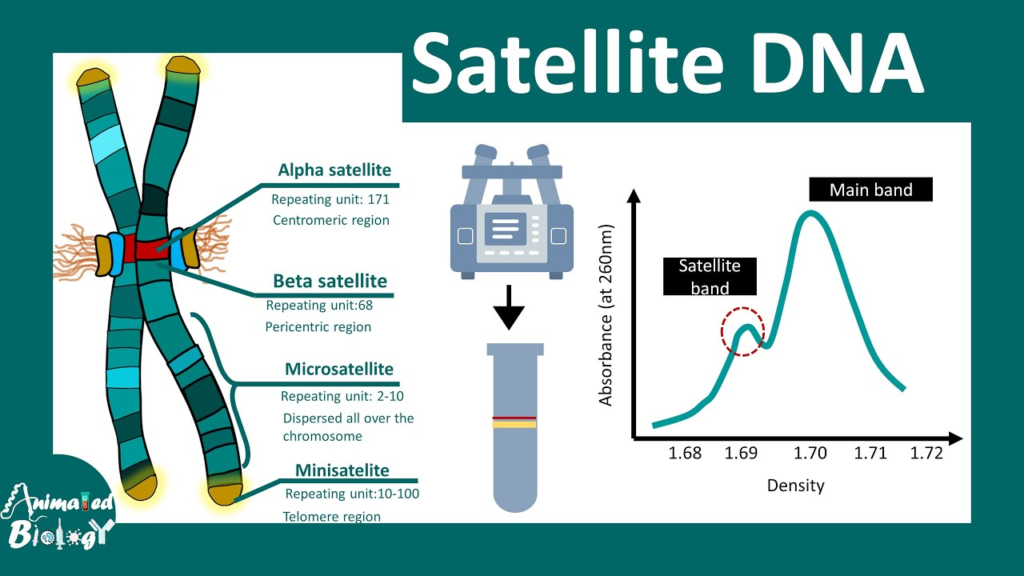
经典小型卫星
- 没有突变致病阈值的拷贝数变异
- 它们调节多基因风险(INS → 1 型糖尿病)或引起结构性疾病(MUC1 → ADTKD)
- 法医DNA指纹识别的历史基础
大型卫星
——FSHD 典型案例
- D4Z4(亚端粒 4q35):3.3 kb 单元
- 正常:11-100份/病理:≤10份(FSHD1)— 收缩,不展开
- 收缩打开染色质 → 去抑制 多克斯4 (通常在成人肌肉中沉默)→毒性
- 需要允许的 4qA 单倍型(4qB 中的相同收缩不会引起疾病)
- FSHD2:正常数组,但突变 SMCHD1 → 通过反式途径得到相同的结果(DUX4 去抑制),而不是通过顺式收缩
- 不遵循经典的遗传预期(表观遗传机制,而不是重复竞赛)
- 是的,有一小部分但重要的疾病与 FSHD 具有“非典型”机制(大量重复、经典非微卫星和/或表观遗传机制,而不是直接毒性)。与您的计划最相关的:
—- ICF综合症(免疫缺陷、着丝粒不稳定、面部异常)
- 影响卫星重复序列 2 和 3(着丝粒周围序列,不是 D4Z4,但与大卫星/重复异染色质的原理相同)
- 机制:突变 DNMT3B (o ZBTB24, CDCA7, 地狱) → 低甲基化 这些重复区域→着丝粒周围解聚→染色体不稳定
- 它实际上是 FSHD2 机制的常染色体隐性遗传等效物:使重复异染色质保持沉默的机制失败,而不是重复本身失败。
---- 进行性肌阵挛癫痫 1 型 (Unverricht-Lundborg).
- 基因 科学技术委员会 (半胱氨酸蛋白酶抑制剂 B)
- 重复 十二相机 (12 bp) 位于启动子中 — 微卫星和小卫星之间的边界大小,这是经典 STR 中不完全适合的另一种情况
- 机制: 扩张 (与 FSHD 不同)但结果是 由于转录减少而丧失功能,而不是蛋白质或 RNA 毒性 — 启动子的扩展只会使基因难以转录
- 用作对比:扩张会导致纯粹的功能丧失,而不会产生有毒增益
19955111
{19955111:N989PCPW},{19955111:XHVJIQA4}
1
温哥华
50
默认
2455
https://neuropediatoolkit.org/wp-content/plugins/zotpress/
%7B%22status%22%3A%22success%22%2C%22updateneeded%22%3Afalse%2C%22instance%22%3Afalse%2C%22meta%22%3A%7B%22request_last%22%3A0%2C%22request_next%22%3A0%2C%22used_cache%22%3Atrue%7D%2C%22data%22%3A%5B%7B%22key%22%3A%22N989PCPW%22%2C%22library%22%3A%7B%22id%22%3A19955111%7D%2C%22meta%22%3A%7B%22creatorSummary%22%3A%22Depienne%20and%20Mandel%22%2C%22parsedDate%22%3A%222021-05-06%22%2C%22numChildren%22%3A1%7D%2C%22bib%22%3A%22%26lt%3Bdiv%20class%3D%26quot%3Bcsl-bib-body%26quot%3B%20style%3D%26quot%3Bline-height%3A%201.35%3B%20%26quot%3B%26gt%3B%5Cn%20%20%26lt%3Bdiv%20class%3D%26quot%3Bcsl-entry%26quot%3B%20style%3D%26quot%3Bclear%3A%20left%3B%20%26quot%3B%26gt%3B%5Cn%20%20%20%20%26lt%3Bdiv%20class%3D%26quot%3Bcsl-left-margin%26quot%3B%20style%3D%26quot%3Bfloat%3A%20left%3B%20padding-right%3A%200.5em%3B%20text-align%3A%20right%3B%20width%3A%201em%3B%26quot%3B%26gt%3B1.%26lt%3B%5C%2Fdiv%26gt%3B%26lt%3Bdiv%20class%3D%26quot%3Bcsl-right-inline%26quot%3B%20style%3D%26quot%3Bmargin%3A%200%20.4em%200%201.5em%3B%26quot%3B%26gt%3BDepienne%20C%2C%20Mandel%20JL.%2030%20years%20of%20repeat%20expansion%20disorders%3A%20What%20have%20we%20learned%20and%20what%20are%20the%20remaining%20challenges%3F%20The%20American%20Journal%20of%20Human%20Genetics%20%5BInternet%5D.%202021%20May%206%20%5Bcited%202021%20Sept%2019%5D%3B108%285%29%3A764%26%23x2013%3B85.%20Available%20from%3A%20%26lt%3Ba%20class%3D%26%23039%3Bzp-ItemURL%26%23039%3B%20href%3D%26%23039%3Bhttps%3A%5C%2F%5C%2Fwww.sciencedirect.com%5C%2Fscience%5C%2Farticle%5C%2Fpii%5C%2FS0002929721000951%26%23039%3B%26gt%3Bhttps%3A%5C%2F%5C%2Fwww.sciencedirect.com%5C%2Fscience%5C%2Farticle%5C%2Fpii%5C%2FS0002929721000951%26lt%3B%5C%2Fa%26gt%3B%26lt%3B%5C%2Fdiv%26gt%3B%5Cn%20%20%26lt%3B%5C%2Fdiv%26gt%3B%5Cn%26lt%3B%5C%2Fdiv%26gt%3B%22%2C%22data%22%3A%7B%22itemType%22%3A%22journalArticle%22%2C%22title%22%3A%2230%20years%20of%20repeat%20expansion%20disorders%3A%20What%20have%20we%20learned%20and%20what%20are%20the%20remaining%20challenges%3F%22%2C%22creators%22%3A%5B%7B%22creatorType%22%3A%22author%22%2C%22firstName%22%3A%22Christel%22%2C%22lastName%22%3A%22Depienne%22%7D%2C%7B%22creatorType%22%3A%22author%22%2C%22firstName%22%3A%22Jean-Louis%22%2C%22lastName%22%3A%22Mandel%22%7D%5D%2C%22abstractNote%22%3A%22Tandem%20repeats%20represent%20one%20of%20the%20most%20abundant%20class%20of%20variations%20in%20human%20genomes%2C%20which%20are%20polymorphic%20by%20nature%20and%20become%20highly%20unstable%20in%20a%20length-dependent%20manner.%20The%20expansion%20of%20repeat%20length%20across%20generations%20is%20a%20well-established%20process%20that%20results%20in%20human%20disorders%20mainly%20affecting%20the%20central%20nervous%20system.%20At%20least%2050%20disorders%20associated%20with%20expansion%20loci%20have%20been%20described%20to%20date%2C%20with%20half%20recognized%20only%20in%20the%20last%20ten%20years%2C%20as%20prior%20methodological%20difficulties%20limited%20their%20identification.%20These%20limitations%20still%20apply%20to%20the%20current%20widely%20used%20molecular%20diagnostic%20methods%20%28exome%20or%20gene%20panels%29%20and%20thus%20result%20in%20missed%20diagnosis%20detrimental%20to%20affected%20individuals%20and%20their%20families%2C%20especially%20for%20disorders%20that%20are%20very%20rare%20and%5C%2For%20clinically%20not%20recognizable.%20Most%20of%20these%20disorders%20have%20been%20identified%20through%20family-driven%20approaches%20and%20many%20others%20likely%20remain%20to%20be%20identified.%20The%20recent%20development%20of%20long-read%20technologies%20provides%20a%20unique%20opportunity%20to%20systematically%20investigate%20the%20contribution%20of%20tandem%20repeats%20and%20repeat%20expansions%20to%20the%20genetic%20architecture%20of%20human%20disorders.%20In%20this%20review%2C%20we%20summarize%20the%20current%20and%20most%20recent%20knowledge%20about%20the%20genetics%20of%20repeat%20expansion%20disorders%20and%20the%20diversity%20of%20their%20pathophysiological%20mechanisms%20and%20outline%20the%20perspectives%20of%20developing%20personalized%20treatments%20in%20the%20future.%22%2C%22date%22%3A%22May%206%2C%202021%22%2C%22section%22%3A%22%22%2C%22partNumber%22%3A%22%22%2C%22partTitle%22%3A%22%22%2C%22DOI%22%3A%2210.1016%5C%2Fj.ajhg.2021.03.011%22%2C%22citationKey%22%3A%22%22%2C%22url%22%3A%22https%3A%5C%2F%5C%2Fwww.sciencedirect.com%5C%2Fscience%5C%2Farticle%5C%2Fpii%5C%2FS0002929721000951%22%2C%22PMID%22%3A%22%22%2C%22PMCID%22%3A%22%22%2C%22ISSN%22%3A%220002-9297%22%2C%22language%22%3A%22en%22%2C%22collections%22%3A%5B%22QKPQST8L%22%5D%2C%22dateModified%22%3A%222026-07-15T22%3A41%3A32Z%22%7D%7D%2C%7B%22key%22%3A%22XHVJIQA4%22%2C%22library%22%3A%7B%22id%22%3A19955111%7D%2C%22meta%22%3A%7B%22creatorSummary%22%3A%22Chintalaphani%20et%20al.%22%2C%22parsedDate%22%3A%222021-05-25%22%2C%22numChildren%22%3A2%7D%2C%22bib%22%3A%22%26lt%3Bdiv%20class%3D%26quot%3Bcsl-bib-body%26quot%3B%20style%3D%26quot%3Bline-height%3A%201.35%3B%20%26quot%3B%26gt%3B%5Cn%20%20%26lt%3Bdiv%20class%3D%26quot%3Bcsl-entry%26quot%3B%20style%3D%26quot%3Bclear%3A%20left%3B%20%26quot%3B%26gt%3B%5Cn%20%20%20%20%26lt%3Bdiv%20class%3D%26quot%3Bcsl-left-margin%26quot%3B%20style%3D%26quot%3Bfloat%3A%20left%3B%20padding-right%3A%200.5em%3B%20text-align%3A%20right%3B%20width%3A%201em%3B%26quot%3B%26gt%3B1.%26lt%3B%5C%2Fdiv%26gt%3B%26lt%3Bdiv%20class%3D%26quot%3Bcsl-right-inline%26quot%3B%20style%3D%26quot%3Bmargin%3A%200%20.4em%200%201.5em%3B%26quot%3B%26gt%3BChintalaphani%20SR%2C%20Pineda%20SS%2C%20Deveson%20IW%2C%20Kumar%20KR.%20An%20update%20on%20the%20neurological%20short%20tandem%20repeat%20expansion%20disorders%20and%20the%20emergence%20of%20long-read%20sequencing%20diagnostics.%20Acta%20Neuropathologica%20Communications%20%5BInternet%5D.%202021%20May%2025%20%5Bcited%202021%20Sept%2019%5D%3B9%281%29%3A98.%20Available%20from%3A%20%26lt%3Ba%20class%3D%26%23039%3Bzp-ItemURL%26%23039%3B%20href%3D%26%23039%3Bhttps%3A%5C%2F%5C%2Fdoi.org%5C%2F10.1186%5C%2Fs40478-021-01201-x%26%23039%3B%26gt%3Bhttps%3A%5C%2F%5C%2Fdoi.org%5C%2F10.1186%5C%2Fs40478-021-01201-x%26lt%3B%5C%2Fa%26gt%3B%26lt%3B%5C%2Fdiv%26gt%3B%5Cn%20%20%26lt%3B%5C%2Fdiv%26gt%3B%5Cn%26lt%3B%5C%2Fdiv%26gt%3B%22%2C%22data%22%3A%7B%22itemType%22%3A%22journalArticle%22%2C%22title%22%3A%22An%20update%20on%20the%20neurological%20short%20tandem%20repeat%20expansion%20disorders%20and%20the%20emergence%20of%20long-read%20sequencing%20diagnostics%22%2C%22creators%22%3A%5B%7B%22creatorType%22%3A%22author%22%2C%22firstName%22%3A%22Sanjog%20R.%22%2C%22lastName%22%3A%22Chintalaphani%22%7D%2C%7B%22creatorType%22%3A%22author%22%2C%22firstName%22%3A%22Sandy%20S.%22%2C%22lastName%22%3A%22Pineda%22%7D%2C%7B%22creatorType%22%3A%22author%22%2C%22firstName%22%3A%22Ira%20W.%22%2C%22lastName%22%3A%22Deveson%22%7D%2C%7B%22creatorType%22%3A%22author%22%2C%22firstName%22%3A%22Kishore%20R.%22%2C%22lastName%22%3A%22Kumar%22%7D%5D%2C%22abstractNote%22%3A%22Short%20tandem%20repeat%20%28STR%29%20expansion%20disorders%20are%20an%20important%20cause%20of%20human%20neurological%20disease.%20They%20have%20an%20established%20role%20in%20more%20than%2040%20different%20phenotypes%20including%20the%20myotonic%20dystrophies%2C%20Fragile%20X%20syndrome%2C%20Huntington%5Cu2019s%20disease%2C%20the%20hereditary%20cerebellar%20ataxias%2C%20amyotrophic%20lateral%20sclerosis%20and%20frontotemporal%20dementia.%22%2C%22date%22%3A%22May%2025%2C%202021%22%2C%22section%22%3A%22%22%2C%22partNumber%22%3A%22%22%2C%22partTitle%22%3A%22%22%2C%22DOI%22%3A%2210.1186%5C%2Fs40478-021-01201-x%22%2C%22citationKey%22%3A%22%22%2C%22url%22%3A%22https%3A%5C%2F%5C%2Fdoi.org%5C%2F10.1186%5C%2Fs40478-021-01201-x%22%2C%22PMID%22%3A%22%22%2C%22PMCID%22%3A%22%22%2C%22ISSN%22%3A%222051-5960%22%2C%22language%22%3A%22%22%2C%22collections%22%3A%5B%22QKPQST8L%22%5D%2C%22dateModified%22%3A%222026-05-09T07%3A43%3A45Z%22%7D%7D%5D%7D
1.
德皮安 C,曼德尔 JL。 30 年的重复扩张障碍:我们学到了什么,剩下的挑战是什么?美国人类遗传学杂志[互联网]。 2021 年 5 月 6 日[引用于 2021 年 9 月 19 日];108(5):764–85。可从: https://www.sciencedirect.com/science/article/pii/S0002929721000951
1.
Chintalaphani SR、Pineda SS、Deveson IW、Kumar KR。神经学短串联重复扩增障碍和长读长测序诊断的出现的最新进展。神经病理学通讯学报[互联网]。 2021 年 5 月 25 日[引用于 2021 年 9 月 19 日];9(1):98。可从: https://doi.org/10.1186/s40478-021-01201-x