

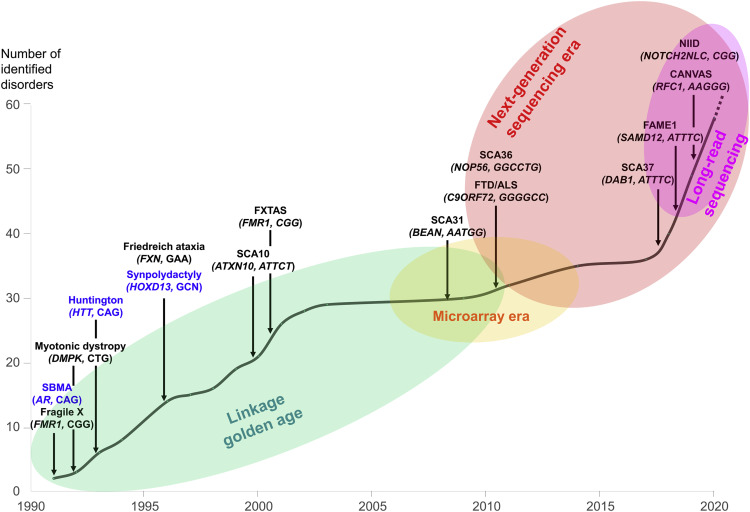
1. ユニットサイズによる分類
- STR (超小型衛星): 1-6 bp → 神経学的病理の厚さ
- VNTR(広義): 可変部数、最大単位
- 古典的なミニ衛星: 10-60 bp (INS、MUC1)
- 巨大衛星: 数千 bp — 同じ原理 (コピー数は可変)、より大きな単位 (FSHD/D4Z4)
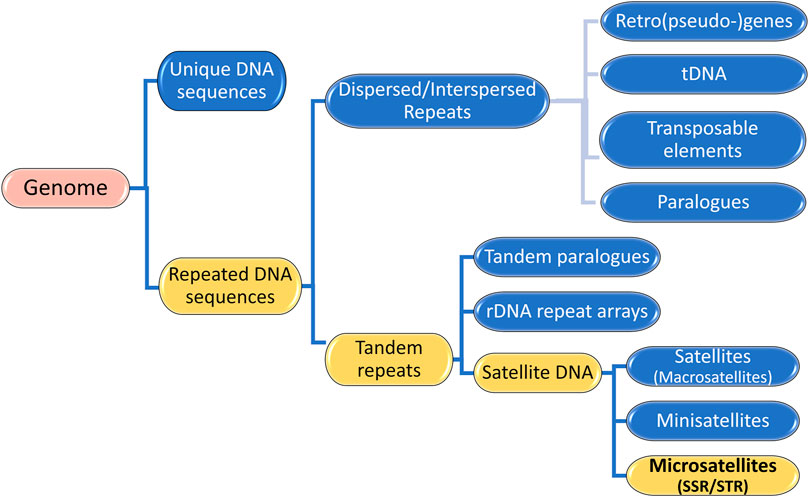
2.なぜ不安定なのか(共通のメカニズム)
- 複製中の DNA ポリメラーゼの滑り
- 新生鎖は、ずれたレジスターで解離と再結合を繰り返す → ループ
- 初期鎖のループ → 拡大
- モールドストランドループ → 収縮
- 事前の長さが大きいほど、ループ→臨界しきい値後の非線形不安定性 (正常→事前突然変異→完全な突然変異) の確率が高くなります。
臨床結果: 遺伝的予測 = この減数分裂不安定性の増大の表現型の発現 (疾患に応じて父方または母方の偏り)。
3. リピート位置に応じた3つの仕組み(STRブロック)
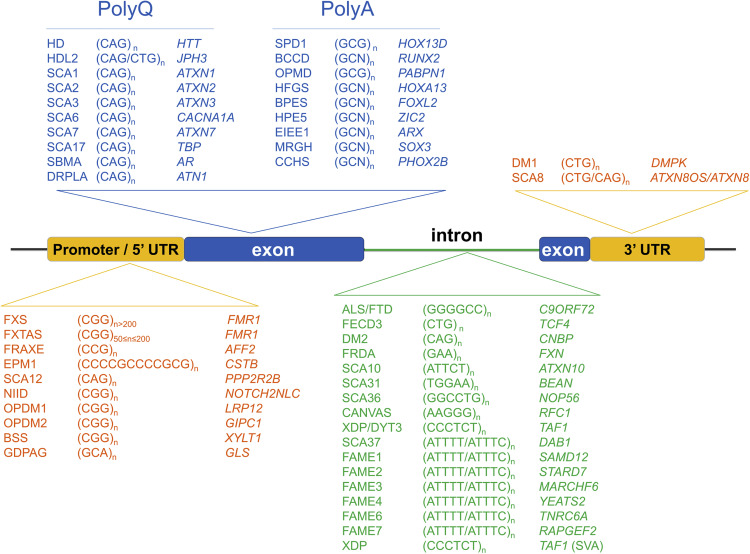
A) コーディングエクソン、トリプレット (CAG=polyQ)
- ポリグルタミントラクトを伴う異常タンパク質
- ミスフォールディング → 核内凝集
- 有毒な機能獲得、 支配的な
- 例: ハンティントン、SCA、ケネディ (X リンク)
B) 非コード領域 (UTR、イントロン)、大規模な拡張
- エピジェネティックなサイレンシング → 過剰メチル化 → 機能喪失 (Fragile X、フリードライヒ)
- RNA毒性 → 拡張されたリピートを持つメッセンジャー RNA によるスプライシングタンパク質の隔離 (筋緊張性、C9orf72)
STR によって引き起こされる神経疾患。
| 表現型の短縮形 (MIM 番号) | 遺伝子 | 継承のモード | リピートモチーフ | 遺伝子上の位置 | 病原性リピート数a | 染色体 | 座標 (hg38) | 臨床表現型 | 参考文献 | |
|---|---|---|---|---|---|---|---|---|---|---|
| C9-FTD C9-ALS (#10550) | C9orf72 | 広告。 | GGGGCC | 5 ’リージョン | 24 -4000 | ch9 | 27573485 | 27573546 | 前頭側頭型認知症、筋萎縮性側索硬化症 | [32, 47, 65] |
| キャンバス (#614575) | RFC1 | A.R. | (ああああ)400–2000 (ACAGG)経験値 AAAAG(通常) | イントロン2 | 400–2000 | ch4 | 39348425 | 39348483 | 小脳失調症、神経障害、前庭反射症候群 | [11, 28, 138] |
| DM1 (#160900) | DMPK | 広告。 | CTG (中断:CCG) | 3' 領域 | 50~10,000 | ch19 | 45770205 | 45770266 | 筋強直性ジストロフィー 1 | [60, 176] |
| DM2 (#602668) | CNBP (ZNF9) | 広告。 | CCTG | イントロン 1 | 50~11,000 | chr3 | 129172577 | 129172656 | 筋強直性ジストロフィー 2 | [176] |
| DRPLA (#125370) | ATN1 | 広告。 | 全能神教会 | エクソン5 | 49–93 | ch12 | 6936717 | 6936775 | 歯状赤核淡蒼球ルイ体萎縮症 | [78] |
| EIEE1/XLID (#308350) (#300419) (#300215) | ARX | XL | GCC | エクソン2 | 17–27 | chrX | 25013654 | 25013697 | 発達性脳症およびてんかん性脳症 1、生殖器異常を伴う水脳症、X 連鎖性滑脳症 2、X 連鎖性精神遅滞 29 を含む疾患の臨床スペクトル | [73, 150] |
| FAME 1 (# 601068) | SAMD12 | 広告。 | TTTCA TTTTAリピート領域内 | イントロン 4 | 105–3680 | chr8 | 118366813 | 118366918 | 家族性成人ミオクロニーてんかん 1 | [22, 68] |
| 名声2 (#607876) | STARD 7 | 広告。 | アッタチ ATTTTリピート領域内 | イントロン 1 | 150~460 | ch2 | 96197067 | 96197124 | 家族性成人ミオクロニーてんかん 2 | [27] |
| フェイム3 (#613608) | MARCHF6 | 広告。 | TTTCA TTTTAリピート領域内 | イントロン 1 | 700–1035 | chr5 | 10356339 | 10356411 | 家族性成人ミオクロニーてんかん 3 | [40] |
| 名声6 (#618074) | TNRC6A | 広告。 | TTTCA TTTTAリピート領域内 | イントロン 1 | ? (1家族のみ) | ch16 | 24613439 | 24613532 | 家族性成人ミオクロニーてんかん 6 | [68] |
| フェイム7 (#618075) | RAPGEF2 | 広告。 | TTTCA TTTTAリピート領域内 | イントロン14 | ? (1家族のみ) | ch4 | 159342527 | 159342618 | 家族性成人ミオクロニーてんかん 7 | [68] |
| フラックス (#309548) | FMR2 (AFF2) | XLR | GCC | 5 ’リージョン | > 200 | chrX | 148500605 | 148500753 | 精神遅滞、X 連鎖、FRAXE 型 | [53] |
| FRDA (#229300) | FXN | A.R. | GAA | イントロン 1 | 66–1300 | ch9 | 69037275 | 69037314 | フリードライヒ運動失調症 | [5, 19, 162] |
| FXS (#300624) FXTAS (#300623) | FMR 1 | XL | CGG | 5 ’リージョン | 200~3000 55~200 | chrX | 147911979 | 147912111 | 脆弱X症候群 脆弱X振戦/運動失調症候群、早発卵巣不全1 | [162] [56] |
| HD (#143100) | HTT | 広告。 | 全能神教会 (中断:CAA) | エクソン1 | 36~250 | ch4 | 3074876 | 3074941 | ハンチントン病 | [96, 101] |
| HDL1 (#603218) | PRNP | 広告。 | 24ベース オクタペプチドPHGGGWGQ | エクソン2 | 8~14 | chr20 | 4699379 | 4699380 | ハンチントン病様1 | [108] |
| HDL2 (#606438) | JPH3 | 広告。 | CTG | エクソン2A | 40–59 | ch16 | 87604283 | 87604329 | ハンチントン病様2 | [62] |
| HMN | VWA1 | A.R. | GGCGCGGAGC | エクソン1 | 3 | chr1 | 1435799 | 1435820 | 遺伝性軸索運動神経障害 | [121] |
| 感染研 (#603472) | ノッチ2NLC | 広告。 | CGG | 5'領域 | 66–517 | chr1 | 149390803 | 149390842 | 神経核内封入体疾患 | [55, 118, 146] |
| OPDM1 (#164310) | LRP12 | 広告。 | CGG | 5'領域 | 90~130 | chr8 | 104588965 | 104588999 | 眼咽頭遠位性ミオパチー | [69] |
| OPDM2 (#618940) | GIPC1 | 広告。 | CGG | 5 ’リージョン | 70~164 | ch19 | 14496029 | 14496104 | 眼咽頭遠位性ミオパチー | [172] |
| OPMD (#164300) | PABPN1 | 広告。 | G.C.G. | エクソン1 | 7–18 | ch14 | 23321472 | 23321511 | 眼咽頭筋ジストロフィー | [15, 129] |
| OPML1 (#618637) | NUTM2B-AS1 | 広告。 | CGG | 5'領域 | 16~160 | ch10 | 79826364 | 79826403 | 白質脳症を伴う眼咽頭ミオパチー 1 | [69] |
| SBMA (#313200) | A.R. | XLR | 全能神教会 | エクソン1 | 38–68 | chrX | 67545317 | 67545419 | ケネディ球脊髄性筋萎縮症(ケネディ病) | [44, 82, 147] |
| SCA1 (#164400) | ATXN1 | 広告。 | 全能神教会 (中断: CAT) | エクソン8 | 39–91 | chr6 | 16327636 | 16327723 | 脊髄小脳失調症 1 | [120, 141] |
| SCA2 (#183090) | ATXN2 | 広告。 | 全能神教会 (中断: CAA、CGG、CGC) | エクソン1 | 33~200 (29–32 ALSリスクの増加) | ch12 | 111598950 | 111599019 | 脊髄小脳失調症 2 | [18, 133, 141, 148] |
| SCA3 (#109150) | ATXN3 | 広告。 | 全能神教会 | エクソン10 | 53–87 | ch14 | 92071011 | 92071052 | 脊髄小脳失調症 3 | [74] |
| SCA6 (183086) | CACNA1A | 広告。 | 全能神教会 | エクソン47 | 19–33 | ch19 | 13207858 | 13207897 | 脊髄小脳失調症 6 | [141, 181] |
| SCA7 (#164500) | ATXN7 | 広告。 | 全能神教会 | エクソン1 | 34~460 | chr3 | 63912685 | 63912716 | 脊髄小脳失調症 7 | [18, 30] |
| SCA8 (#608768) | ATXN8 | 広告。 | CAG/タグ | 3'-末端非翻訳領域 | 74 -1300 | ch13 | 70139383 | 70139428 | 脊髄小脳失調症 8 | [79, 141, 155] |
| SCA10 (#603516) | ATXN10 | 広告。 | 攻撃する (中断:ATCCT) | イントロン9 | 280~4500 | ch22 | 45795355 | 45795424 | 脊髄小脳失調症 10 | [88, 100, 141] |
| SCA12 (#604326) | PPP2R2B | 広告。 | 全能神教会 | 5 ’リージョン | 51–78 | chr5 | 146878729 | 146878758 | 脊髄小脳失調症 12 | [63, 94, 141] |
| SCA17 (#607136) | 未定 | 広告。 | 全能神教会 (中断:CAT、CAA) | エクソン3 | 43–66 | chr6 | 170561907 | 170562017 | 脊髄小脳失調症 17 名、ハンチントン病様 4 名 | [97, 115, 141] |
| SCA31 (#117210) | ビーン1 | 広告。 | TGGAA TAAAA および TAGAA リピート領域内 | イントロン/ 遺伝子間領域 | 500~760 (> 110 TGGAA リピート) | ch16 | 66495475 | 66495509 | 脊髄小脳失調症 31 | [134] |
| SCA36 (#614153) | NOP56 | 広告。 | GGCCTG | イントロン 1 | 650~2500 | chr20 | 2652733 | 2652775 | 脊髄小脳失調症 36 | [77] |
| SCA37 (#615945) | DAB1 | 広告。 | アッタチ 内 (ATTTT)7~400 リピート領域 | 5 ’リージョン | 31–75 | chr1 | 57367044 | 57367125 | 脊髄小脳失調症 37 | [139] |
| ULD (#254800) | CSTB | A.R. | CCCCGCCCCGCG | 上流 5'-末端非翻訳領域 | 30~125 | chr21 | 43776444 | 43776479 | 進行性ミオクロニーてんかん 1A (ウンバーリヒト・ルンドボー病) | [87, 91] |
aこれらの範囲は研究によって異なり、多くの場合上限は不明です。これらは潜在的に病原性があるだけであることに注意することが重要です。健康な対照集団の中には、臨床症状のない拡張対立遺伝子を持つ少数のサブセクション (< 1%) が存在します。同様に、指定された範囲よりも低い対立遺伝子が存在し、中間の対立遺伝子と前突然変異症候群が発生する可能性があります。
STR によって引き起こされる先天性および発達性疾患。
| 表現型( OMIM #) | 遺伝子 | モチーフ | 病原性リピート数 | 位置 | (hg38) | 参考文献 | ||
|---|---|---|---|---|---|---|---|---|
| BPES (#110100) | FOXL2 | G.C.G. | 22–24 | エクソン | chr3 | 138946022 | 138946062 | [116] |
| CCHS (#209880) | PHOX2B | G.C.G. | 24–33 | エクソン | ch4 | 41745976 | 41746022 | [7] |
| DBQD2 (#615777) | XYLT1 | GGC | 100~800 | 5 ’リージョン | ch16 | 17470869 | 17470967 | [86] |
| FECD3 (#613267) | TCF4 | TGC | > 50 | イントロン | ch18a | 55222184a | 55635956a | [167] |
| GDPAG (#618412) | GLS | GCA | > 300 | 5 ’リージョン | ch2 | 190880873 | 190880920 | [159] |
| H.F.G. (#140000) | ホクサ13 | G.C.G. | 24–26 | エクソン | chr7 | 27199827 | 27199967 | [50] |
| HPE5 (#609637) | ZIC2 | G.C.G. | 25 | エクソン | ch13 | 99985449 | 99985494 | [17] |
| HSAN8 (#616488) | PRDM12 | G.C.G. | 18–19 | エクソン | ch9 | 130681606 | 130681641 | [23] |
| SPD1 (#186000) | HOXD13 | G.C.G. | 22~29 | エクソン | ch2 | 176093058 | 176093099 | [2] |
| XLMR (#300123) | SOX3 | G.C.G. | 15~26 | エクソン | chr3 | 181712415 | 181712456 | [89] |
aリストされた遺伝子全体の位置
4. VNTR(ワイドセンス)ブロック
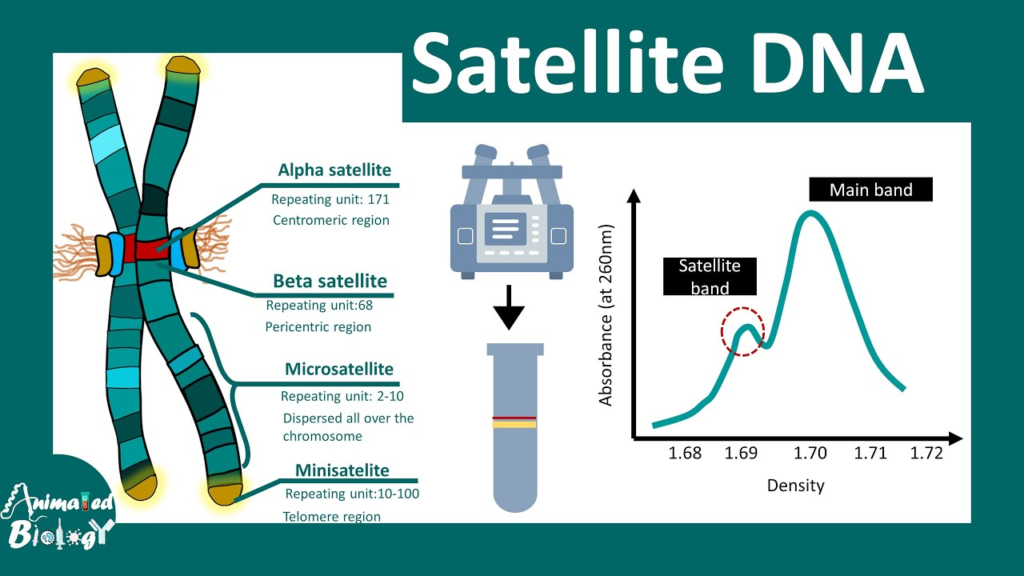
古典的な小型衛星
- 突然の病原性閾値を伴わないコピー数の変動
- それらは多遺伝子リスクを調節したり(INS→1型糖尿病)、構造的疾患を引き起こしたり(MUC1→ADTKD)します。
- 法医学的 DNA フィンガープリンティングの歴史的基礎
巨大衛星
— 模範的なケースとしての FSHD
- D4Z4 (サブテロメア 4q35): 3.3 kb ユニット
- 正常: 11-100 コピー / 病的: ≤10 コピー (FSHD1) — 収縮、拡張ではありません
- 収縮によりクロマチンが開く → クロマチンの抑制が解除される DUX4 (成人の筋肉では通常沈黙している) → 毒性
- 寛容な 4qA ハプロタイプが必要 (4qB の同じ収縮は病気を引き起こさない)
- FSHD2: 通常の配列ですが、変異があります SMCHD1 → シス収縮経由ではなく、トランスルート経由で同じ結果(DUX4 抑制解除)
- 古典的な遺伝的予測(反復競争ではなくエピジェネティックなメカニズム)には従わない
- はい、FSHD と「非定型」メカニズム (ラージリピート、古典的な非マイクロサテライト、および/または直接毒性ではなくエピジェネティックなメカニズム) を共有する、小さいながらも重要な疾患グループがあります。あなたのスキームに最も関連するもの:
—- ICF症候群(免疫不全、動原体不安定性、顔面異常)
- サテライトリピート 2 および 3 に影響を及ぼします (D4Z4 ではなくセントロメア周囲配列ですが、マクロサテライト/反復ヘテロクロマチンと同じ原理)
- メカニズム: の突然変異 DNMT3B (o ZBTB24, CDCA7, 地獄)→ 低メチル化 これらの繰り返し領域の→動原体周囲の脱凝縮→染色体の不安定性
- これは事実上、FSHD2 機構と同等の常染色体劣性遺伝機構です。つまり、反復自体ではなく、反復ヘテロクロマチンを沈黙させ続ける機構が機能しません。
—- 進行性ミオクロニーてんかん 1 型 (Unverricht-Lundborg).
- 遺伝子 CSTB (シスタチンB)
- 繰り返し ドデカカメラ プロモーター内の (12 bp) — マイクロサテライトとミニサテライトの間の境界サイズ、古典的な STR にきれいに適合しない別のケース
- 機構: 拡大 (FSHD とは異なります) しかし、結果は次のようになります。 転写低下による機能喪失タンパク質やRNAの毒性ではありません。プロモーターの拡張により、遺伝子の転写が困難になるだけです。
- 対比として有用: 拡張は純粋な機能の損失を引き起こし、毒性の増加はありません
19955111
{19955111:N989PCPW},{19955111:XHVJIQA4}
1
バンクーバー
50
デフォルト
2455
https://neuropediatoolkit.org/wp-content/plugins/zotpress/
%7B%22status%22%3A%22success%22%2C%22updateneeded%22%3Afalse%2C%22instance%22%3Afalse%2C%22meta%22%3A%7B%22request_last%22%3A0%2C%22request_next%22%3A0%2C%22used_cache%22%3Atrue%7D%2C%22data%22%3A%5B%7B%22key%22%3A%22N989PCPW%22%2C%22library%22%3A%7B%22id%22%3A19955111%7D%2C%22meta%22%3A%7B%22creatorSummary%22%3A%22Depienne%20and%20Mandel%22%2C%22parsedDate%22%3A%222021-05-06%22%2C%22numChildren%22%3A1%7D%2C%22bib%22%3A%22%26lt%3Bdiv%20class%3D%26quot%3Bcsl-bib-body%26quot%3B%20style%3D%26quot%3Bline-height%3A%201.35%3B%20%26quot%3B%26gt%3B%5Cn%20%20%26lt%3Bdiv%20class%3D%26quot%3Bcsl-entry%26quot%3B%20style%3D%26quot%3Bclear%3A%20left%3B%20%26quot%3B%26gt%3B%5Cn%20%20%20%20%26lt%3Bdiv%20class%3D%26quot%3Bcsl-left-margin%26quot%3B%20style%3D%26quot%3Bfloat%3A%20left%3B%20padding-right%3A%200.5em%3B%20text-align%3A%20right%3B%20width%3A%201em%3B%26quot%3B%26gt%3B1.%26lt%3B%5C%2Fdiv%26gt%3B%26lt%3Bdiv%20class%3D%26quot%3Bcsl-right-inline%26quot%3B%20style%3D%26quot%3Bmargin%3A%200%20.4em%200%201.5em%3B%26quot%3B%26gt%3BDepienne%20C%2C%20Mandel%20JL.%2030%20years%20of%20repeat%20expansion%20disorders%3A%20What%20have%20we%20learned%20and%20what%20are%20the%20remaining%20challenges%3F%20The%20American%20Journal%20of%20Human%20Genetics%20%5BInternet%5D.%202021%20May%206%20%5Bcited%202021%20Sept%2019%5D%3B108%285%29%3A764%26%23x2013%3B85.%20Available%20from%3A%20%26lt%3Ba%20class%3D%26%23039%3Bzp-ItemURL%26%23039%3B%20href%3D%26%23039%3Bhttps%3A%5C%2F%5C%2Fwww.sciencedirect.com%5C%2Fscience%5C%2Farticle%5C%2Fpii%5C%2FS0002929721000951%26%23039%3B%26gt%3Bhttps%3A%5C%2F%5C%2Fwww.sciencedirect.com%5C%2Fscience%5C%2Farticle%5C%2Fpii%5C%2FS0002929721000951%26lt%3B%5C%2Fa%26gt%3B%26lt%3B%5C%2Fdiv%26gt%3B%5Cn%20%20%26lt%3B%5C%2Fdiv%26gt%3B%5Cn%26lt%3B%5C%2Fdiv%26gt%3B%22%2C%22data%22%3A%7B%22itemType%22%3A%22journalArticle%22%2C%22title%22%3A%2230%20years%20of%20repeat%20expansion%20disorders%3A%20What%20have%20we%20learned%20and%20what%20are%20the%20remaining%20challenges%3F%22%2C%22creators%22%3A%5B%7B%22creatorType%22%3A%22author%22%2C%22firstName%22%3A%22Christel%22%2C%22lastName%22%3A%22Depienne%22%7D%2C%7B%22creatorType%22%3A%22author%22%2C%22firstName%22%3A%22Jean-Louis%22%2C%22lastName%22%3A%22Mandel%22%7D%5D%2C%22abstractNote%22%3A%22Tandem%20repeats%20represent%20one%20of%20the%20most%20abundant%20class%20of%20variations%20in%20human%20genomes%2C%20which%20are%20polymorphic%20by%20nature%20and%20become%20highly%20unstable%20in%20a%20length-dependent%20manner.%20The%20expansion%20of%20repeat%20length%20across%20generations%20is%20a%20well-established%20process%20that%20results%20in%20human%20disorders%20mainly%20affecting%20the%20central%20nervous%20system.%20At%20least%2050%20disorders%20associated%20with%20expansion%20loci%20have%20been%20described%20to%20date%2C%20with%20half%20recognized%20only%20in%20the%20last%20ten%20years%2C%20as%20prior%20methodological%20difficulties%20limited%20their%20identification.%20These%20limitations%20still%20apply%20to%20the%20current%20widely%20used%20molecular%20diagnostic%20methods%20%28exome%20or%20gene%20panels%29%20and%20thus%20result%20in%20missed%20diagnosis%20detrimental%20to%20affected%20individuals%20and%20their%20families%2C%20especially%20for%20disorders%20that%20are%20very%20rare%20and%5C%2For%20clinically%20not%20recognizable.%20Most%20of%20these%20disorders%20have%20been%20identified%20through%20family-driven%20approaches%20and%20many%20others%20likely%20remain%20to%20be%20identified.%20The%20recent%20development%20of%20long-read%20technologies%20provides%20a%20unique%20opportunity%20to%20systematically%20investigate%20the%20contribution%20of%20tandem%20repeats%20and%20repeat%20expansions%20to%20the%20genetic%20architecture%20of%20human%20disorders.%20In%20this%20review%2C%20we%20summarize%20the%20current%20and%20most%20recent%20knowledge%20about%20the%20genetics%20of%20repeat%20expansion%20disorders%20and%20the%20diversity%20of%20their%20pathophysiological%20mechanisms%20and%20outline%20the%20perspectives%20of%20developing%20personalized%20treatments%20in%20the%20future.%22%2C%22date%22%3A%22May%206%2C%202021%22%2C%22section%22%3A%22%22%2C%22partNumber%22%3A%22%22%2C%22partTitle%22%3A%22%22%2C%22DOI%22%3A%2210.1016%5C%2Fj.ajhg.2021.03.011%22%2C%22citationKey%22%3A%22%22%2C%22url%22%3A%22https%3A%5C%2F%5C%2Fwww.sciencedirect.com%5C%2Fscience%5C%2Farticle%5C%2Fpii%5C%2FS0002929721000951%22%2C%22PMID%22%3A%22%22%2C%22PMCID%22%3A%22%22%2C%22ISSN%22%3A%220002-9297%22%2C%22language%22%3A%22en%22%2C%22collections%22%3A%5B%22QKPQST8L%22%5D%2C%22dateModified%22%3A%222026-07-15T22%3A41%3A32Z%22%7D%7D%2C%7B%22key%22%3A%22XHVJIQA4%22%2C%22library%22%3A%7B%22id%22%3A19955111%7D%2C%22meta%22%3A%7B%22creatorSummary%22%3A%22Chintalaphani%20et%20al.%22%2C%22parsedDate%22%3A%222021-05-25%22%2C%22numChildren%22%3A2%7D%2C%22bib%22%3A%22%26lt%3Bdiv%20class%3D%26quot%3Bcsl-bib-body%26quot%3B%20style%3D%26quot%3Bline-height%3A%201.35%3B%20%26quot%3B%26gt%3B%5Cn%20%20%26lt%3Bdiv%20class%3D%26quot%3Bcsl-entry%26quot%3B%20style%3D%26quot%3Bclear%3A%20left%3B%20%26quot%3B%26gt%3B%5Cn%20%20%20%20%26lt%3Bdiv%20class%3D%26quot%3Bcsl-left-margin%26quot%3B%20style%3D%26quot%3Bfloat%3A%20left%3B%20padding-right%3A%200.5em%3B%20text-align%3A%20right%3B%20width%3A%201em%3B%26quot%3B%26gt%3B1.%26lt%3B%5C%2Fdiv%26gt%3B%26lt%3Bdiv%20class%3D%26quot%3Bcsl-right-inline%26quot%3B%20style%3D%26quot%3Bmargin%3A%200%20.4em%200%201.5em%3B%26quot%3B%26gt%3BChintalaphani%20SR%2C%20Pineda%20SS%2C%20Deveson%20IW%2C%20Kumar%20KR.%20An%20update%20on%20the%20neurological%20short%20tandem%20repeat%20expansion%20disorders%20and%20the%20emergence%20of%20long-read%20sequencing%20diagnostics.%20Acta%20Neuropathologica%20Communications%20%5BInternet%5D.%202021%20May%2025%20%5Bcited%202021%20Sept%2019%5D%3B9%281%29%3A98.%20Available%20from%3A%20%26lt%3Ba%20class%3D%26%23039%3Bzp-ItemURL%26%23039%3B%20href%3D%26%23039%3Bhttps%3A%5C%2F%5C%2Fdoi.org%5C%2F10.1186%5C%2Fs40478-021-01201-x%26%23039%3B%26gt%3Bhttps%3A%5C%2F%5C%2Fdoi.org%5C%2F10.1186%5C%2Fs40478-021-01201-x%26lt%3B%5C%2Fa%26gt%3B%26lt%3B%5C%2Fdiv%26gt%3B%5Cn%20%20%26lt%3B%5C%2Fdiv%26gt%3B%5Cn%26lt%3B%5C%2Fdiv%26gt%3B%22%2C%22data%22%3A%7B%22itemType%22%3A%22journalArticle%22%2C%22title%22%3A%22An%20update%20on%20the%20neurological%20short%20tandem%20repeat%20expansion%20disorders%20and%20the%20emergence%20of%20long-read%20sequencing%20diagnostics%22%2C%22creators%22%3A%5B%7B%22creatorType%22%3A%22author%22%2C%22firstName%22%3A%22Sanjog%20R.%22%2C%22lastName%22%3A%22Chintalaphani%22%7D%2C%7B%22creatorType%22%3A%22author%22%2C%22firstName%22%3A%22Sandy%20S.%22%2C%22lastName%22%3A%22Pineda%22%7D%2C%7B%22creatorType%22%3A%22author%22%2C%22firstName%22%3A%22Ira%20W.%22%2C%22lastName%22%3A%22Deveson%22%7D%2C%7B%22creatorType%22%3A%22author%22%2C%22firstName%22%3A%22Kishore%20R.%22%2C%22lastName%22%3A%22Kumar%22%7D%5D%2C%22abstractNote%22%3A%22Short%20tandem%20repeat%20%28STR%29%20expansion%20disorders%20are%20an%20important%20cause%20of%20human%20neurological%20disease.%20They%20have%20an%20established%20role%20in%20more%20than%2040%20different%20phenotypes%20including%20the%20myotonic%20dystrophies%2C%20Fragile%20X%20syndrome%2C%20Huntington%5Cu2019s%20disease%2C%20the%20hereditary%20cerebellar%20ataxias%2C%20amyotrophic%20lateral%20sclerosis%20and%20frontotemporal%20dementia.%22%2C%22date%22%3A%22May%2025%2C%202021%22%2C%22section%22%3A%22%22%2C%22partNumber%22%3A%22%22%2C%22partTitle%22%3A%22%22%2C%22DOI%22%3A%2210.1186%5C%2Fs40478-021-01201-x%22%2C%22citationKey%22%3A%22%22%2C%22url%22%3A%22https%3A%5C%2F%5C%2Fdoi.org%5C%2F10.1186%5C%2Fs40478-021-01201-x%22%2C%22PMID%22%3A%22%22%2C%22PMCID%22%3A%22%22%2C%22ISSN%22%3A%222051-5960%22%2C%22language%22%3A%22%22%2C%22collections%22%3A%5B%22QKPQST8L%22%5D%2C%22dateModified%22%3A%222026-05-09T07%3A43%3A45Z%22%7D%7D%5D%7D
1.
デピエンヌ C、マンデル JL. 30 年間にわたる反復性拡張障害: 私たちは何を学び、何が残っているのでしょうか?アメリカ人類遺伝学ジャーナル [インターネット]。 2021 年 5 月 6 日 [2021 年 9 月 19 日引用];108(5):764–85。以下から入手可能: https://www.sciencedirect.com/science/article/pii/S0002929721000951
1.
チンタラファニ SR、ピネダ SS、デベソン IW、クマール KR。神経学的ショートタンデムリピート拡張障害とロングリードシーケンス診断の出現に関する最新情報。 Acta Neuropathologica Communications [インターネット]。 2021 年 5 月 25 日 [2021 年 9 月 19 日引用];9(1):98。以下から入手可能: https://doi.org/10.1186/s40478-021-01201-x