
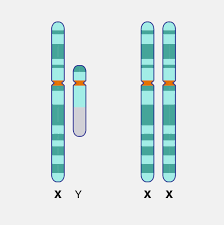
Recessive X-Linked Inheritance Pattern
The frequency of sick individuals is much higher among men than among women. Men pass the diseased allele to all their daughters, but all daughters will be healthy. A heterozygous carrier will transmit the allele to 50% of her sons (who will be sick) as well as 50% of her daughters (who will be healthy carriers). There is no transmission of the disease from parents to children.
Dominant X-Linked Inheritance Pattern
Both men and women transmit the disease, and it is expressed in both sexes. The disease is twice as common in women as in men. An affected man transmits the disease to all his daughters, but to none of his sons. An affected woman transmits the disease to half of her sons and daughters. Women usually have a milder form of the disease than men.
Dutch or Y-Linked Inheritance
Only men express and transmit the genes linked to the Y chromosome, and they pass them on to all their male children.
Pseudoautosomal Inheritance or “Partial Sex Linkage”
Women transmit the genes of the X/Y homologous segment in the same way to their children of both sexes, but men transmit them predominantly to children of the same sex. For example, this inheritance model occurs in X-linked ichthyosis due to steroid sulfatase deficiency.
X-Linked Metabolic Diseases
X-linked metabolic diseases are a more limited number than autosomal diseases, but it is a better strategy to know and learn about them. An extensive list can be consulted at OMIM.
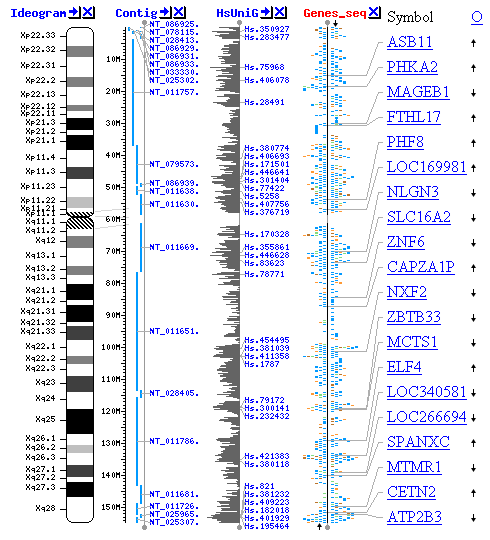
🔗 Consult linked resource: X-linked diseases of special neurogenetic relevance.