
Carrying out cosegregation studies has 2 main uses:
- Reproductive advice. Through the study of family members, information can be obtained about the presence of asymptomatic carriers in the family in which there is a high risk of transmission of hereditary diseases. It is necessary to check if there is reproductive intention in the family.
- Reanalysis and reclassification of VSI. In those variants of uncertain meaning in which it is relevant to know whether it is a de novo variant or not, a cosegregation study can be carried out to obtain this information.
- De novo emergence is an ACMG criterion used in pathogenicity classifications. If reanalysis results in a pathogenicity reclassification, it may or may not be clinically significant. This is clinically significant if it produces a change from VSI to probably pathogenic.
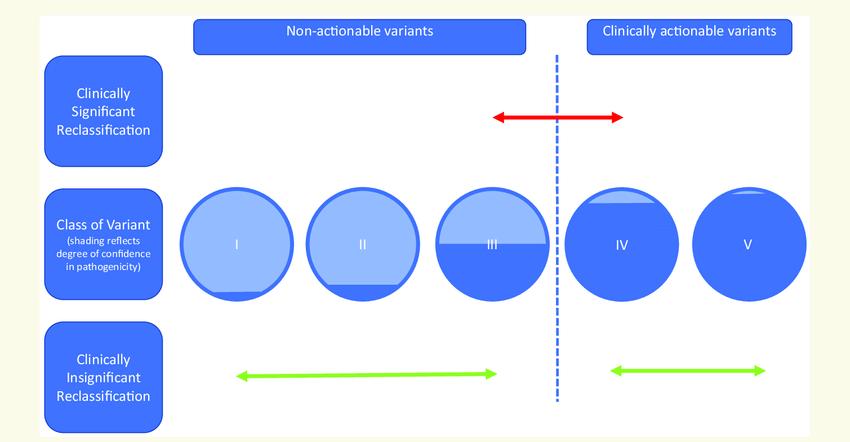
- The probability of pathogenicity of a VSI moves in a very high range, between 5 and 95%, therefore not all VSIs are the same. Some are very close to being considered probably benign, and others are close to being reclassified as probably pathogenic. It is therefore important to know the reason why it has been classified as VSI, in particular the ACMG criteria it meets.
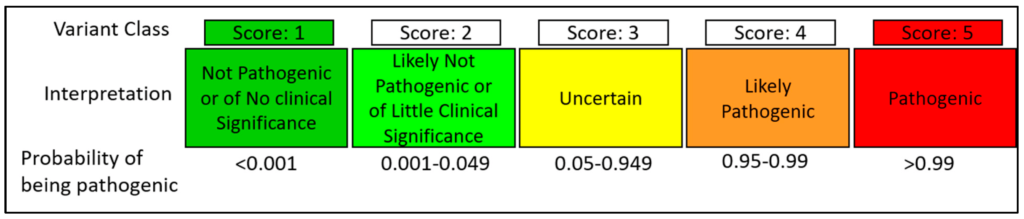
- It is also interesting to carry out a prior simulation, using some computerized system for calculating the probability of pathogenicity, to decide whether or not it is worth carrying out cosegregation, depending on whether compliance with said criterion would modify the classification.
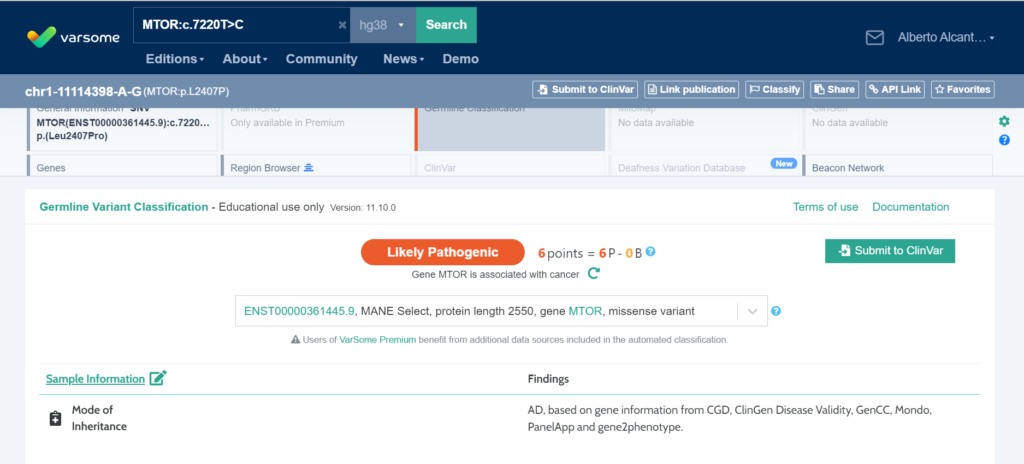
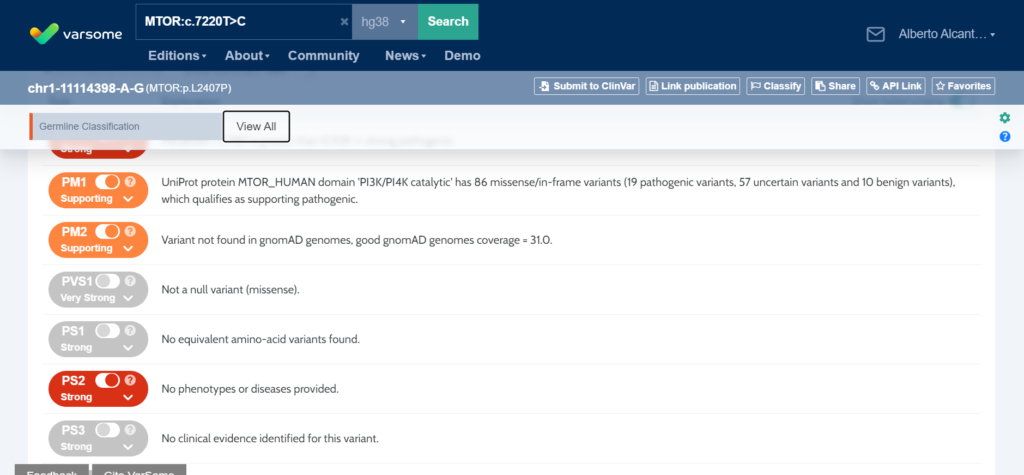
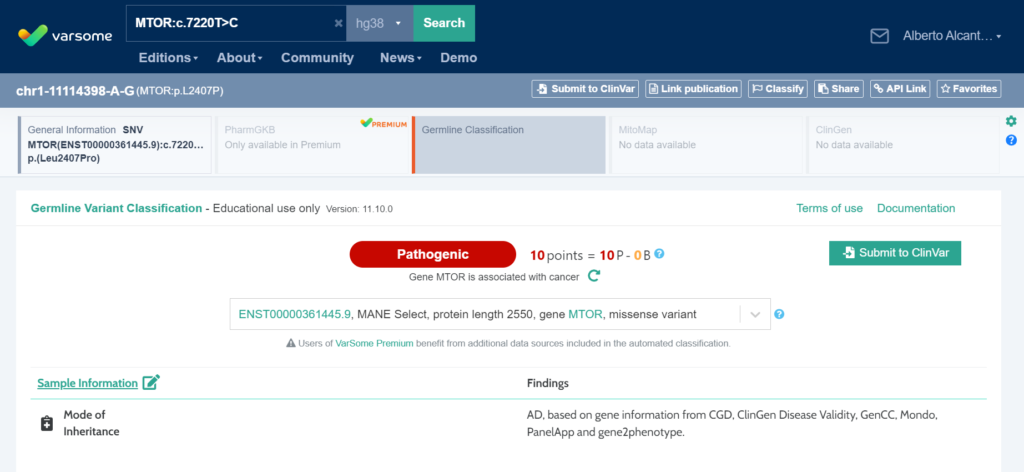
- In this sense, Varsome can be used to evaluate the possibility that a variant of uncertain significance changes its pathogenicity classification if we manage to demonstrate its de novo origin, that is, by meeting the PM6 or PS2 criteria.
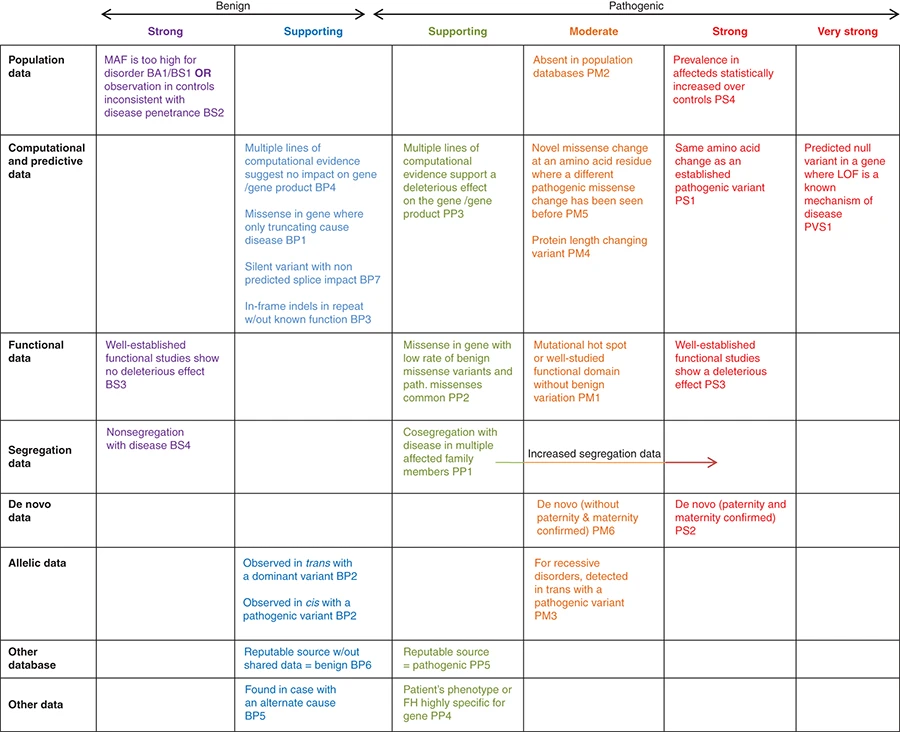
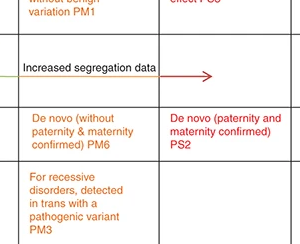
Example: Variant classified as probably pathogenic, which after applying the PS2 criterion is reclassified as pathogenic.
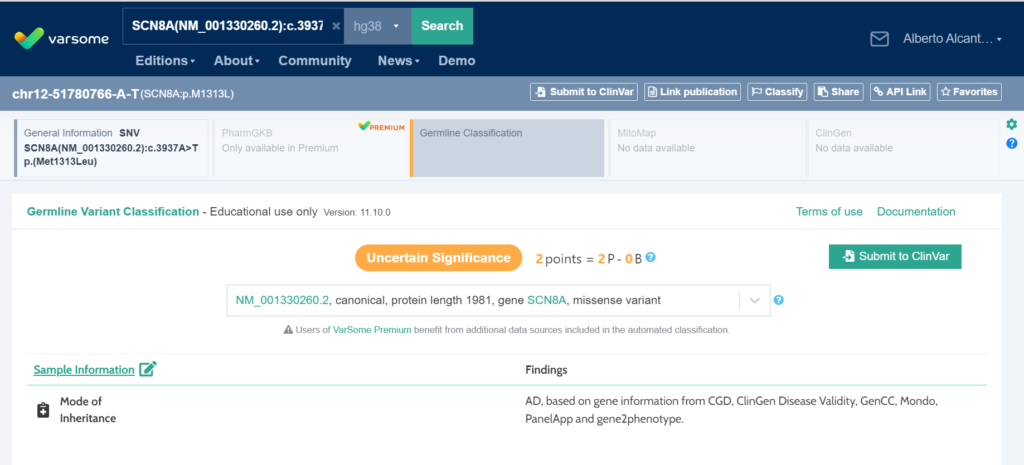
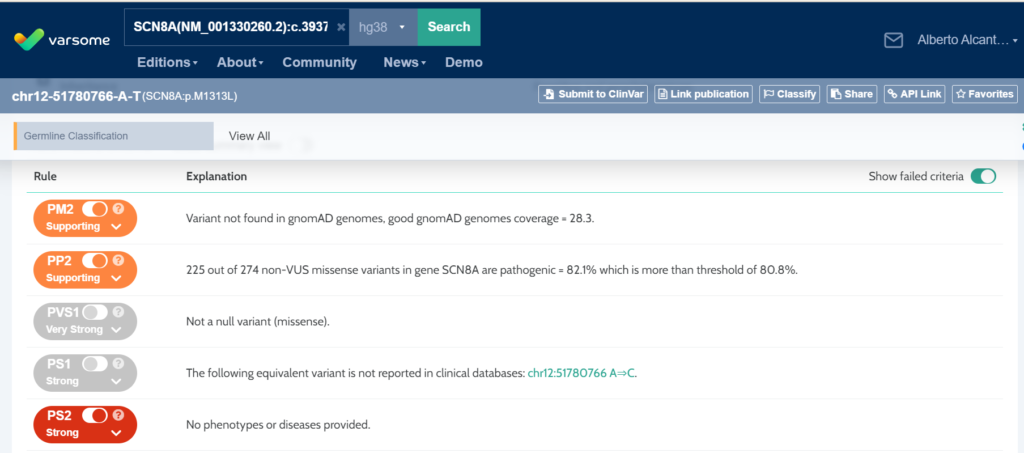
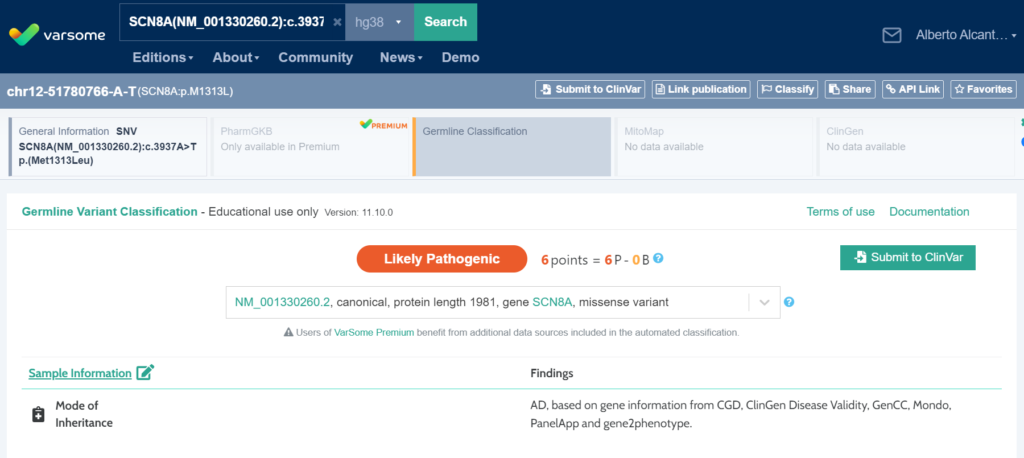
Example 2: Probably pathogenic variant that is reclassified as pathogenic.