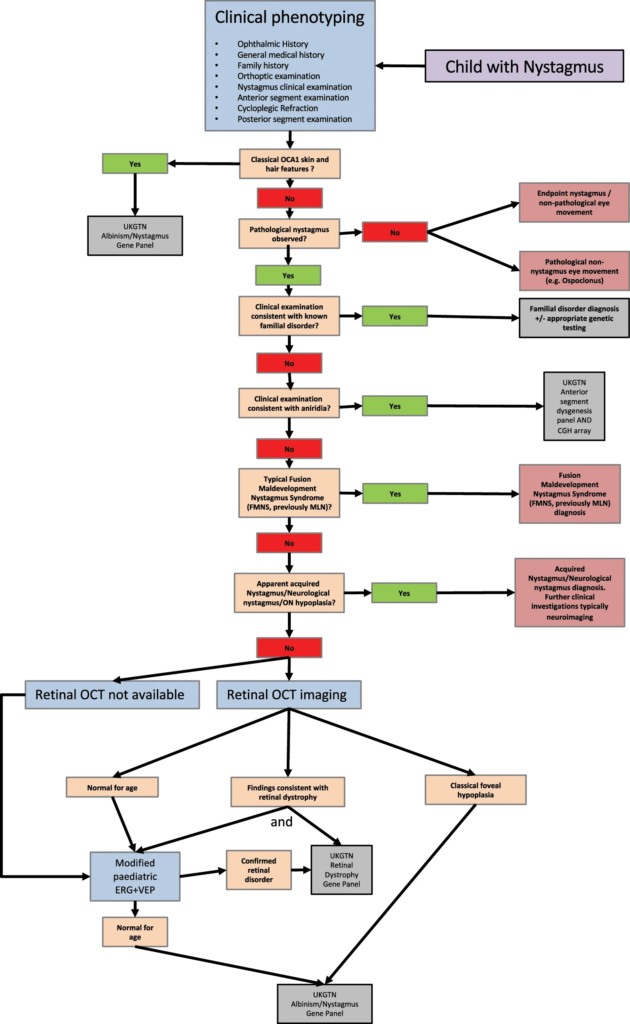
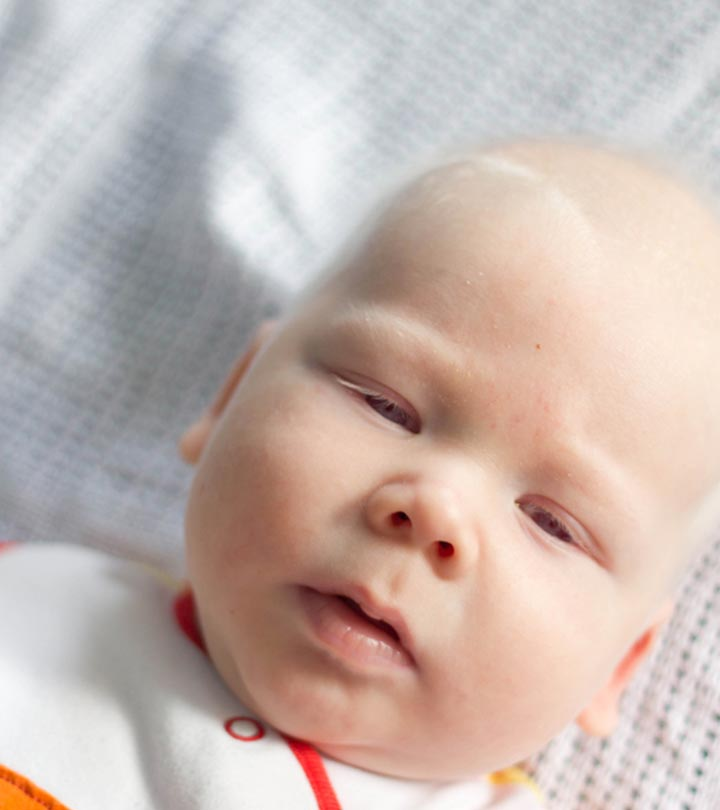
Neuropediatric action protocol for congenital infantile/infant nystagmus
Congenital nystagmus is an involuntary eye movement that can be diagnosed in the first months of life. It is important to perform a complete and systematic evaluation to determine its cause and plan appropriate treatment.
Diagnostic criteria
- Transfontanelar echoanalysis (in children under 6 months with an ultrasound window): It allows evaluating the bone structure of the skull and detecting anomalies that may cause nystagmus.
- Fundus of the eye: It is essential to rule out ocular problems such as myopia, hyperopia or astigmatism.
- PEV flash (optional): Allows you to evaluate visual function and detect optic nerve abnormalities.
- Neurological and dysmorphological examination: It is important to perform a complete examination to rule out dyschromia or neurological abnormalities that may cause nystagmus.
- Referral to early care regardless of neurodevelopment (neurodevelopmental risk): Early care can help prevent complications and improve the child's development.
Evaluation of the indication for neuroimaging testing
Based on the previous findings, the indication for neuroimaging testing should be considered. The most common tests are:
- MRI with sedation: Allows you to evaluate the brain and detect abnormalities that may cause nystagmus.
- Genetics: Allows us to rule out genetic pathologies that can cause nystagmus.
Warning signs (red flag signs)
| Red flag signs |
| • Later onset nystagmus (in the absence of signs consistent with an ocular disorder). |
| • Constant oscillopsia in older children. |
| • Dysconjugate/gaze evoked/seesaw/convergence-retraction nystagmus. |
| • Horizontal nystagmus becoming vertical in the vertical turn. |
| • Vertical or torsional nystagmus (in the absence of retinal pathology such as achromatopsia). |
| • Any associated neurological sign and/or a systematically ill child. |
Images