
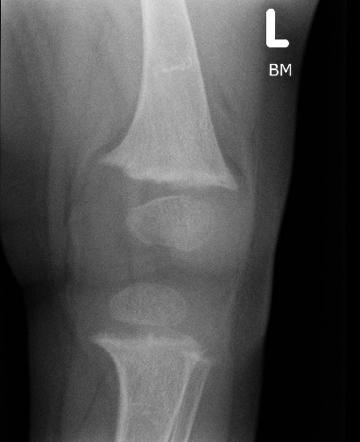
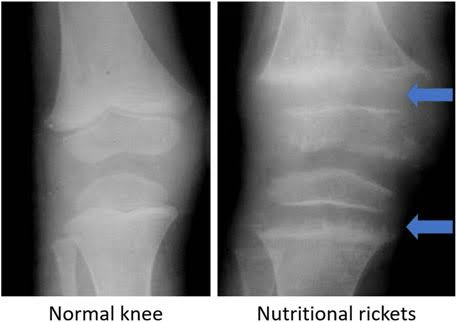
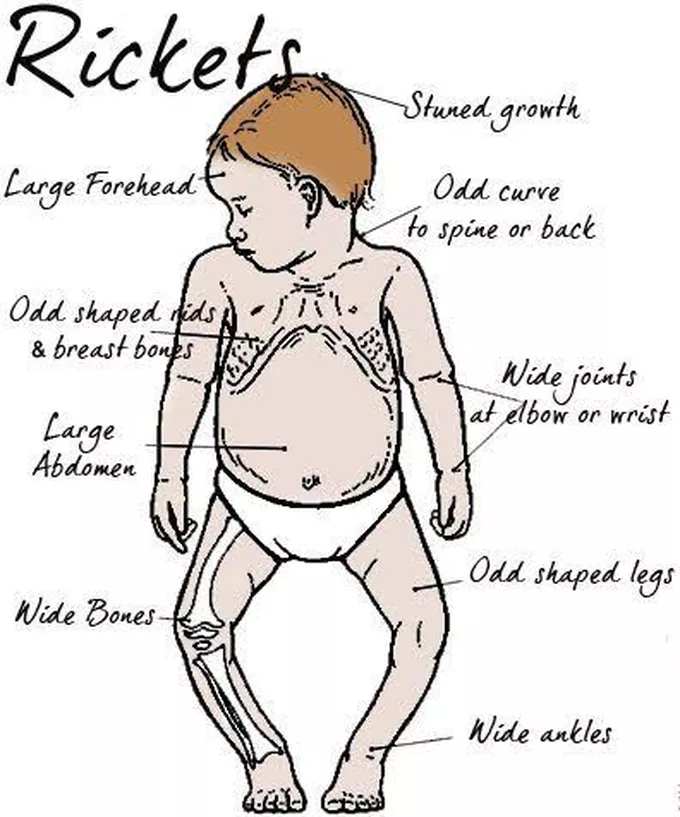
Differential diagnosis of rickets versus congenital metabolic errors and genetic disorders requires evaluating key biochemical markers, especially the Serum alkaline phosphatase (ALP), el phosphate and calcium, since many rare conditions mimic the clinical and radiological presentation of common nutritional rickets.
Diagnostic Differential Key
- Hypophosphatemia (HPP)
- Type: Inherent metabolic disorder caused by mutations in the gene ALPL (Deficiency of alkaline phosphatase specific to tissue).
- Signatory: Paradigmatically low levels of serum FA (while the common rickets raises it markedly), accompanied by elevation of phosphatidylcholine, risk of seizures and severe osteomalacia.
- Hypophosphatemic Myopathy Hereditary:
- Type: Genetic disorder of phosphate loss (e.g. linked to chromosome X by mutations in PHEX, or related autosomal forms FGF23 o DMP1).
- Signatory: Hypophosphatemia severe with low or normal levels of 1,25-dihydroxyvitamin D and elevated FA, but with normal levels of 25-hydroxyvitamin D.
- Vitamin D-dependent rickets (VDDR)
- Type 1A/1B: Genetic defects in the synthesis or bioactivation of vitamin D (enzyme deficiencies such as renal 1α-hydroxylase deficiency).
- 2A/2B: Mutations in the vitamin D receptor (VDR).
- Signatory: Type 2 presents extremely high levels of circulating 1,25-(OH)₂D and frequently is associated with total alopesia, which distinguishes it from classic rickets and type 1.
- Fanconi syndrome (Acidotic Renal Tubular Dysplasia/Tubulopathy)
- Type: Generalized distal tubular dysfunction, which may be inherited (secondary to cystinosis, Wilson's disease, etc.) or acquired.
- Signatory: Massive urinary loss of phosphate, glucose, amino acids and bicarbonate, causing systemic acidosis and hypophosphatemic osteomalacia.
- Osteolytic lesions and Storage diseases:
- Jensen's metaphyseal dysplasia Autosomal dominant rare condition that mimics metaphysical alterations of scoliosis.
- Mucopolysaccharidosis: Can debut with skeletal deformities that confuse with scoliosis in early stages.
- Osteogénesis Imperfecta: Defectos in the collagen that cause frequent fractures and osteoporosis, sometimes resembling severe rickets.
Basic Screening Strategy
- Determine calcium, phosphorus, magnesium and FA in serum.
- Measure 25-Hydroxyvitamin D y 1,25-Dihydroxyvitamin D.
- Evaluate the renal tubular function (urinary phosphate, amino acids, glucose, and blood/urine pH) to exclude Fanconi syndrome or isolated phosphate loss.