The child admitted to intensive care is a difficult scenario for neurological examination, which is limited by the special circumstances imposed by this environment. We can find 3 main scenarios:

Neurological examination in the sedated and intubated child.

The main limitations are:

  • The assessment of the level of consciousness, cognition, attention, language, or any exploration strategy that requires the patient's collaboration (such as sensitivity) is not approachable.
  • The lower cranial nerves cannot be assessed either due to the presence of the laryngeal tube.
  • It is not usually possible to mobilize the head to assess the oculocephalic reflex due to the risk of extubation.
  • It is necessary to take into account the use of pharmacological treatments that affect pupillary function (morphic) or the neuromuscular junction (rocuronium, etc.).

In any case it can be assessed:

  • Forced eye opening and Hirschberg test. The effects of the drugs and the absence of visual fixation make its assessment of little use, except in very evident ophthalmoparesis (complete pc III, for example).
  • Facial asymmetry.
  • Exploration of the motor system, including:
    • Muscle trophism (to be interpreted in the context of length of stay and atrophy due to disuse).
    • Muscle tone and musculoskeletal reflexes (depending on the presence of drugs that affect the neuromuscular junction).
    • Signs of long road involvement (Babinski, Hoffmann, Rossolimo), with the same limitations as the previous ones.
  • Exploration neurocutaneous.
  • Exploration dismorfológica.

There are some specific neurocritical devices that we should know, and that we can find in this situation:

Non-pharmacological neurological examination of the child with decreased level of consciousness.

In a child who presents with a decreased level of consciousness in the PICU, the neurological examination mainly seeks to differentiate the presence of a structural cause versus the presence of toxic-metabolic causes that justify their situation. It is practical to differentiate between 2 situations:

Eyes closed.

  • We will apply the GCS with the objective of evaluating the level of consciousness through the response to pain, if there are fluctuations in it, and if it is possible to explore any cognitive function.
  • If eye opening is not achieved, it can be opened artificially in order to evaluate the integrity of the brain stem.
  • Exploration of the motor system: Muscle tone, trophism, musculoskeletal reflexes and signs of long tract dysfunction (Hoffmann, Babinski, Rossolimo).
  • Examination of sensitivity, coordination and voluntary motor skills is not usually applicable.

Eyes open.

  • We will assess the response to the verbal command, and based on this and the observation of spontaneous behavior, we will infer the situation of consciousness, making a differential diagnosis between the following situations:
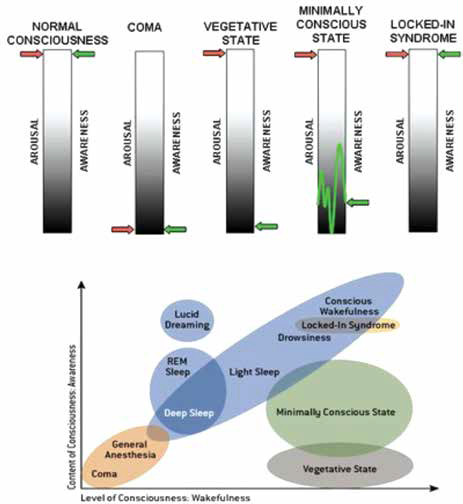
  • It is important to keep in mind that multiple assessments will need to be carried out over time, as the level of consciousness may fluctuate. It may be useful to have a video recording camera.
  • In locked-in situations or states of minimal consciousness in the older child, some augmentative and alternative communication system can be used such as ETRAN type boards.
  • If a diagnosis of brain death needs to be made, it will be necessary to use complementary techniques, although none of them provides the diagnosis by itself.
    • EEG.
    • Transcranial Doppler.
    • Neuroimaging.
    • Nuclear medicine (cerebral SPECT).
Neurological examination of the child with acute para or tetraparesis.

This scenario usually raises the differential diagnosis between acute motor neuropathies (neuronopathies and polyradiculopathies) and acute myelopathies. The most frequently used signs for differentiation are:

  • Cutaneoabdominal reflex.
  • Cremasterine reflex.
  • Sensitive level.
  • Iodine-starch test for the assessment of dysautonomia.
Assessment of brain death.

A particularly complex situation is the assessment of brain death according to neurological criteria.

There are international consensus guidelines on this matter.

19955111 {19955111:Z5II7B53} 1 vancouver 50 default 7336 https://neuropediatoolkit.org/wp-content/plugins/zotpress/
%7B%22status%22%3A%22success%22%2C%22updateneeded%22%3Afalse%2C%22instance%22%3Afalse%2C%22meta%22%3A%7B%22request_last%22%3A0%2C%22request_next%22%3A0%2C%22used_cache%22%3Atrue%7D%2C%22data%22%3A%5B%7B%22key%22%3A%22Z5II7B53%22%2C%22library%22%3A%7B%22id%22%3A19955111%7D%2C%22meta%22%3A%7B%22creatorSummary%22%3A%22Greer%20et%20al.%22%2C%22parsedDate%22%3A%222023-12-12%22%2C%22numChildren%22%3A0%7D%2C%22bib%22%3A%22%26lt%3Bdiv%20class%3D%26quot%3Bcsl-bib-body%26quot%3B%20style%3D%26quot%3Bline-height%3A%201.35%3B%20%26quot%3B%26gt%3B%5Cn%20%20%26lt%3Bdiv%20class%3D%26quot%3Bcsl-entry%26quot%3B%20style%3D%26quot%3Bclear%3A%20left%3B%20%26quot%3B%26gt%3B%5Cn%20%20%20%20%26lt%3Bdiv%20class%3D%26quot%3Bcsl-left-margin%26quot%3B%20style%3D%26quot%3Bfloat%3A%20left%3B%20padding-right%3A%200.5em%3B%20text-align%3A%20right%3B%20width%3A%201em%3B%26quot%3B%26gt%3B1.%26lt%3B%5C%2Fdiv%26gt%3B%26lt%3Bdiv%20class%3D%26quot%3Bcsl-right-inline%26quot%3B%20style%3D%26quot%3Bmargin%3A%200%20.4em%200%201.5em%3B%26quot%3B%26gt%3BGreer%20DM%2C%20Kirschen%20MP%2C%20Lewis%20A%2C%20Gronseth%20GS%2C%20Rae-Grant%20A%2C%20Ashwal%20S%2C%20et%20al.%20Pediatric%20and%20Adult%20Brain%20Death%5C%2FDeath%20by%20Neurologic%20Criteria%20Consensus%20Guideline.%20Neurology%20%5BInternet%5D.%202023%20Dec%2012%20%5Bcited%202024%20May%2029%5D%3B101%2824%29%3A1112%26%23x2013%3B32.%20Available%20from%3A%20%26lt%3Ba%20class%3D%26%23039%3Bzp-ItemURL%26%23039%3B%20href%3D%26%23039%3Bhttps%3A%5C%2F%5C%2Fwww.neurology.org%5C%2Fdoi%5C%2F10.1212%5C%2FWNL.0000000000207740%26%23039%3B%26gt%3Bhttps%3A%5C%2F%5C%2Fwww.neurology.org%5C%2Fdoi%5C%2F10.1212%5C%2FWNL.0000000000207740%26lt%3B%5C%2Fa%26gt%3B%26lt%3B%5C%2Fdiv%26gt%3B%5Cn%20%20%26lt%3B%5C%2Fdiv%26gt%3B%5Cn%26lt%3B%5C%2Fdiv%26gt%3B%22%2C%22data%22%3A%7B%22itemType%22%3A%22journalArticle%22%2C%22title%22%3A%22Pediatric%20and%20Adult%20Brain%20Death%5C%2FDeath%20by%20Neurologic%20Criteria%20Consensus%20Guideline%22%2C%22creators%22%3A%5B%7B%22creatorType%22%3A%22author%22%2C%22firstName%22%3A%22David%20M.%22%2C%22lastName%22%3A%22Greer%22%7D%2C%7B%22creatorType%22%3A%22author%22%2C%22firstName%22%3A%22Matthew%20P.%22%2C%22lastName%22%3A%22Kirschen%22%7D%2C%7B%22creatorType%22%3A%22author%22%2C%22firstName%22%3A%22Ariane%22%2C%22lastName%22%3A%22Lewis%22%7D%2C%7B%22creatorType%22%3A%22author%22%2C%22firstName%22%3A%22Gary%20S.%22%2C%22lastName%22%3A%22Gronseth%22%7D%2C%7B%22creatorType%22%3A%22author%22%2C%22firstName%22%3A%22Alexander%22%2C%22lastName%22%3A%22Rae-Grant%22%7D%2C%7B%22creatorType%22%3A%22author%22%2C%22firstName%22%3A%22Stephen%22%2C%22lastName%22%3A%22Ashwal%22%7D%2C%7B%22creatorType%22%3A%22author%22%2C%22firstName%22%3A%22Maya%20A.%22%2C%22lastName%22%3A%22Babu%22%7D%2C%7B%22creatorType%22%3A%22author%22%2C%22firstName%22%3A%22David%20F.%22%2C%22lastName%22%3A%22Bauer%22%7D%2C%7B%22creatorType%22%3A%22author%22%2C%22firstName%22%3A%22Lori%22%2C%22lastName%22%3A%22Billinghurst%22%7D%2C%7B%22creatorType%22%3A%22author%22%2C%22firstName%22%3A%22Amanda%22%2C%22lastName%22%3A%22Corey%22%7D%2C%7B%22creatorType%22%3A%22author%22%2C%22firstName%22%3A%22Sonia%22%2C%22lastName%22%3A%22Partap%22%7D%2C%7B%22creatorType%22%3A%22author%22%2C%22firstName%22%3A%22Michael%20A.%22%2C%22lastName%22%3A%22Rubin%22%7D%2C%7B%22creatorType%22%3A%22author%22%2C%22firstName%22%3A%22Lori%22%2C%22lastName%22%3A%22Shutter%22%7D%2C%7B%22creatorType%22%3A%22author%22%2C%22firstName%22%3A%22Courtney%22%2C%22lastName%22%3A%22Takahashi%22%7D%2C%7B%22creatorType%22%3A%22author%22%2C%22firstName%22%3A%22Robert%20C.%22%2C%22lastName%22%3A%22Tasker%22%7D%2C%7B%22creatorType%22%3A%22author%22%2C%22firstName%22%3A%22Panayiotis%20Nicolaou%22%2C%22lastName%22%3A%22Varelas%22%7D%2C%7B%22creatorType%22%3A%22author%22%2C%22firstName%22%3A%22Eelco%22%2C%22lastName%22%3A%22Wijdicks%22%7D%2C%7B%22creatorType%22%3A%22author%22%2C%22firstName%22%3A%22Amy%22%2C%22lastName%22%3A%22Bennett%22%7D%2C%7B%22creatorType%22%3A%22author%22%2C%22firstName%22%3A%22Scott%20R.%22%2C%22lastName%22%3A%22Wessels%22%7D%2C%7B%22creatorType%22%3A%22author%22%2C%22firstName%22%3A%22John%20J.%22%2C%22lastName%22%3A%22Halperin%22%7D%5D%2C%22abstractNote%22%3A%22Background%20and%20Objectives%5CnThe%20purpose%20of%20this%20guideline%20is%20to%20update%20the%202010%20American%20Academy%20of%20Neurology%20%28AAN%29%20brain%20death%5C%2Fdeath%20by%20neurologic%20criteria%20%28BD%5C%2FDNC%29%20guideline%20for%20adults%20and%20the%202011%20American%20Academy%20of%20Pediatrics%2C%20Child%20Neurology%20Society%2C%20and%20Society%20of%20Critical%20Care%20Medicine%20guideline%20for%20infants%20and%20children%20and%20to%20clarify%20the%20BD%5C%2FDNC%20determination%20process%20by%20integrating%20guidance%20for%20adults%20and%20children%20into%20a%20single%20guideline.%20Updates%20in%20this%20guideline%20include%20guidance%20related%20to%20conducting%20the%20BD%5C%2FDNC%20evaluation%20in%20the%20context%20of%20extracorporeal%20membrane%20oxygenation%2C%20targeted%20temperature%20management%2C%20and%20primary%20infratentorial%20injury.%5CnMethods%5CnA%20panel%20of%20experts%20from%20multiple%20medical%20societies%20developed%20BD%5C%2FDNC%20recommendations.%20Because%20of%20the%20lack%20of%20high-quality%20evidence%20on%20the%20subject%2C%20a%20novel%2C%20evidence-informed%20formal%20consensus%20process%20was%20used.%20This%20process%20relied%20on%20the%20panel%20experts%26%23039%3B%20review%20and%20detailed%20knowledge%20of%20the%20literature%20surrounding%20BD%5C%2FDNC%20to%20guide%20the%20development%20of%20preliminary%20recommendations.%20Recommendations%20were%20formulated%20and%20voted%20on%2C%20using%20a%20modified%20Delphi%20process%2C%20according%20to%20the%202017%20AAN%20Clinical%20Practice%20Guideline%20Process%20Manual.%5CnMajor%20Recommendations%5CnEighty-five%20recommendations%20were%20developed%20on%20the%20following%3A%20%281%29%20general%20principles%20for%20the%20BD%5C%2FDNC%20evaluation%2C%20%282%29%20qualifications%20to%20perform%20BD%5C%2FDNC%20evaluations%2C%20%283%29%20prerequisites%20for%20BD%5C%2FDNC%20determination%2C%20%284%29%20components%20of%20the%20BD%5C%2FDNC%20neurologic%20examination%2C%20%285%29%20apnea%20testing%20as%20part%20of%20the%20BD%5C%2FDNC%20evaluation%2C%20%286%29%20ancillary%20testing%20as%20part%20of%20the%20BD%5C%2FDNC%20evaluation%2C%20and%20%287%29%20special%20considerations%20for%20BD%5C%2FDNC%20determination.%22%2C%22date%22%3A%222023-12-12%22%2C%22section%22%3A%22%22%2C%22partNumber%22%3A%22%22%2C%22partTitle%22%3A%22%22%2C%22DOI%22%3A%2210.1212%5C%2FWNL.0000000000207740%22%2C%22citationKey%22%3A%22%22%2C%22url%22%3A%22https%3A%5C%2F%5C%2Fwww.neurology.org%5C%2Fdoi%5C%2F10.1212%5C%2FWNL.0000000000207740%22%2C%22PMID%22%3A%22%22%2C%22PMCID%22%3A%22%22%2C%22ISSN%22%3A%220028-3878%2C%201526-632X%22%2C%22language%22%3A%22en%22%2C%22collections%22%3A%5B%22VVPER4DE%22%5D%2C%22dateModified%22%3A%222026-05-09T21%3A06%3A28Z%22%7D%7D%5D%7D
1.
Greer DM, Kirschen MP, Lewis A, Gronseth GS, Rae-Grant A, Ashwal S, et al. Pediatric and Adult Brain Death/Death by Neurologic Criteria Consensus Guideline. Neurology [Internet]. 2023 Dec 12 [cited 2024 May 29];101(24):1112–32. Available from: https://www.neurology.org/doi/10.1212/WNL.0000000000207740